
Course Review

Bonnie Doon Golf Course
Sydney, Australia
Where the Coast Commands the Game
AMW Faves List
Favorite Par 3 -#6 A hole that catches the eye and holds the body accountable. Beauty without intimidation, difficulty without unfairness.
Favorite Par 4 -#12: From the tee, the Sydney skyline stretches across the horizon a stunning backdrop that elevates the moment before the swing.
Favorite Par 5 -#9: This hole rewards thinking as much as striking. It’s a thoughtful examination of judgment, restraint, and timing where the best score comes from the best decision.
Favorite Hole Design –#7: Rolling hills frame the hole with dramatic beauty, while deep, punishing bunkers lie in wait for anything slightly misjudged.
Easiest Hole –#2: a hole that asks for solid execution rather than overthinking, rewarding commitment and a confident swing.
Hardest Hole –#14: Length alone sets the tone, but it’s the surrounding trouble that sharpens the challenge. Hazards press in from tee to green, turning every decision into a measured risk.
Favorite Extra Sighting -Baby banksia trees
Favorite Après Golf -Zephyr Bar atop Hyatt Regency Sydney
Where to Stay -The Eve Hotel, Park Hyatt Sydney, Four Seasons, Capella Sydney, The Langham, Ovolo 1888 Darling Harbour,
Where to Eat -Saint Peter, Mr. Wongs, Aria, Ptelleguino 2000
PLAN AHEAD
Course Details
Address: Banks Avenue, Pagewood NSW 2035
Telephone: +61 29349 2101
Website: www.bdgc.com.au
Director of Golf: Blake Ballinger
Year Open: 1897, 1907, 1947
Greens Fees: ⛳️⛳️
Yardage: 5964 meters (6522 yards)
What You Need to Know
It's AMW Story Time!
Long before streets, factories, or fairways took shape, the land now known as Marrickville was home to the Cadigal (Gadigal) people of the Eora Nation. For thousands of years, they lived in close connection with the landscape, drawing food, shelter, and culture from the Cooks River and its surrounds. The river was not simply a waterway, but a lifeline woven into daily life, movement, and story.
European settlement arrived in the early 19th century, reshaping the land through a series of colonial land grants. Figures such as John Fincham and Thomas Moore, a skilled boatbuilder, established early holdings, and the area began to take on an industrial character. Timber cutting, shipbuilding, brickworks, and tanneries flourished, industries drawn by access to clay, water, and transport routes.
Much of Marrickville’s early identity was shaped by the vast Wardell Estate, owned by barrister and journalist Robert Wardell. His property dominated the area until his death in 1834. Two decades later, in 1855,merchant Thomas Chalder purchased the estate and subdivided it into smaller holdings, naming the development the Marrick Estate a pivotal moment that transformed the area from rural holdings into a growing residential community.
Growth was swift. By 1861, Marrickville had become an official municipality, reflecting its emergence as a thriving industrial and residential hub. Workers’ cottages rose alongside factories, and the suburb developed a strong working-class character that would define it for generations.

In 1897, a group of ‘golf-mad cranks’ gathered at the home of Marrickville doctor Charles Adam Patrick, and from that meeting, one of Australia’s most influential golf clubs was born. What started as a modest 12-hole course among the grand estates of Tempe quickly earned a reputation for challenge and camaraderie. Players tackled the infamous ‘cliff hole,’ lofting irons 15 meters up a rocky face, while bookmakers, jockeys, and hoteliers mingled on the fairways. Women were welcomed from the start, with a tearoom encouraging female participation and the first Ladies Monthly Medal contested in 1899. The club also played a pioneering role in competitive golf, hosting Australia’s first interclub match in 1898 a precursor to the Major Pennant and helping lay the groundwork for the Ladies Golf Union.
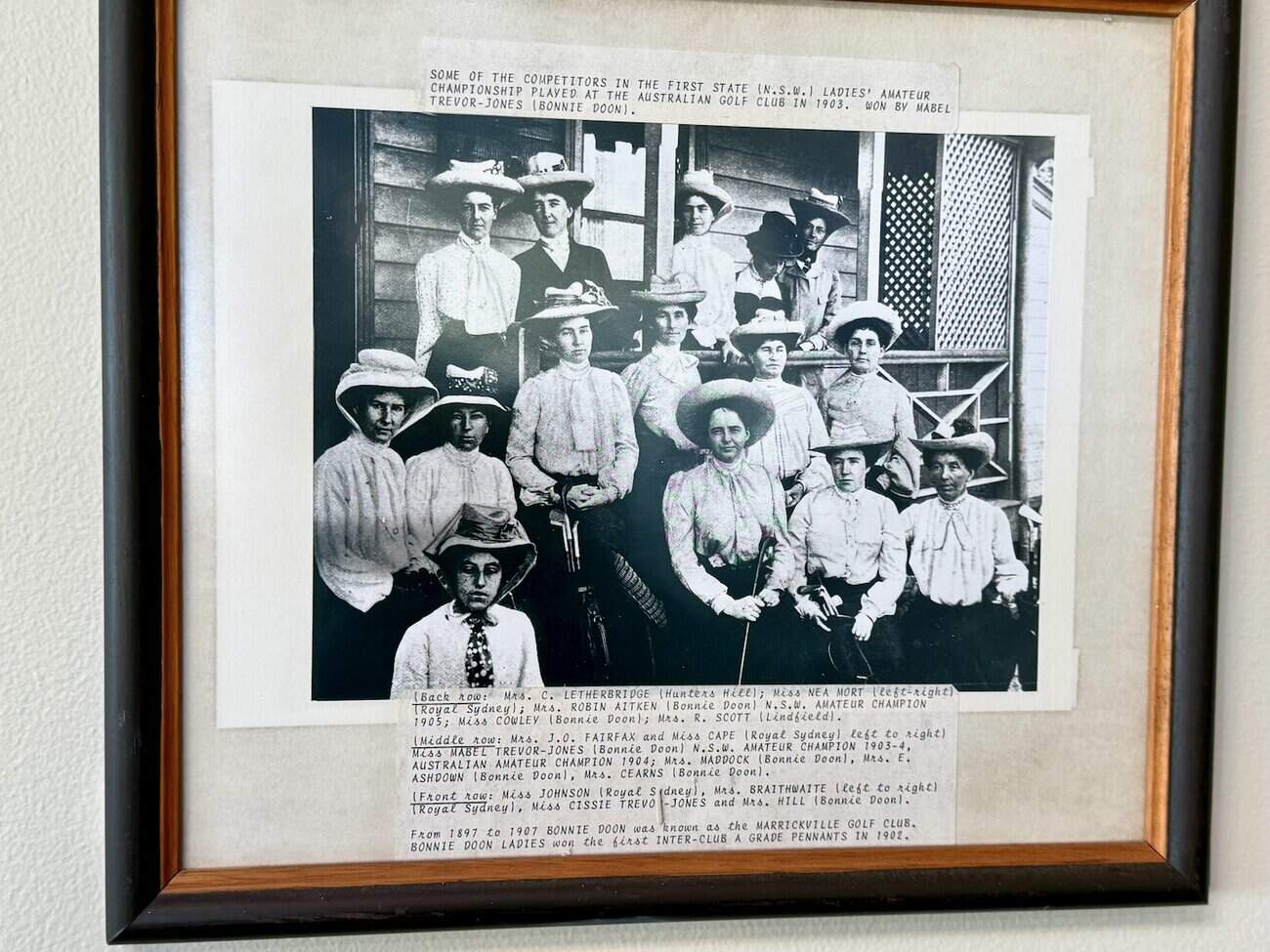
In 1907, the club moved to Arncliffe, purchasing a grazing property and adopting its name: Bonnie Doon. “Bonnie” is a Scottish term meaning “beautiful,” and “Doon” refers to a river in Scotland. Together, the name evokes “beautiful river,” or in the context of Sydney, “beautiful dunes” a perfect reflection of the course’s sandy terrain and natural beauty. At Arncliffe, the course expanded to 18 holes, and a cattle station homestead served as the clubhouse, blending tradition with practicality.
To continue reading please login in or join
To access all of our Course Reviews, Guides, Tips, Lessons, and so much more!