Course Review

Villa d’ Este Golf Club
Montorfano, Como, Italy
Beyond the Words of History is Villa d’Este
AMW Faves List
Favorite Par 3 – #3 – rarely does the first par 3 of the day completely knock your socks off, but this one does. Tight, long, unruly. It is deserving of being a favorite!
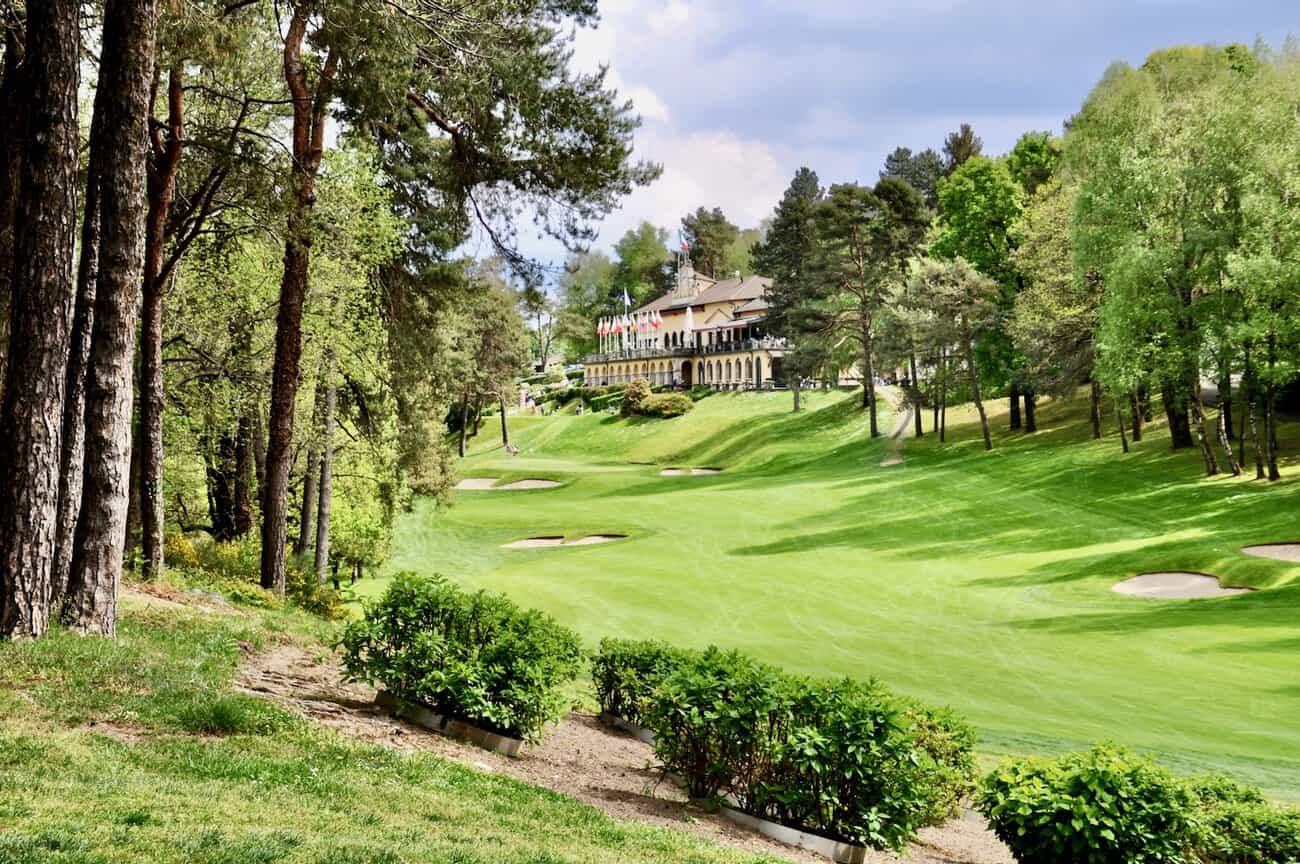
Favorite Par 4 – ##18 – so hard not to pick the iconic 18th hole at VdE. With the centurion clubhouse in the background, a brilliantly designed layout, and the members cheering you on from the terrace, what is not to like?
Favorite Par 5 – #13 – in the middle of the course you feel like you are in a national park or one of your favorite forest walks. This par 5 asks everything from you and gives it all back.
Favorite Hole Design – #12 – different levels of the fairway to playing over the water, the 12th hole is a mind bender, but fair. Two good shots give you a chance, but anything else and your score just might find itself in the tiramisu!
Easiest Hole – #4 – a short par 4 that gives you a very good chance of being happy!
Hardest Hole – #11 – not sure why this one was so tough. Maybe because the fairway is like a bowling lane, the green is heavily guarded, and the walk is uphill…it was just pure challenging.
Favorite Extra Sighting – the views to Lake Como and the Grigne Mountains.
Favorite Apres Golf – sitting on the terrace overlooking the course.
Where to Stay – Circolo Golf Villa d’Este Lodges (if you are lucky!), Hotel Villa d’Este, Grand Hotel Tremezzo.
Where to Eat – La Terrazo al Golf (Clubhouse at Circolo Golf Villa d’Este), Ali di Alice (an absolute must!)
PLAN AHEAD
Course Details
Address: Via per Cantù 13, 22030 Montorfano, Italy
Telephone: +39 031 200 200
Website: www.golfvilladeste.com
Director of Golf: Filippo Felsovanyi (Secretary & Booking)
Architect: Peter Gannon
Year Open: 1926
Greens Fees: ⛳️⛳️⛳️⛳️
Yardage: TBC
What You Need to Know
The Course Uncovered
Discover the story behind the course—from its history and design to the experience of playing it today. Tap the + to expand each section, journey through time, and explore the course one hole at a time.
There is history and a scene like very few,
The mix of days gone by and then of new.
Golf has been played for a century now,
Under the stars, sky, and each tree bough.
Mountains that circle all around
Villa d’Este is a gem that will astound.
The views, the course, the people too,
To grace the grounds, how lucky are you?
December comes to Lake Como with a particular quality of light: low and precise, the kind that finds every surface and holds it a moment too long, so that the water looks painted and the mountains look permanent in a way they do not in summer. It was in this light that the Circolo Golf Villa d'Este opened its gates on the first of December 1926, and it was this light, slanting across the frosted fairways at Montorfano, catching the snow on the Grigne above the tree line that gave the course its character from the very first round.

By 1926, Lake Como had spent a century and a half as the preferred retreat of European high society, the place where Stendhal wrote, where Liszt played, where Shelley drifted in a hired boat composing lines about mountains and water. Aristocrats, industrialists, and artists had been building villas along its shores since the eighteenth century, drawn by a beauty so extravagant it seemed almost composed, as though the Alps had arranged themselves around the water for the pleasure of those watching from below. The infrastructure of luxury had been accumulating for decades: hotels, gardens, restaurants, steamers with each addition deepening the resource that drew the next visitor.
At the summit of this world stood Villa d'Este, a sixteenth-century palazzo transformed into a hotel in 1873 with conspicuous care. Its baroque gardens, fountains, nymphaea, and cypress allées descending in terraces to the water were preserved as though the cardinal who built them had never left. The guests of the 1920s were the sort of people for whom the word exclusive, applied directly, would have seemed unnecessary. They went to Villa d'Este because it was the finest place on the lake, and the lake was among the finest places in the world.

And yet, by the mid-1920s, that world was under pressure it had not felt before. The war had killed or impoverished many of the old aristocratic families who had formed its pre-war clientele. A new class of wealthy traveler was emerging: American industrialists, South American landowners, the newly enriched of Northern Europe, all wanting luxury but wanting it animated. They were accustomed to doing things. The great Swiss hotels had understood this and invested heavily in sport. The Riviera had its casinos and regattas. Lake Como, for all its beauty, risked appearing slightly static: a place where one admired, rather than a place where one also played.
The Circolo Golf was a considered response. Not simply a recreational facility but a statement about the kind of resort Villa d'Este intended to be. Golf's English pedigree was unimpeachable, its etiquette elaborate. Its courses demanded vast tracts of carefully maintained landscape. Adding a course was not a concession to modernity but an extension of the aristocratic culture the hotel had always embodied, projected onto a new and larger stage.

The eighteen holes were laid out above Montorfano, five kilometers inland from the western shore, in wooded hills that rose steeply from the Lombard plain. The terrain was not an obvious choice as it was heavily forested, the ground uneven, the contours dramatic, but these apparent disadvantages became, in the hands of the designers, the course's defining character. The holes wound through stands of chestnut and oak, each one enclosed by trees and revealing itself gradually, so that the golfer was almost continuously surprised.
The architects had studied the great English models in Sunningdale, Wentworth, Walton Heath, and consciously evoked their qualities showcasing natural terrain over artificial features, variety over regularity, an aesthetic atmosphere in which the course felt less like a sporting facility than an extension of the private landscape through which it moved. At Montorfano, that atmosphere was more intense than at the English originals, because the landscape was more extreme; mountains in the distance, valleys deeper, light more various. The greens were prepared with fastidiousness; the fairways rewarded boldness but punished imprecision. The rough was unforgiving. The course had manners, it also had teeth.

Pretend it is opening day: The guest arrives at the first tee in Villa d'Este's noted car, its windows clouded with breath, the driver navigating the narrow roads through Cernobbio with practiced economy. The air at Montorfano is startlingly cold, clear and still, carrying pine resin and the mineral sharpness of frost on grass. The caddie is already there: a local boy of fourteen or fifteen who knows every slope on this course and carries the bag with a seriousness suggesting he understands the weight of what is inside.
At the third hole, where the trees thin briefly, there is a view south-west toward the plain and, beyond it, the faint gleam of the lake. It appears for a moment, then the trees close again. At the seventh, playing into the wind, the mountains are directly ahead, the Resegone to the east, jagged as a signature; the snowier ridges of the Grigne catching the low sun and throwing it back in hard, brilliant light. The golfer watches his ball rise, hang, fall, and thinks there are worse places in the world to have to concentrate.
At the turn, an Englishman appears at the clubhouse, handicap of three. He falls into step. The back nine is played in conversation: the new Italian government, the speed of the new motor cars, a mutual acquaintance who has recently done something ill-advised in Monte Carlo. Golf's great social gift is this alternation of speech and silence and the walk long enough for a thought to develop, the shot requiring a silence that clears the mind, the resumption of walking restoring the thread. By the eighteenth green, four hours have produced the kind of genuine exchange that four dinners might not.

The return to the hotel is a pleasurable re-encounter. The afternoon light on the water has shifted from morning, deepened, amber, the quality that winter afternoons at this latitude assume in the last hour before dusk. The gardens of Villa d'Este seem particularly beautiful now, because they have been briefly set aside. The cypress allées, the fountain terrace, the view across to the eastern shore, all of it arrives with the freshness of something relinquished and recovered. The course performed a service for the hotel: it gave guests a reason to leave, so that the return might feel like an arrival.
Golf in 1926 was a game of the European and American upper classes, played at clubs with carefully managed memberships, elaborate rules of conduct, and courses maintained at enormous expense as a matter of social honor. Villa d'Este's decision to establish the Circolo Golf was therefore a social act as much as a commercial one. Its membership drawn from the hotel's guest list and from the Lombard professional and aristocratic classes constituted a self-selecting society of people who recognized one another as belonging to the same world. The course was the arena in which that recognition was enacted: where a business connection became a friendship, where a first-name acquaintance deepened into something more durable through the quiet ritual of the game, repeated across many seasons.

The caddies occupied a different angle on the same texture. The boys of Montorfano were in intimate proximity to the guest class without belonging to it. They knew the visitors by name, recognized their habits season to season, and occasionally steered a guest toward the right club by saying nothing at all. They were repositories of the course's history and, in a small way, witnesses to the private lives of the European wealthy, those who played together, which rounds had ended in high spirits, which in silence.
The club opened in December deliberately. Summer at Lake Como belonged to a larger, louder crowd, tourists, honeymooners, families whose cheerful vitality left little room for more private pleasures. December was for the serious visitor, the one who understood that the landscape in winter was, if anything, more beautiful, the mountains whiter, the light cleaner, the water darker and more still.
The Hitchcock’s, arriving at Villa d'Este that same December for their honeymoon, were precisely this kind of visitor. Alfred Hitchcock was a man of precise and cultivated tastes. He would spend his life constructing experiences with the care of someone who understood that beauty required framing, and his choice of Como in December rather than August was characteristic. He wanted the place at its most concentrated, undiluted self, held in the clear cold of a Lombard winter. Whether he played golf is not recorded. But the course was there, newly opened, in the hills above the town, and the fact that he and Alma arrived to find the lake at once unchanged and newly furnished with this particular pleasure feels, in retrospect, like a detail from one of his own films, too well arranged to have happened entirely by accident.

J. Dudley Johnston photographed the lake that same winter. In Winter Evening, Lake Como, the water is dark and perfectly still, the mountains wearing their first snow, the lights of a far village reflected in long, trembling columns on the surface. It is a picture of almost excessive beauty, the kind a painter might have rejected as implausible. And yet there it is, the lake as it actually looked in December 1926, on an evening perhaps not unlike the one on which a guest returned from Montorfano with the satisfying fatigue of a round well played, and found the water waiting below, lit exactly like this, holding everything in its motionless dark.
Nearly a century later, the Circolo Golf Villa d'Este still occupies its hillside. The chestnuts have grown larger; the membership has changed in composition if not in character. Guests still make the drive up from Cernobbio, the views are just as majestic, and the course as magical. The round still takes four hours, and the conversation conducted during it is still, in ways recognizable from 1926, the real business of the morning.
What makes the founding resonant is not merely longevity but the precision with which it expressed its moment. Lake Como in 1926 had mastered the art of holding old pleasures and new ones in the same easy frame, ancient gardens and modernist architecture, historic steamers and new motorboats, the tradition-steeped hotel and the freshly opened golf club. Circolo Golf completed that frame: a place where the full range of civilized leisure, from the contemplative to the active, could be enjoyed within a single, luminous December day.

Arriving to Villa d’Este 
Checking in at Villa d’Este
Today arriving at Circolo Golf Villa d’Este is not much different. The gate is the first declaration. You pass through it and the world reorganizes itself, the course sweeping away to the right, lodge rooms set back to the left, and ahead, anchoring everything, the historic clubhouse with its terrace flags moving in the mountain air. On a clear day the mountains are fully present above the tree line, the Grigne, the Resegone, and the whole picture has a quality that photographs only partially capture. The feeling that you are about to take part in something that exceeds the ordinary is not manufactured. It is simply what the place is.
The rituals of arrival are unhurried. Check-in sits just left of the entrance, handled with a warmth that is genuine. From there, follow the outside corridor of the clubhouse, down the stairs and across to the pro shop, beautifully appointed with mementos perfect to take home. The driving range accepts tokens so purchase a few, take the short walk up to the practice tee, send a few balls out into the air. The practice green below returns you to earth, one putt at a time. Then the first tee, just ahead. The round begins.
Let’s Play the Course…
Hole 1
The first hole wastes no time in making its expectations clear. It drops away just below the parking area which means, for better or worse, that your opening drive is played in full view of anyone who happens to be watching from above. There is no easing in gently at Montorfano.
It is a par 4 that sends you down into the valley, the fairway falling away from the tee before bending left toward a green you cannot yet see. The line off the tee is right of center, trusting the natural contours of the land to bring the ball back into the fairway so resist the instinct to aim straight and let the slope do its work. Catch the downhill kick and you gain a few welcome yards; miss the fairway and the rough makes you pay for it immediately. It is thick, genuine rough, the kind that reminds you, early in the round, that the course has opinions.
Two bunkers guard the green, placed with enough precision to reward the approach that was set up by a good drive and to punish the one that wasn't. Par here is a result to be respected. The 1st hole at Circolo Golf Villa d'Este is not a gentle introduction it is a quiet declaration of intent, from a course that has plenty more to say.

Experience History at the 1st Hole 
From the Tee at the 1st Hole
Hole 2
Where the first hole descended, the second climbs and what looks straightforward on the card reveals itself, on the ground, to be something more demanding. The yardage is short, the fairway appears generous, and for a moment you might think the course is offering a moment of relief. It is not.
The land here has strong opinions about where your ball is allowed to go. Too far right off the tee, even right of center, which feels safe, and the slope tips the ball quietly into the rough. Too far left and the hill rises to meet the drive, absorbing momentum and leaving you short of where you intended to be. Left of center is the answer, a line that feels slightly uncomfortable from the tee but rewards the trust placed in it, the contours gathering the ball and rolling it forward into position for the approach.
The approach demands respect of its own. The climb to the green is severe enough that club selection requires adjustment; add the yards the hill will take from you, or watch a well-struck shot pull up short. The green itself is small and closely held by the property around it, leaving little room for ambition. This is a hole that asks for precision over power, patience over instinct. Find the green, take your score, and move on. The course has more to show you.

Hole 3
The 3rd hole announces itself as something different. After two holes that worked with the valley and the hill, sending you down and then up through the landscape, the course now asks you to stop, take stock, and carry everything in one shot. It is a par 3 of mid-length, and it is, in the best possible sense, brilliant.
The tee shot must clear a stretch of Villa d'Este rough and a series of mounds that make the ground between you and the green feel actively hostile, not decorative, but genuinely punishing to anything that falls short or strays wide. Above, the tree limbs crowd the chute, narrowing the corridor of air through which a clean shot must travel and turning what might elsewhere be a pleasant mid-iron into something that requires a moment's genuine deliberation.
Distance perception plays its tricks here. The bunker to the left sits further from the green than the eye suggests, leaving depth perception to your imagination. The small bunker to the right is genuinely greenside and will catch anything that hugs that edge too keenly. The hole, in other words, offers sand on both sides and sky overhead, with a small green in between and the rough waiting for anything that doesn't quite commit.
The correct play is the middle of the green. Not the pin, the middle. It sounds conservative stated plainly, but the hole earns that conservatism honestly. Par here is very good. Take it without apology and walk to the 4thtee with something to build on.

Demanding at the 3rd Hole 
Arriving at the Green on the 3rd Hole
Hole 4
Just when your legs need a reprieve, the 4th hole arrives like a deep breath, a par 4 that wraps its arms around you and whispers, easy now. But don't be fooled into dreaming too soon.
The hole demands just enough respect to keep you honest. Favor the left center off the tee and you'll slip past the cross bunker that crouches in the fairway roughly 75 yards from the green, a quiet trap waiting for the careless or the bold. Thread that drive, and you'll find yourself with a short iron in hand, the pressure suddenly lifting from your shoulders.
From here, the green reveals itself. What looked small from the fairway begins to open, almost inviting a soft, high shot to drift down and settle. The putting surface crowns gently at its peak, shedding anything that doesn't commit, with the ground falling away on both sides. To the right, a solitary bunker stands sentinel, patient and unhurried, collecting every shot that wanders just a touch too far. Play it smart. Play it straight. Because this hole is handing you a birdie on a silver platter and all you must do is accept the gift.

Hole 5
The 5th hole doesn't ease you in. It comes at you with its chin up. A par 3 with something to prove, this uphill beauty demands full attention from the moment you step onto the tee. The climb is real, and the bunker hugging the front of the green isn't shy about reminding you of that. Under club here, and you won't be putting for birdie you'll be raking sand instead.
Give it at least two extra clubs. Maybe more. Let the hill have its say in your bag selection, because this is one of those holes where confidence in the number matters as much as the swing itself. Long? That's perfectly fine. The green is generous in its size, forgiving to the player who commits and swings through. And here's the quiet gift the hole offers despite the climb, even with all that elevation: the approach still calls for a shorter iron, the kind that lets you throw a dart, take dead aim, and trust the flight. But read the green before you ever pull the club. The surface tilts back to front, which means the pin position isn't just a target, it's a conversation. Front pin, feather it in. Back pin, take a breath and go after it.
Uphill, guarded, and quietly demanding the 5th is a beautiful par 3 wearing its difficulty like a well-tailored suit. Respect it, and it just might hand you something special.

Hole 6
The 6th hole is the kind of short par 4 that makes you feel like the course is finally on your side right up until it isn't.
Gorgeous from tee to green, this slight dogleg bends gently to the right, the fairway edges curling along with it like a river finding its natural course. The smart play off the tee is to trust the shape of the hole and hang your drive out left, letting it drift back into position as the fairway welcomes it home. A well-struck drive, and suddenly the hole opens ahead of you, a shorter club in hand and opportunity knocking.
From the left side of the fairway, the green reveals its secret with an opening on the left that acts almost like a funnel, coaxing a well-played shot onto the putting surface as if guiding it by hand. It's the kind of entrance that rewards the player who took the time to think one shot ahead. Drift right of center, though, and the hole changes its tone entirely. Trees begin to crowd your sightline, narrowing the approach and forcing a conversation you'd rather not have. And just beyond, a pair of greenside bunkers meld into the right side of the green like they were always meant to be there, waiting, watching.
The green itself is small and tilts right to left, so pin position becomes the final piece of the puzzle. Find the right angle, read the slope, and depending on where the flag is tucked, this hole is there for the taking.

Short Par 4 at the 6th Hole 
A Look from Behind at the 6th Hole
Hole 7
Just when you've settled into a rhythm, the 7th hole steps forward, another par 3, this one stretching a little further and carrying a quiet kind of confidence about itself.
Benign at first glance. Almost disarmingly so. The hole sits there looking pleasant and unhurried, the kind of scene that can lull you into a false sense of calm. But look closer and the challenge reveals itself, two bunkers resting in front of the green like a pair of toy soldiers standing shoulder to shoulder, with precious little room between them to escape unscathed. This green must be reached by air, and the ball must earn its landing.
There is, however, a sliver of grace. A narrow patch of ground nestled just short of the putting surface, threading the gap between the traps and the green's edge a bailout for the slightly under hit shot that still had good intentions. It's not the ideal outcome, but it beats the sand.
Front pin? Resist the temptation to attack it. Take enough club to comfortably reach the center of the green, let the shot breathe, and trust that two putts from the middle beats one swing from the bunker every time. Back pin? That's your invitation. Go after it. The extra depth gives you room to be aggressive, to throw the dart you've been waiting to throw.

Hole 8
The 8th hole arrives with a quiet authority at which the previous holes only hinted. This par 4 is longer, a little more layered, and it asks something more of you from the very first swing. A good tee shot here isn't just preferred it's the price of admission for any realistic chance of reaching the green in regulation. Cut corners on the drive and the hole will make you pay for it before you ever reach the approach.
The fairway bends ever so slightly to the right, a gentle suggestion more than a demand, but one worth heeding, nonetheless. And waiting at the end of that journey is a green elevated above the fairway, sitting up like a stage, requiring both the right club and the right angle to properly access it.
Miss right of center and a front bunker steps into the conversation, suddenly your approach is complicated, your angle is compromised, and what could have been straightforward becomes a scramble. But find the left side of the fairway and the hole transforms. The green opens ahead of you like a door swinging wide, the approach clear and inviting, the elevated target suddenly within honest reach.
The green has a little movement to it gentle waves in the surface that can send a confident first putt skidding past the hole if you haven't done your homework. Take your time here. Walk the read. Let the slope speak before you commit to the stroke.

Hole 9
And then there is the 9th. The front nine saves its final word for a hole that is short in distance but long on drama: a par 4 that has a habit of making heroes and breaking hearts in equal measure. If there are bets on the round, and there usually are, this is where they get settled. Palms get a little clammier here. Swings get a little tighter. The 9th has a way of knowing.
Short it may be but challenging it most certainly is, the perfect punctuation mark on nine holes that has already asked plenty of questions. The trees press in from both sides, narrowing the world around you and turning what looks like a generous fairway into something that suddenly feels much more personal. There is little room for a careless swing here, little margin for the drive that leaks one way or wanders the other.
Find the wrong side of the fairway and the thick grass swallows your ball whole, turning a short hole into a very long conversation. The carry back to the green becomes a negotiation rather than an approach, and the scorecard suffers for it.
But find the short grass, and it is there to be found, and the hole exhales. The green sits accessible and open, a mid or short iron away, birdie not just possible but genuinely within reach for the player who kept their composure when the trees leaned in and the moment grew large.

Through the Trees at the 9th Hole 
Ending the Front Nine at the 9th Hole
Between the drama of the 9th and whatever the back nine has waiting, there is a moment to exhale. The turn offers something every golfer quietly looks forward to: a chance to stop, reset, and refuel. And here, it is done beautifully. Perfectly positioned between the 9th green and the 10th tee, the stop feels less like an interruption and more like the course itself offering a gentle pause before the second act begins.
Whether you linger a little or keep it moving, the spread is worth a moment of appreciation. Panini-style sandwiches warm and satisfying, fresh fruit cups to brighten the palette, crisp salads for the player who takes their fuel as seriously as their game. Grab and go or pull up a chair for a few minutes either way, you leave nourished and ready. And ready is exactly what you will need to be.
The back nine does not ease you in. It does not offer the same gentle introductions the front nine occasionally allowed. Relentless is not too strong a word for what lies ahead, a stretch of holes that will test your patience, your shot making, and your ability to stay present when the course begins to press.
So, eat well. Take a breath. And if your bag is running a little light from the front nine's adventures, now is the time to quietly restock the ball supply without drawing too much attention to why.
The 10th tee is waiting. The back nine is ready when you are.

Hole 10
The back nine opens not with a roar, but with something far more elegant.
A par 3 to begin the return journey luscious in the truest sense of the word, the kind of hole that makes you glad you refueled at the turn and saved something in the tank for moments exactly like this one. The 10th tee box sits in quiet companionship with the 1st, close enough to feel familiar yet far enough to feel like its own world entirely, perfectly aligned for the short shot that lies ahead.
And short it may be but carry it must. Like several of its siblings on this course, the green demands the ball arrive by air and by air alone. There is no running it up, no safe bounce short and hope for the best. Commit to the shot, trust the club, and let it fly.
What makes this hole something altogether special, however, is its setting. The green tucks itself near the 18th, which means the terrace comes into full view and with it, the members. There is a quiet theater to this tee shot that the others don't quite possess. Eyes may be watching from the comfort of the clubhouse, drinks in hand, offering the kind of casual audience that somehow makes the moment feel just a little larger than it did on the practice green.
A wonderful stage for the opening act of the back nine one that sets the tone beautifully for everything still to come.

Hole 11
The 11th hole presents itself with a straight face and absolutely means none of it. At first glance, this par 4 looks like an honest, uncomplicated stretch of golf, the kind of hole you size up from the tee and think, I've got this. And that, perhaps, is exactly where the trouble begins. Because the 11th is not straightforward. It is merely the wolf wearing the costume of a sheep.
The fairway has opinions of its own. Favor the right side, and the ground will have the final say, kicking the ball obediently into the rough as if it had somewhere better to be. The left side of the fairway is where the hole wants you, where it rewards the player who read the brief and followed instructions. Stay left, stay in play, stay in control.
From there, club selection becomes the next conversation, and it is one worth having carefully. Land short and the approach becomes complicated. Fly it long and a different kind of trouble opens on the other side. The window here is real, but it is not infinitely wide, and the hole has no patience for indecision.
The green asks for the same precision. Find the middle and par is well within reach, the putting surface offering a fair chance to anyone who arrives at the right address. But greenside bunkers wait on both the right and left, and further back, a fairway bunker sits fifty yards out like an afterthought that is anything but. Miss them all and the hole is yours. It sounds simple enough.

Hole 12
The 12th hole at Circolo Golf Villa d'Este has a secret, and longer hitters are the first to find it. Water. Quiet, patient, and perfectly placed to humble the player who leads with ego rather than strategy. For those who like to let the driver breathe, the hazard creeps in off the tee in a way that demands respect before a single club is pulled from the bag. Power here is not the virtue as it might be elsewhere on the course.
The fairway offers a way through, but it asks you to earn it. A tee shot shaped toward the left side of the double tiered fairway is the smart play the position that keeps the water at a comfortable distance and sets up the approach from solid, forgiving ground. The right side may tempt, but the left side thinks ahead.
And then there is the green.
Designed on two distinct levels, it is one of the more quietly fascinating putting surfaces the course has to offer. Beautiful to look at, demanding to navigate. Before the approach shot is ever struck, the pin position must be read and understood because the wrong level is a different hole entirely, and a careless approach that lands on the wrong tier can turn a straightforward two putt into something far more humbling.
Precision matters here from first swing to final stroke. Strategy over strength, placement over power, patience over impulse.Conquer the 12th and you leave having earned every stroke on the card.

Stunning Par 4 at the 12th Hole 
“Members” at the 12th Hole
Hole 13
The 13th hole speaks the language of precision, and it expects you to be fluent; a longer par 5 that nonetheless remains reachable in regulation for the player who thinks carefully from the very first swing. Getting there requires a conversation with the tee shot that cannot be rushed or taken lightly. Trees line both sides of the fairway with the quiet authority of walls that have no intention of moving, and the dogleg bending left adds a layer of complexity that turns an otherwise inviting par 5 into something that must be navigated rather than simply attacked.
Miss the fairway here and the second shot causes options to narrow; the hole suddenly feeling much longer than the card suggests. Find the short grass, however, and a trusted companion appears for the layup. A large, prominent tree standing on the left side of the hole becomes something of a landmark, a natural reference point that the course itself seems to offer as guidance. Use it. Let it help you select the line, dial in the club, and position the ball exactly where the approach must be launched. It is one of those moments where the course and the golfer feel briefly like collaborators rather than opponents.
The approach into the green carries its own mild drama: a few bunkers scattered about the entrance, present enough to acknowledge but nothing that should quicken the pulse unduly. The green itself is generous and wide, and for those who prefer to keep the ball low and rolling, the center opens invitingly, perfectly suited to a shot run up along the ground.
A longer hole with the manners to still be reachable. Respect the 13th and it will respect you right back.

Hole 14
The 14th hole doesn't whisper. It speaks with full conviction. A par 3, yes, but one that arrives with an entirely different personality than its shorter siblings earlier in the round. Long and narrow, it stretches out before you with the kind of quiet confidence that only a well-designed hole truly possesses, challenging every skill level with equal and unhurried indifference. Beginner or scratch, the 14th will have something to say to you.
The tee tells the first part of the story. There is a meaningful drop in elevation between where you stand and where the green waits, and that height difference is not merely scenic it is mathematical. It changes the distance. It shapes the trajectory. Ignore it and the club in your hand will almost certainly be the wrong one. Factor it in, adjust accordingly, and suddenly the hole begins to feel a little more manageable, a little less like a riddle without an answer.
Precision off the tee is everything here. The narrow green leaves little room for the shot that wanders sideways. The wisest play is to set your sights on the front portion of the green, not the flag, not the back, but the front. Let the ball land safely, take what the hole offers, and give yourself a makeable next shot rather than an impossible one.
This is a hole that rewards the golfer who checks their ego at the tee markers and lets smart, measured play do the talking. Long, narrow, and quietly magnificent the 14th is the kind of par 3 you remember long after the round is done.

Hole 15
The 15th hole arrives like a statement. At 464 yards, this par 4 makes no apologies for what it is a genuine test of length, patience, and the kind of quiet determination that separates a good round from a great one. By this point in the back nine the legs have logged some miles, the mind has made countless decisions, and now the course asks for perhaps the most from both.
The fairway has its own agenda. Sloped and uneven, it is the kind of surface that takes a well-struck drive and adds a footnote, a kick here, a lean there, leaving lies that demand adaptability rather than assumption. What you planned from the tee is not always what you find when you arrive at the ball, and the 15th knows this about itself. And then there is the bunker.
Sitting front left with the patience of something that has caught a thousand golf balls and fully expects to catch a thousand more, it guards the approach with quiet menace. It does not need to announce itself. Its position alone does the talking. Any approach shot that drifts left and comes up short will find it, and from there the hole stretches even further than it already is. Avoid the sand. Respect the slope. Commit fully to every swing this hole demands.

Toughest on the Course at the 15th Hole 
Midway at the 15th Hole 
The Green at the 15th Hole
Hole 16
And then the 16th arrives, and something shifts. The last of the short holes at Circolo Golf Villa d'Este carries with it a different kind of energy, one that draws a smile almost involuntarily as you step onto the elevated tee and take in what lies before you. Below, the green appears quietly against a backdrop that stops you mid-thought. Mountains rise in the distance, ancient and unhurried, offering a panorama so generously beautiful that for just a moment, the scorecard feels entirely beside the point.
From the elevation of the tee, the green sits below in a natural hollow, the downhill adding both drama to the view and a gentle wrinkle to the club selection. Take one less than instinct suggests and let the descent do a portion of the work. Trust the math and swing with confidence.
Bunkers frame the green on its edges, present enough to acknowledge but far enough removed that they really ought not trouble the player who aims sensibly. And sensibly here means the middle of the green not the flag, not the edges, but the heart of the putting surface. Find it, and par walks off the hole alongside you.
With mountains filling the horizon and an elevated tee beneath your feet, this par 3 offers something rare in golf: a moment where the shot and the scenery feel equally worthy of attention.

Hole 17
There are holes you play, and then there are holes you experience. The 17th at Circolo Golf Villa d'Este is firmly, unmistakably, the latter.
A stunning par 5 that announces the beginning of the end of the finishing stretch is here, and it arrives with theatre. Depending on where you stand, the hole opens either with a blind tee shot that disappears down the crest toward a dogleg bending right, or from the chute tucked just behind the 16th green, a launch pad that frames the shot with its own quiet drama. Two different beginnings, one magical destination. Regardless of which tee you play, the hole wraps itself around you from the very first swing.
The fairway is the key to everything that follows. A tee shot that finds the middle sets the entire hole in motion allowing the angles to open. The second shot becomes purposeful, and the green begins to feel genuinely reachable. But the terrain has strong opinions of its own, falling harshly from left to right with a persistence that will punish the ball that drifts and reward the one that holds its line. Stay left. The hole is telling you this from the moment you read it, and it bears repeating with every club you pull.
The second shot asks for placement over power, a careful layup landing just short of the green, leaving a clean look at the approach rather than a scramble from somewhere the terrain has taken the ball uninvited.
And then the green reveals its final defense. Bunkers spread generously across the entire front, a wide and unhurried collection of sand that eliminates any thought of bumping the ball up along the ground. The shot must arrive by air, direct and committed, onto a putting surface that is smaller than the grandeur of the hole might suggest.
This is not a hole to overpower. It is a hole to respect, to read, and to play with the kind of measured intelligence that the closing stretch of a great course quietly demands. Play it for regulation. Play it with patience. And somewhere between the blind tee shot and the final putt, let yourself enjoy every single step of it.

Hole 18
Some finishing holes celebrate you. The 18th at Circolo Golf Villa d'Este simply waits. It has been waiting for well over a century, welcoming golfers home with the same quiet, unyielding dignity it has always possessed. There is no fanfare here, no gentle easing toward the clubhouse. The course began with seriousness of purpose, and it finishes with precisely the same, a final reminder, if any were needed, of where you have spent your afternoon and what it has asked of you.
A par 4 that starts inside the tree line, enclosed and focused, as though the hole itself is drawing a deep breath before the climb begins. And climb it does without apology, without mercy, without any pretense that the final hole of a round at Villa d'Este was going to be anything less than a genuine examination. The elevation builds steadily from tee to green, the fairway rising ahead of you as the trees hold their position on either side, framing the journey with a formality that feels entirely earned.
By now the legs know the course. The mind has navigated bunkers and water, blind shots and elevated tees, mountains in the distance and greens that slope in every direction. And yet here, at the last, the course asks for one more full measure of commitment: a strong drive, a composed approach, and the kind of final swing that a hole with this much history quietly deserves.
Reach the green, take in the terrace above, and let the moment settle. Over a century of rounds have ended on this very spot. Yours is now among them.
The tee shot is one of the few on this course where you can genuinely let the club go; split the fairway bunkers, find the center of the fairway, and the uphill rewards a well-struck drive with a shorter, more manageable club into the green. Hit it flush here and birdie is not merely possible; it is the logical conclusion of a drive played with conviction.
The approach must avoid the greenside bunkers left and right, and the green itself slopes back to front. Favour the front half of the pin. A ball above the hole on this surface is a putt that demands complete respect.
And then there is the terrace. The members have been up there all afternoon, and by the time you reach the 18th tee they are watching, a small, attentive audience who know every contour of this hole and will notice everything. It is a finish designed, consciously or not, to test the nerves. The round has been long and beautiful and full of moments worth remembering. This is the last one. Keep your focus, trust what the day has given you, and play it well. The terrace, the wine, the view, the mountains going gold in the late light will be yours the moment the ball drops.
When the last putt drops, do not walk immediately to the clubhouse. Turn instead toward the mountains. Stand there a moment, breathe, be still, let the round settle around you. Bend down and touch the ground if the impulse takes you. Whatever feels right, do it, and do it slowly. Because this is a moment worth marking.
Whether this is your only visit to Montorfano or the first of many, something will stay. The course leaves a particular residue not just the memory of holes played well or poorly, but the deeper impression of having spent four hours inside a landscape of genuine and lasting beauty. There is history, and then there is elegant history: the kind that has been tended across generations, that carries the weight of everyone who walked these fairways before you and will, in turn, carry yours forward. Circolo Golf Villa d'Este belongs to that rarer category, and standing on the 18th green, with the mountains above and the chestnuts holding their stillness on either side, you feel it without needing it explained.
Then move on to the terrace. A glass of Italian wine, Peroni, or cup of tea is ready. Enjoy a meal and think, this has happened since 1926; let it be unhurried, relaxed, memorable. The experience and food understand where it is being served, immerse yourself in its gift. Then let the afternoon open into evening without urgency.
And if you are fortunate enough to be staying in one of the lodge rooms, do not let the evening end too soon. Take it out into the night. Above the grounds, away from the light of the cities below, the stars are extraordinary, clear and abundant, the sky doing what skies rarely do anymore. The mountains that watched you play are still there in the dark, present if no longer visible. It is, in every sense, a place that continues to give long after the last putt, long after the last glass, long into a night that deserves to be stayed awake for. Thank you for the memories, Circolo Golf Villa d’Este!

The Crest of Villa d’Este 
Mountains of Como 
Well Earned Smiles


A Concierge Member exclusive
Experience Golf Club Villa d’Este beyond the review. This exceptional course is included in our Tour of Italy itinerary, where Concierge Members enjoy thoughtfully curated golf, beautiful stays, local experiences, and seamless planning throughout the journey. Become a Concierge Member and experience golf beyond the guidebook.