Course Review

Loomis Trail Golf
Blaine Washington
Water, Water Everywhere but Not a Drop to Drink.
AMW Faves List
Favorite Par 3 – #5 – aesthetically pleasing and beautifully captivating, this par 3 will capture your heart.
Favorite Par 4 – #17 – you don’t know how much trouble you are in until you get there, but enjoy every minute.
Favorite Par 5 – #14 – so much time, so little to do…strike that reverse it! This hole demands your time, energy, and focus.
Favorite Hole Design – #13 – water creeps into this magnificently sculpted hole. Checkmate if you try to cut off too much.
Easiest Hole – #3 – short answer sweet par 3. Simple.
Hardest Hole – #6 – a mean and lean par 5 where shot-making is key.
Favorite Extra Sighting – listen for the wind chime next to the 13th tee
Favorite Apres Golf – visit to Vancouver, BC
Where to Stay – Semiahmoo Resort, Hotel Bellwether (Bellingham), Princess and the Pea Hotel (Langley, BC – Canada)
Where to Eat – Packers Kitchen at Semiahmoo, The Vault (Blaine), Uli’s Restaurant (White Rock), Five Kitchen and Oyster Bar (White Rock)
PLAN AHEAD
Course Details
Address: 4342 Loomis Trail Road, Blaine, WA 98230
Telephone: +1 (360) 332-725
Website: golfloomis.com
Director of Golf: Justin Conlan
Architect: Graham Cooke
Year Open: 1993
Greens Fees: ⛳️⛳️⛳️
Yardage: 7131; Blue – 6635; White – 6147; Gold – 5700; Red – 5437; Orange – 4317
What You Need to Know
It's AMW Story Time!
Before there were scorecards. Before carved bunkers. Before the soft snap of a flag in coastal wind. There was water. And the people who understood it.
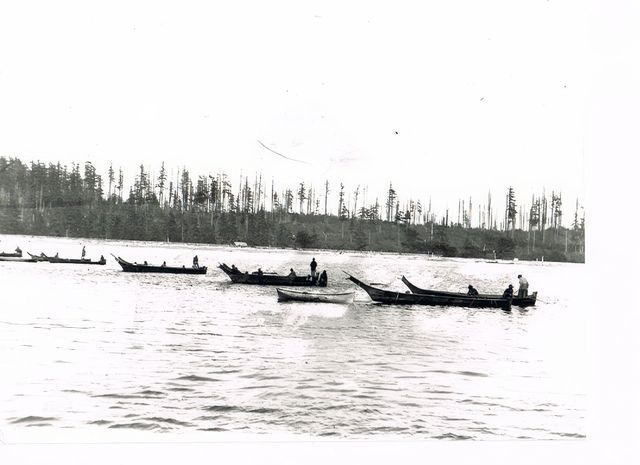
The Lummi, who call themselves Lhaq’temish — the People of the Sea, lived by currents and tides, and within cedar forests so dense they softened the sound of rain. Their homeland stretched wide and wild — from the Fraser River, through the San Juan Islands, down into the deep reaches of Puget Sound. They did not measure land in acres. They measured it in salmon runs, shellfish beds, berry seasons, and the quiet language of waves against stone.

Cedar trees became more than wood. They became homes. They became canoes. They became memory.
Longhouses rose from split planks. Fires burned low and steady. Families moved with the seasons — fishing when the rivers ran thick with salmon, hunting elk and deer in autumn forests, gathering roots and medicine where the earth softened in spring. Life moved to the rhythm of the tide: in, out, always returning.
Then the wind changed. Ships appeared on the horizon. Maps were drawn. Borders were imagined.
In 1855, ink pressed onto paper became law. The Treaty of Point carved away a world that had never needed carving. Vast homelands were reduced to lines on a map. Villages disappeared. Fishing places that once fed generations became restricted. Sacred places were cut off behind boundaries decided by people who did not know the tides.

But water does not forget. And neither did the Lummi. Quietly. Relentlessly. They endured.
They carried songs forward. They kept carving canoes. They passed stories by the firelight. They survived boarding schools, land loss, broken promises, and the slow erosion of original stories from official history. They learned English not to forget their language, but to defend it. They learned the systems of courts and governments to protect the rights that their ancestors had never surrendered in spirit. The tide went out. But it did not stop returning.
In the early 1990s, far from the longhouses and canoe routes, the land shifted again. Bulldozers replaced paddles. Survey flags replaced cedar stakes.
Developers arrived with plans, sketches, and a vision of luxury. Wetlands were sculpted into fairways. Natural bends in the earth became bunkers. Quiet meadows were shaped into greens that ran smooth as glass. They called it Loomis Trail.
Designed by Graham Cooke, it opened in 1993 as a championship golf course meant to rival the best in the Northwest. And it succeeded. Water shimmered along nearly every hole. Morning fog lifted off the fairways like breath rising from ancient ground. It became part of the grand Semiahmoo dream — refined, exclusive, admired.

A strange rhythm emerged. Members played on certain days. The public on others. An unusual peace between private and open, access and restriction. Golfers came and went. Seasons turned. Rain softened the edges of the sand. The grass grew in obedient lines.
But beneath it all, the land remembered what it was before it was shaped. Land has memory. Water has memory. So do people.
In 2018, something almost unheard of happened. The Lummi Nation bought it back. There were no triumphant headlines. No dramatic parades. No celebration that could capture the meaning of that moment. Because this was not conquest. This was return. It was not about owning land. It was about resuming responsibility.
About standing again as caretakers of a place that had always been part of their story. A place that held echoes of footpaths, fishing camps, quiet prayers, and the steady rhythm of paddle strokes moving through saltwater fog. They could have shut the gates. They could have made it private. Protected. Reserved. They didn’t. They opened it wider.

They made Loomis Trail fully public, welcoming anyone to walk the fairways. Not to erase its past — but to add meaning to its present. They connected it to Silver Reef Casino Resort, not simply as a resort experience, but as a way of sharing hospitality, pride, and economic future with their community.
Golf became something different here. Not just a sport. But a walk-through story.
Today, when a golfer stands on the first tee and looks out across the wetlands, the view is quiet. Elegant. Still. But the silence is layered. The water along the fairway is not just a hazard. It is a memory of tides.
The trees are not just framing. They are descendants of forests that taught families how to live.
The wind off the Salish Sea does not just cool the skin.
It carries stories that were never written down.
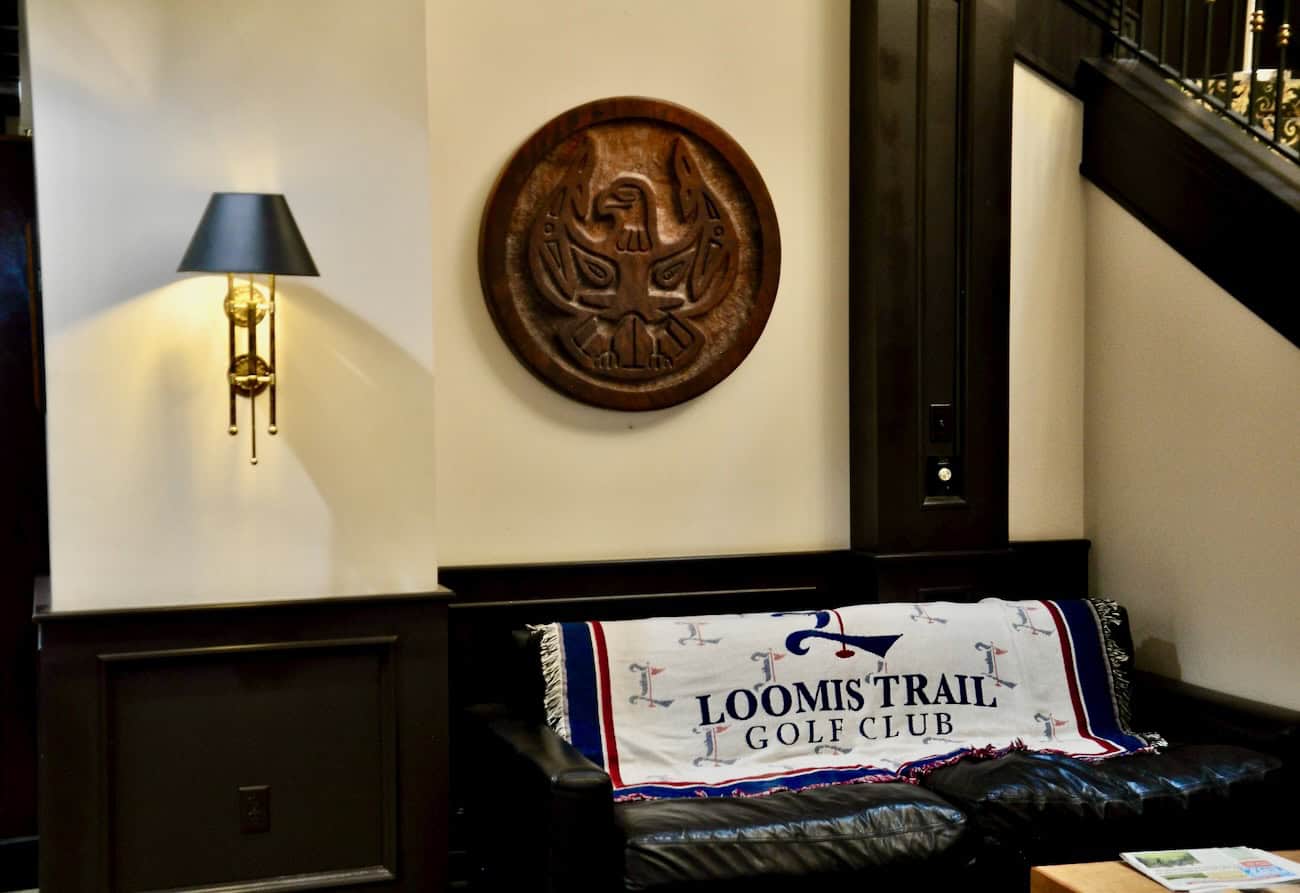
Clubs swing. Balls rise. Footsteps soften into grass. And beneath every step is a story older than the game. This is not just a course. This is not just a landscape. This is a place that was taken. Reshaped. And finally returned.
Loomis Trail is where water remembers. Where land listens. And where history, quietly, has found its way home. As you walk the fairways, put an ear to the ground and hear the pitter patter of feet, the wind whistling through the trees, and the reeds brush across the ponds. Let the spirit of the Lummi Nation take you on a journey, one that will open all your senses.
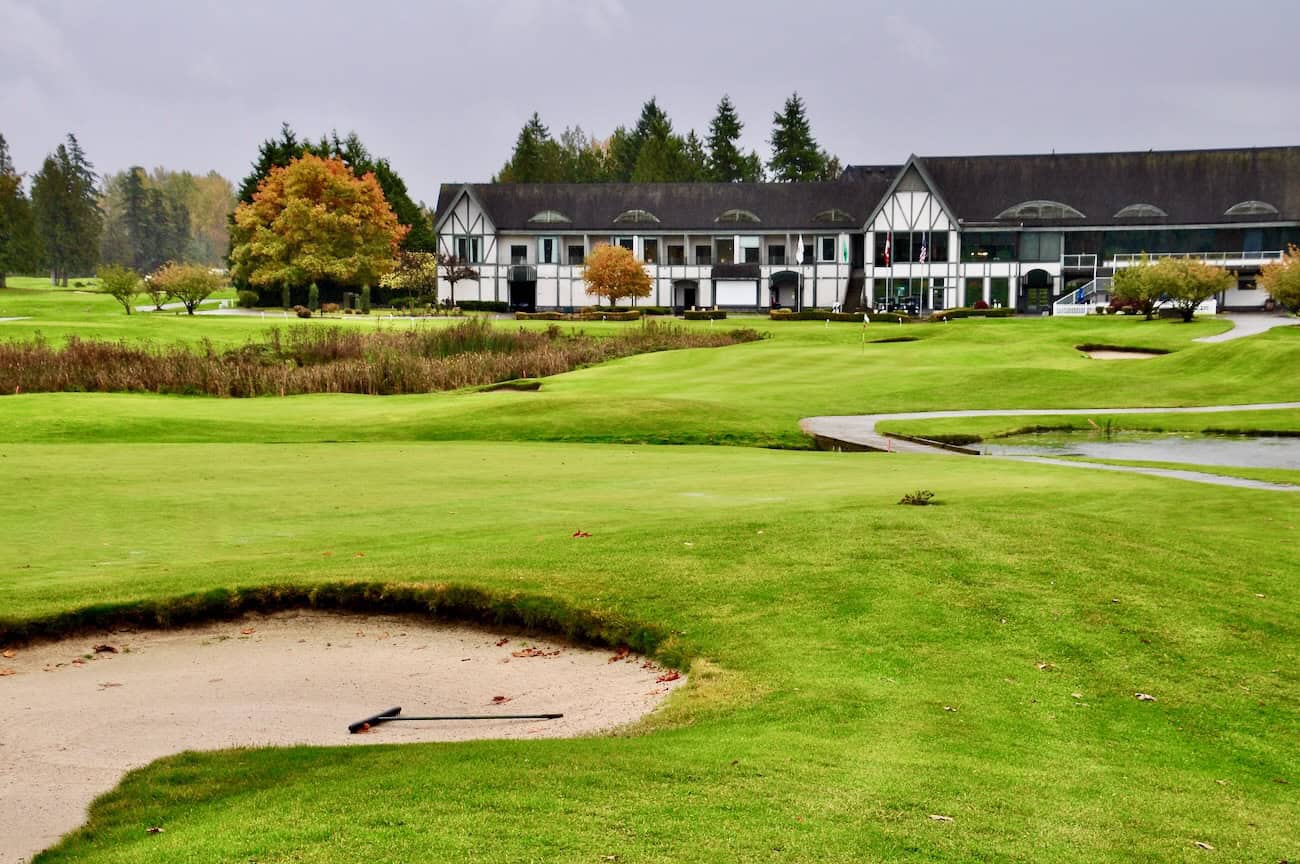
The clubhouse is grand yet sparse. The possibilities seep into every crevice, every corner, but right now the focus is golf. Check-in, grab your clubs, and find your way to the driving range, then putting green. Tune the swing and find the pace and move onto the first tee.
Let’s Play the Course…
Hole 1
The starting hole at Loomis sets the tone for the day. Deep green hues frame the fairway as trees rise and fall in soft highs and lows, creating a natural rhythm from tee to green. Humps and bumps ripple through the fairway like a black diamond run at Snoqualmie Pass — bold, unpredictable, and full of character.
Water creeps quietly near both tee and green, present but passive — a gentle warning of what lies ahead rather than a threat you must fear. Favor the right side off the tee and shape it left if you can. The dogleg comes at you in perfect position, inviting a confident turn. A bunker guards the right side of the green, ready to collect any approach that drifts too far, so err on the side of caution and keep it safely away.
Open your round with a steady par, maybe even that elusive birdie, and prepare to disappear into the thicket of pine that calls you forward.
Hole 2
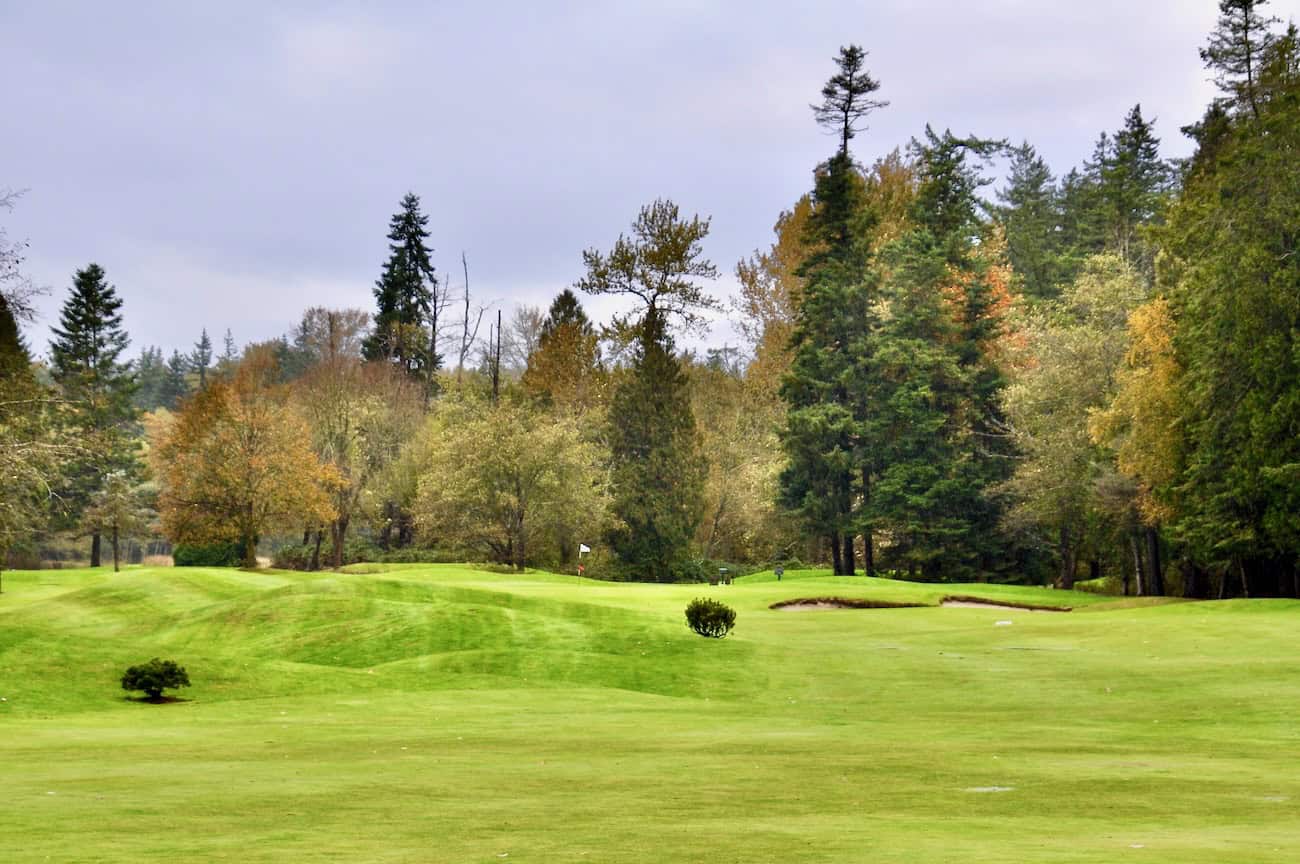
One of the hardest tests on the course arrives almost immediately. There is no time to settle in. No slow build. The second hole demands your attention the moment you step onto the tee. This par five bends deliberately to the right halfway down the fairway, a graceful curve that tempts you to shape the perfect shot. A drive that starts left and falls gently right unlocks the chance to reach the green in two — but temptation comes with teeth. Water stretches in from the right, quiet but hungry, waiting for anything pushed too far.
Pick a tree down the left and trust it. Let the ball turn from there. Let it follow the bend like it was meant to be. If power isn’t in your hands that day, the hole offers another path. A solid drive, a second safely down the left, and a short to mid-iron third will leave you in control. No heroics required. The green is kind, willing to receive a well-struck ball. Short is safe. Long is trouble.
Survive this one, and you’ll feel like you’ve earned the rest of the round.
Hole 3
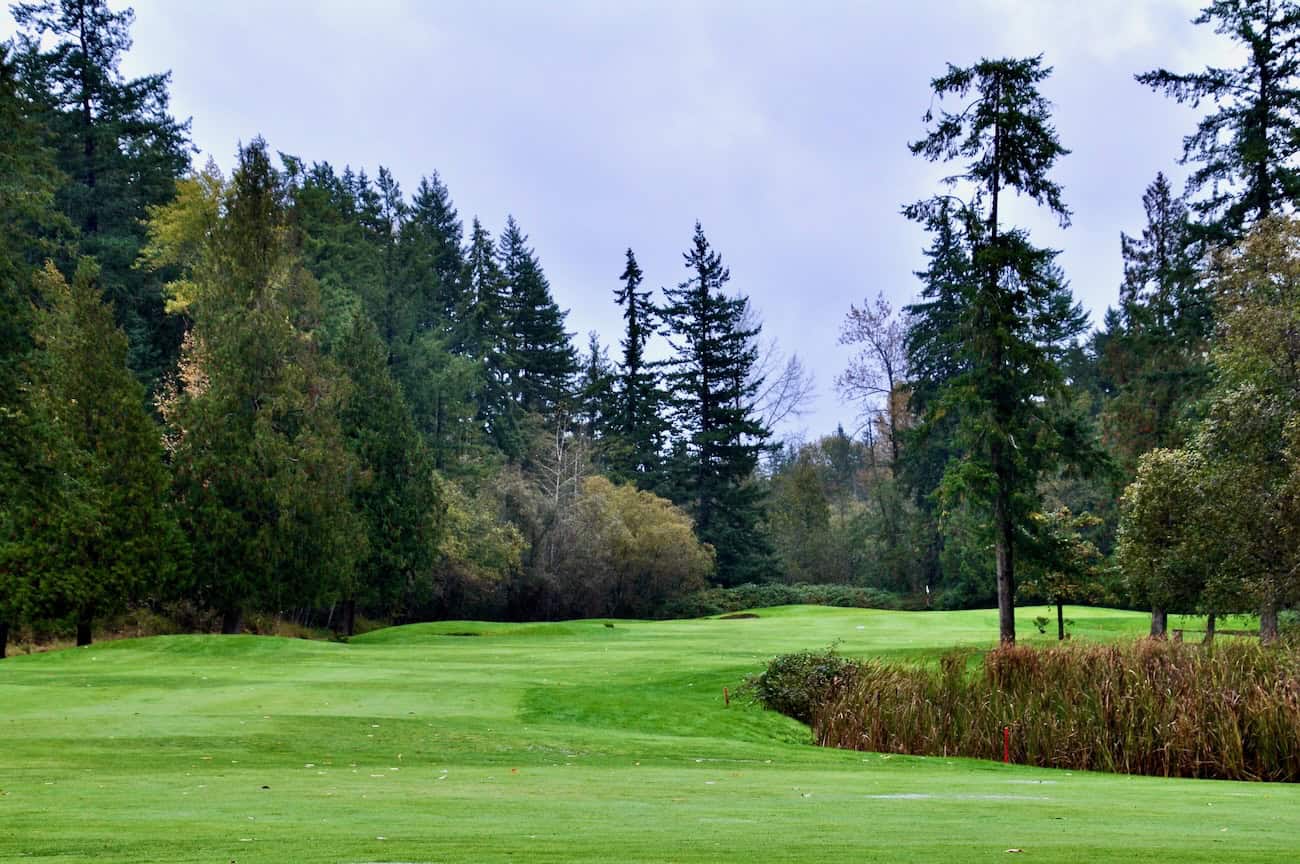
A cheeky little par three slips quietly into the round at the third, arriving almost before you’re ready. Delicate in length but rich in texture, it’s a hole full of creativity and quiet confidence — beautifully styled, thoughtfully shaped, and far cleverer than it first appears. It may be short. It may look gentle. But make no mistake — this one can bite if you grow careless or greedy.
The smart play is simple: aim for the heart of the green and be sure to carry the front. Let the ball land softly and release where it will. Anything too bold is quickly punished. Behind the green, the world goes still. The backdrop is serene and almost meditative, asking you to slow down, breathe it in, and enjoy the walk forward. This is a moment to savor — a soft pause in the round — and a rare, honest chance at birdie.
Hole 4
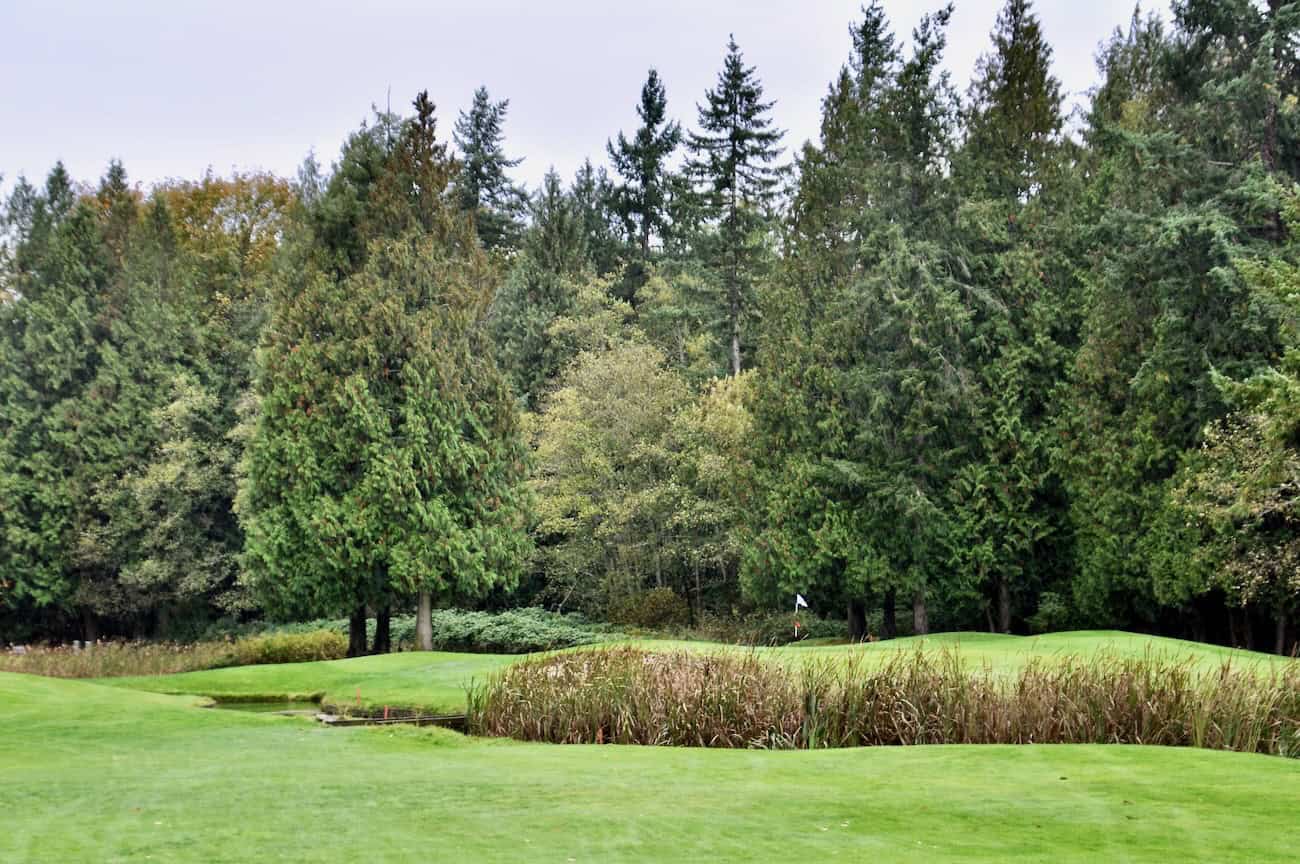
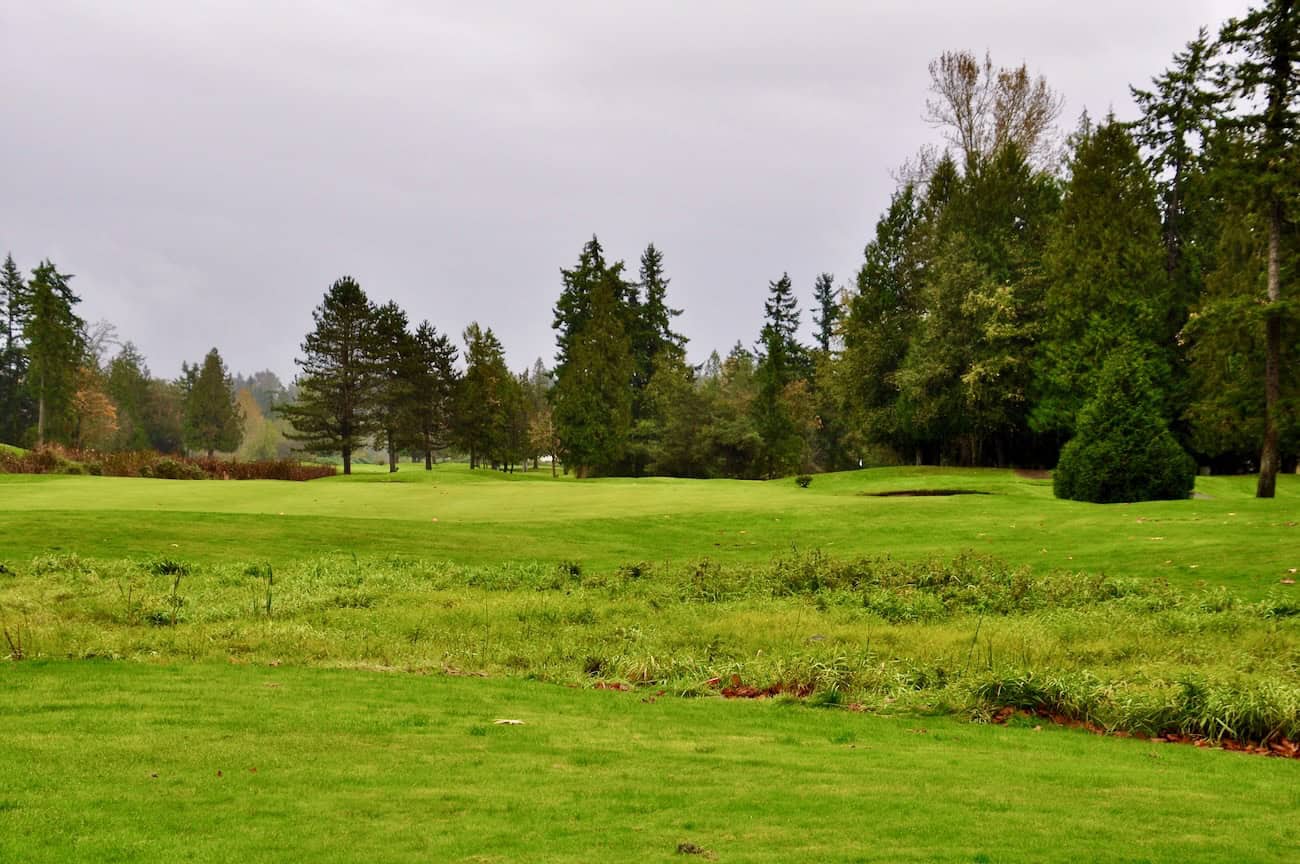
From the beauty of the par three, you step gently into a par four that feels like a breath — a moment of calm as the front nine begins to settle into rhythm. Straight in appearance and honest in design, it offers a rare sense of clarity as the green waits patiently in the distance. But Loomis never fully lets its guard down.
Water lingers along the fairway, both from the tee and as you near the green, always present, always watching. Sand freckles the entrance to the putting surface, ready to punish even the smallest misstep. The ideal drive hugs the left side, tight enough to earn the best angle, brave enough to flirt with the water that lines the fairway. That line opens the green in front of you, rewarding commitment with opportunity.
It may be marked as one of the easier holes on the card, but doubt lingers as you stand over your ball. Is it truly kind — or simply quiet before what lies ahead? Take it gently. Take it wisely. Walk away with a number that feels good and carry your composure to the next tee.
Hole 5
The par threes on the front side may be short by yardage, but they are mighty in spirit and bold in design. This one stands as proof — small in distance, large in demand.
A full body of water stretches between tee and green, asking for a committed swing and a clean carry. There is no easing into this shot. You choose your club, you trust it, and you let it fly. A hungry bunker waits short and left, ready to swallow anything that hesitates. To the right, a narrow trickle of water lingers in the background — far enough to feel distant, close enough to stay in your mind.
The pin is the real storyteller here. If it sits tucked back left, resist the temptation and play for the center. Anywhere else, take aim and let it go. This is a hole that rewards confidence, clarity, and a single fearless swing.
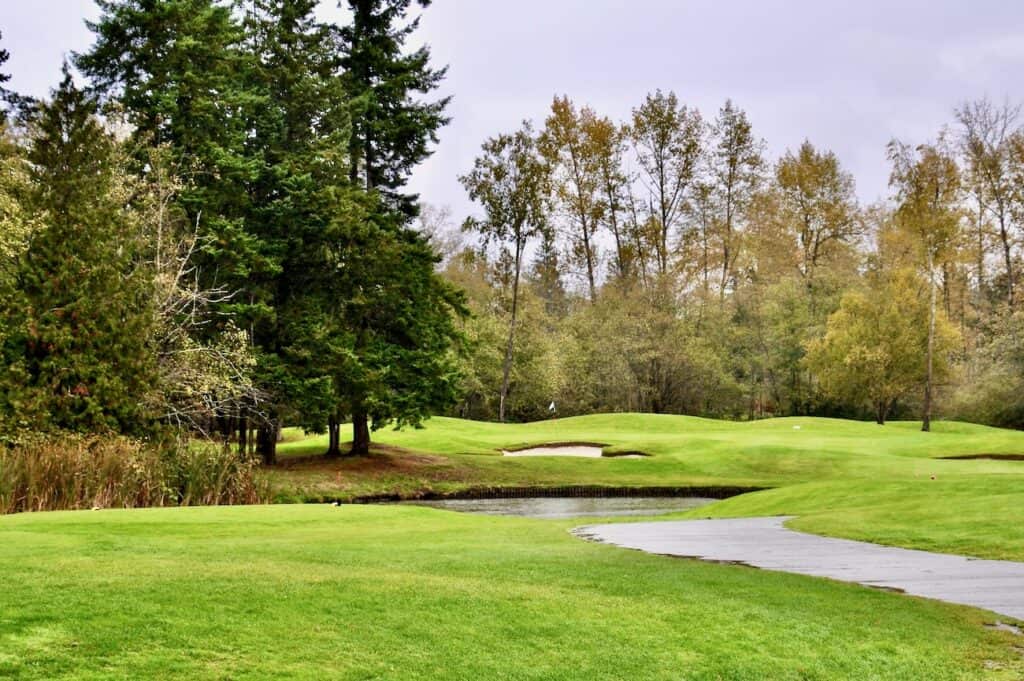
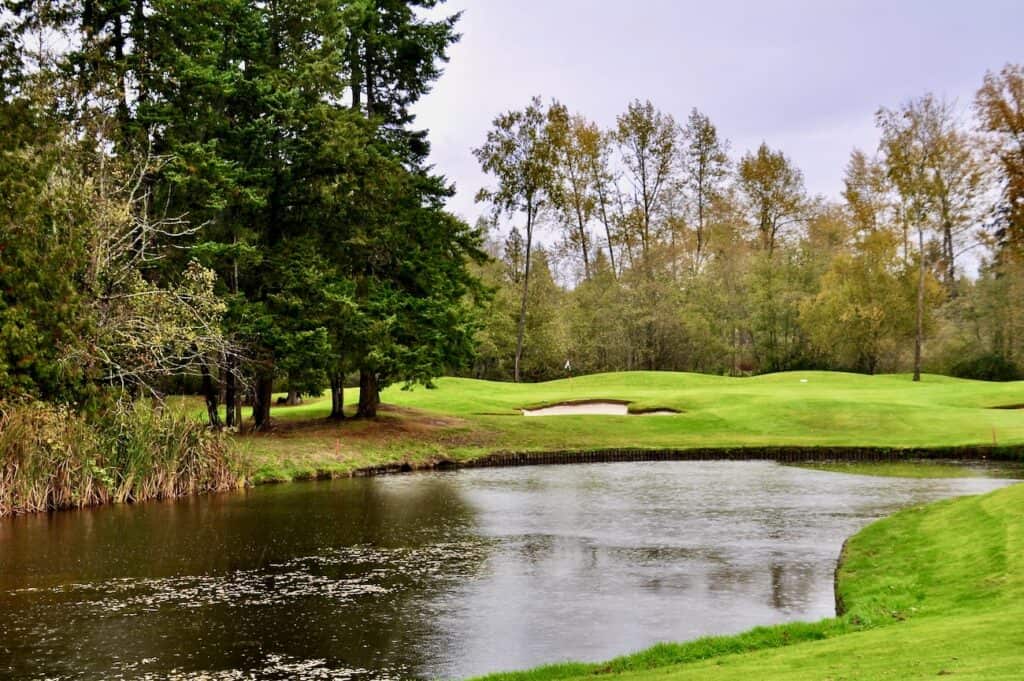
A Hungry Bunker at the 5th Hole
Hole 6
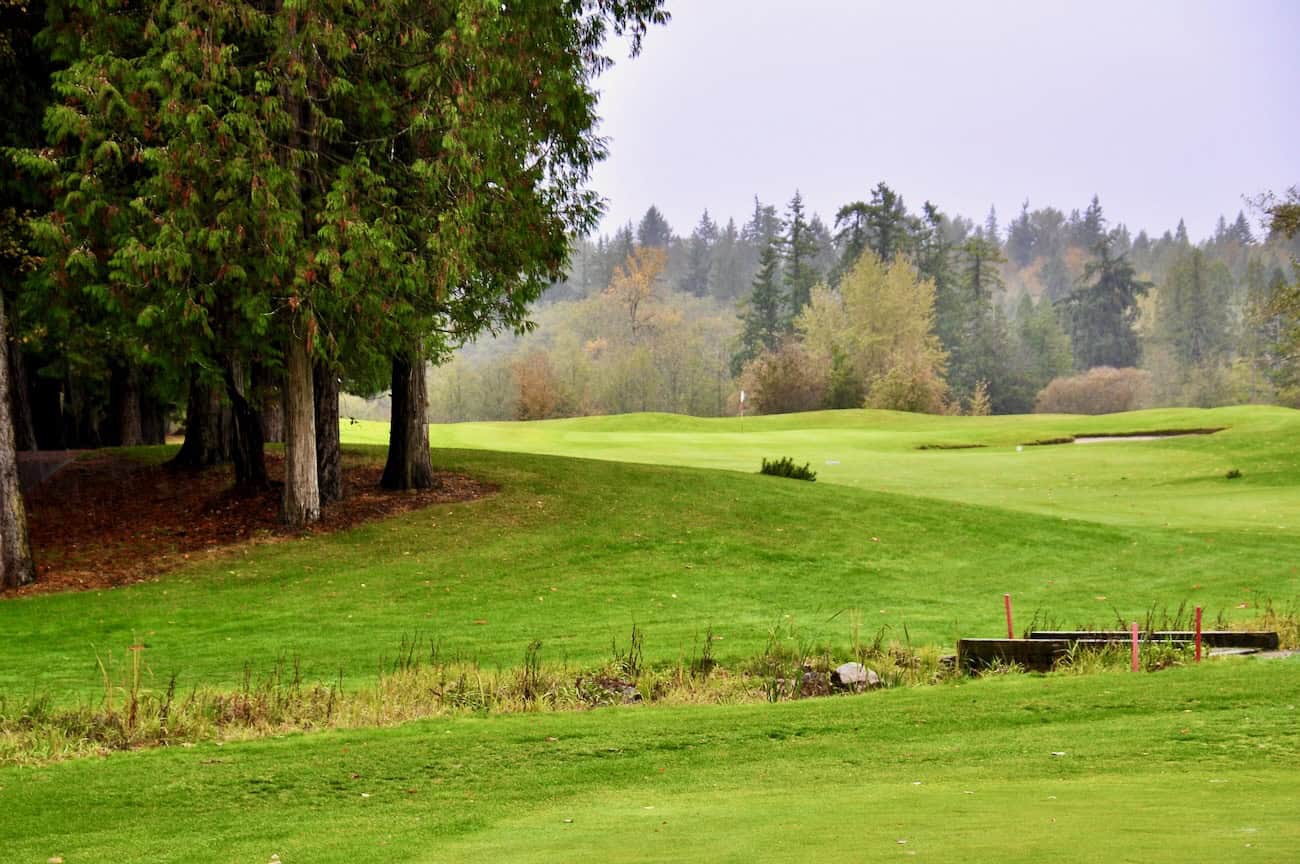
A relentless par five raises its mighty head at the sixth, and by the time you reach the tee, you can feel its presence. This is not a hole that offers favors. It demands commitment from the very first swing.
A strong tee shot that hugs the center of the fairway is essential — your only real gateway to what comes next. From there, the hole bares its teeth. Water cuts across the landscape, guarding the landing zone of your second and forcing a decision. If length is in your hands and confidence in your heart, take your shot and fly the creek. This hole will respect the bold.
But if the smart play is to lay back, it offers that path as well. You’ll be left with plenty of work — yardage still to cover and pressure still alive — but that’s okay. This is where touch matters. This is where your short game earns its keep. Water shimmers to the right of the green, but it stays out of the fight, more spectacle than threat. Survive this hole, and you’ll feel like you’ve wrestled something wild and walked away standing.
Hole 7
Water cuts boldly back across the fairway from the tee at the seventh, drawing a sharp line in the sand before you’ve even swung. This is a big par four — straight in shape, tight in feel — and it asks for precision from the very first strike. The ideal drive finds the right side of the fairway, where the hole begins to open like a door slowly swinging wide. From there, the green reveals its best angle.
A line of bunkers guards the right side of the putting surface, shaping the approach and encouraging a soft, gentle bend with your second. Turn it just enough and the ball will fall toward the flag, settling in close and offering a rare, honest look at birdie. Pour it in — and if you do — move quickly to the next tee with a smile you won’t try to hide.

Hole 8
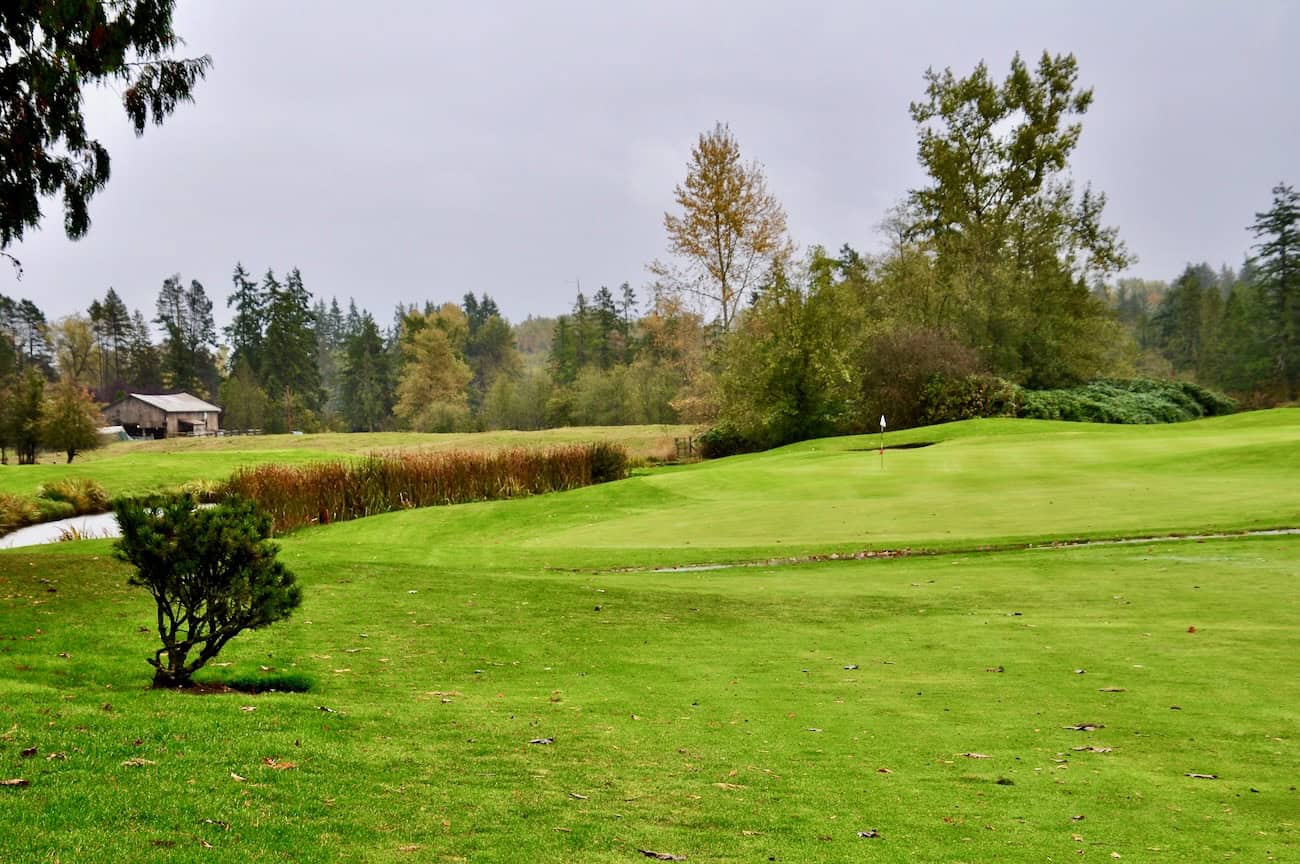
Beautifully sculpted from the pines along the Semiahmoo Peninsula, this par four strikes a confident pose as you settle onto the tee. It feels like a picture — framed by towering evergreens, still and patient — waiting on your first move.
A body of water rests just off the tee, close enough to tighten your hands and quicken your thoughts. That’s exactly the trap it lays. The swing here isn’t meant to be guarded. It’s meant to be free. Trust it and let it go. Trouble roams throughout the fairway — first in flashes of sand, then in glimmers of water as you move closer to the green. Yardage matters. Precision matters more. Leave your ball safely short of the pond and you’ll unlock the right-angle in. From the left side, the land does the work for you. Play your approach and allow the natural slope to draw the ball gently from right to left, guiding it home. This is a hole that rewards trust over tension, rhythm over force.
Hole 9
A stunning par four awaits at the ninth, a hole built for drama and a story that will stick with you long after the front nine ends. This is a hole that can leave you beaming at the turn—or shaking your head, needing a moment to catch your breath.
The key is simple: keep your drive down the left side to steer clear of the fairway bunkers on the right. Hug it tight, trust your line, and set up the approach from right to left, moving the ball safely away from the water that edges the right side of the green.
Long and short left aren’t disasters here; if you need a bailout, that’s your safe harbor. Play it smart, breathe in the view, and walk off the front nine knowing you’ve met one of Loomis’ true characters.
Making the turn at Loomis is a quiet pause in the action. If a snack or drink is calling your name, the bar and grill is ready — a chance to catch your breath, swap stories, or reload for what comes next. Take a moment to check your bag. Did the front nine’s water features claim a few extra balls? Replenish and reset, because the back nine is just as wet, just as wild. Then, with a smile and a sense of anticipation, wander toward the 10th tee. The second act of the day is waiting.
Hole 10
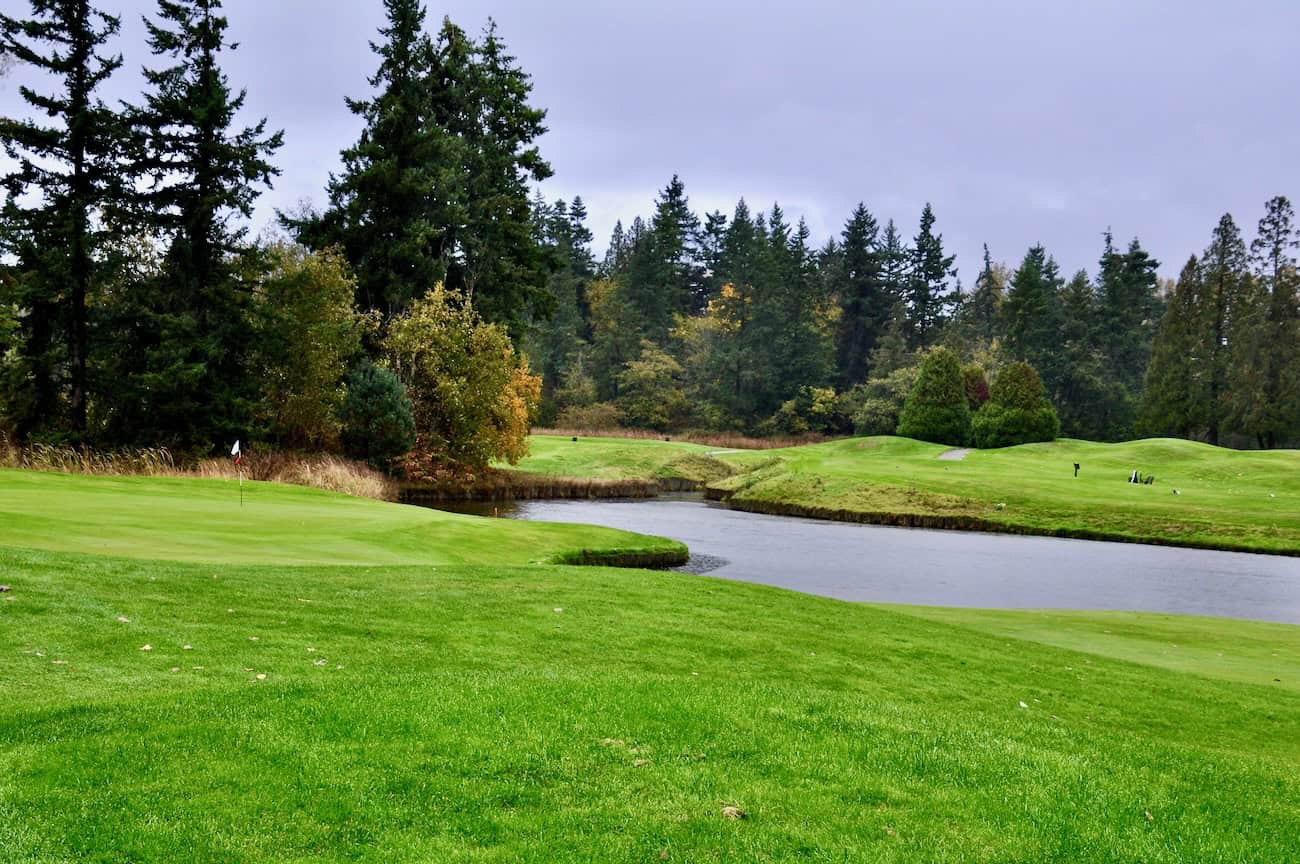
The back nine begins with a hole that feels like a quiet promise. Standing on the tee, the water glimmers just beyond your sightline — not a threat, but a gentle invitation. A confident drive over that sweet stretch of water, favoring the right side, opens the door to the kind of approach of which every golfer dreams. The green leans softly from right to left, asking only that you trust the moment. It’s the kind of hole that lets you breathe, settle in, and believe that birdie is not just possible — it’s expected.
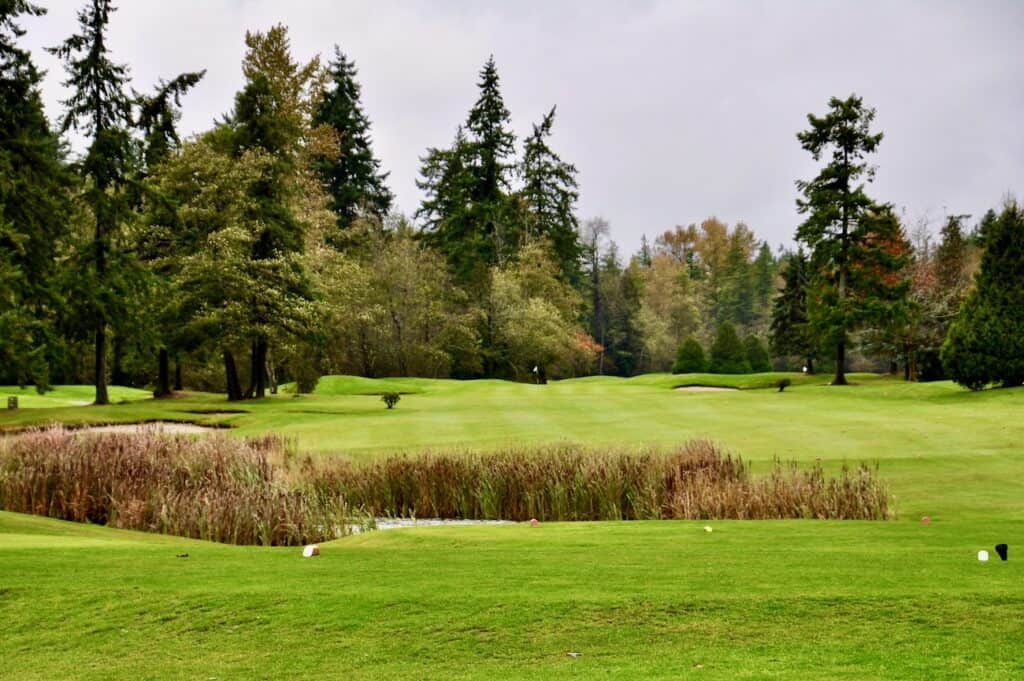

Textures and Imagination on the 10th Hole
Hole 11
Standing on the 11th tee, you face a demanding yet beautifully crafted par 5 that feels both bold and reachable. Water glimmers in front of the tee, then quietly traces the right side of the hole all the way toward the green, framing the fairway like a silver guide. The hole bends left, guarded by a fairway bunker sitting perfectly at the corner of the dogleg, tempting you to be brave. A confident drive favoring the right side opens the door for a bold second toward the green — or, at worst, a simple pitch for your third. It’s a hole that rewards courage and touch, offering a genuine chance to turn good golf into birdie.
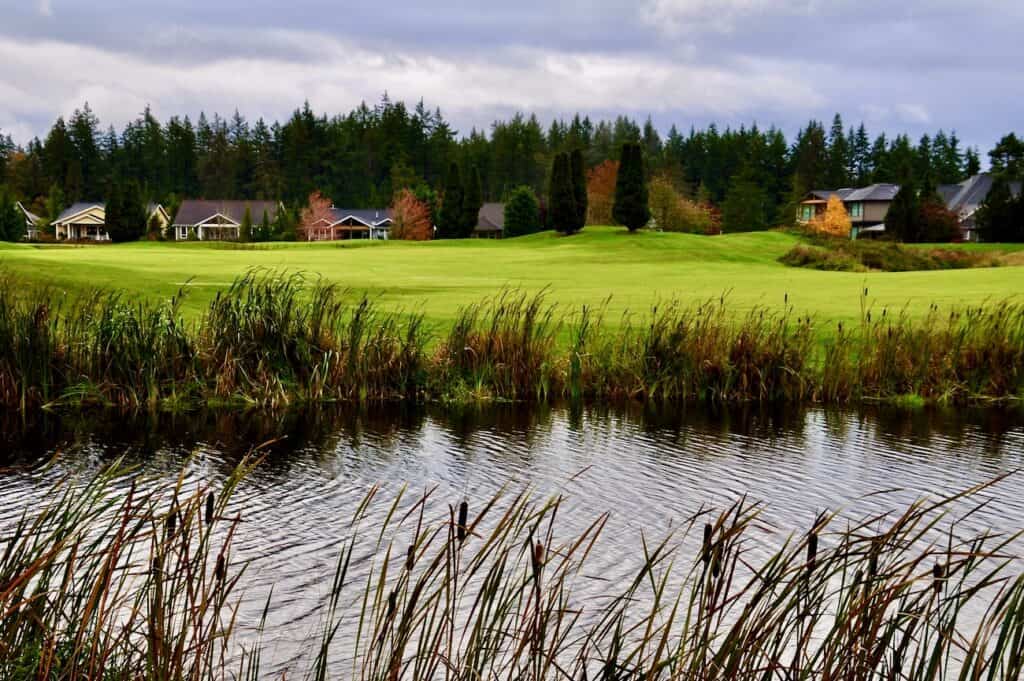
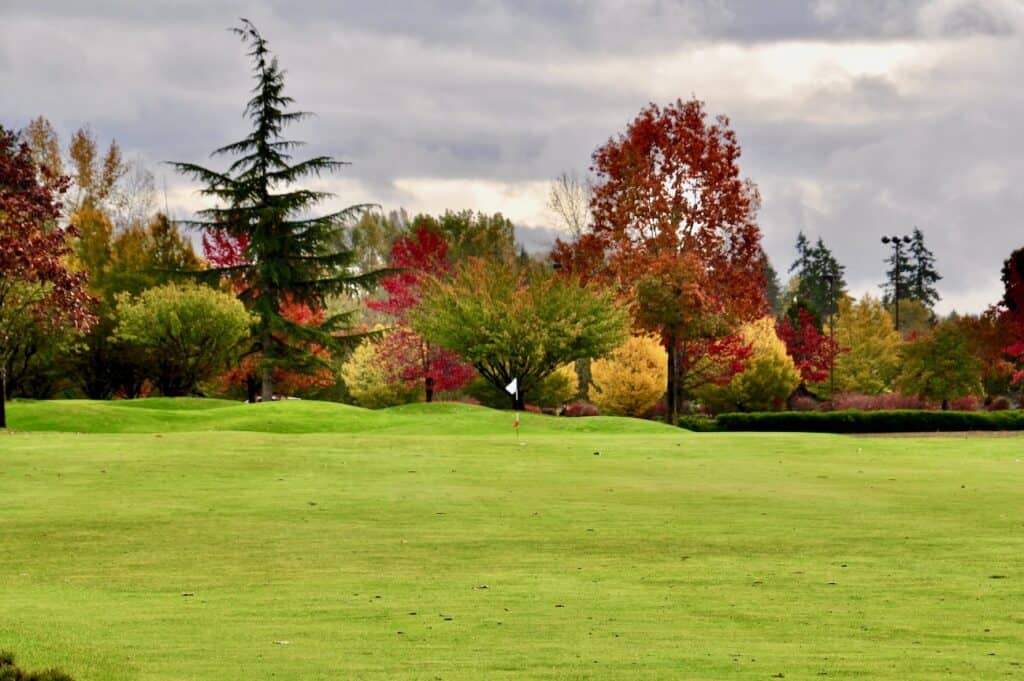
Bending it for Two at the 11th Hole
Hole 12
This par 3 is as beautiful as it is unforgiving. Tucked against the quiet trails of Loomis, the tee rests beside the same water that shadowed you on the 11th, now calm and reflective. A chain of bunkers guards the entire left side — front and back — daring you to trust the right half of the green. The best line is not the boldest, but the highest: a towering shot that lands soft, settles quickly, and leaves you staring at a real chance for birdie.

Hole 13
The 13th is simply fun — the kind of par 4 that sneaks a smile onto your face as you stand on the tee. But it does ask you to think. Water and sand stretch across the fairway right at the perfect landing zone, daring you to bite off too much. Lay back or carry it clean, and the hole suddenly feels wide open. The ideal play is a gentle drive favoring the right side, setting up a shorter, stress-free approach. A lone greenside bunker waits to the right, so aim true and let this hole be exactly what it’s meant to be: fun.
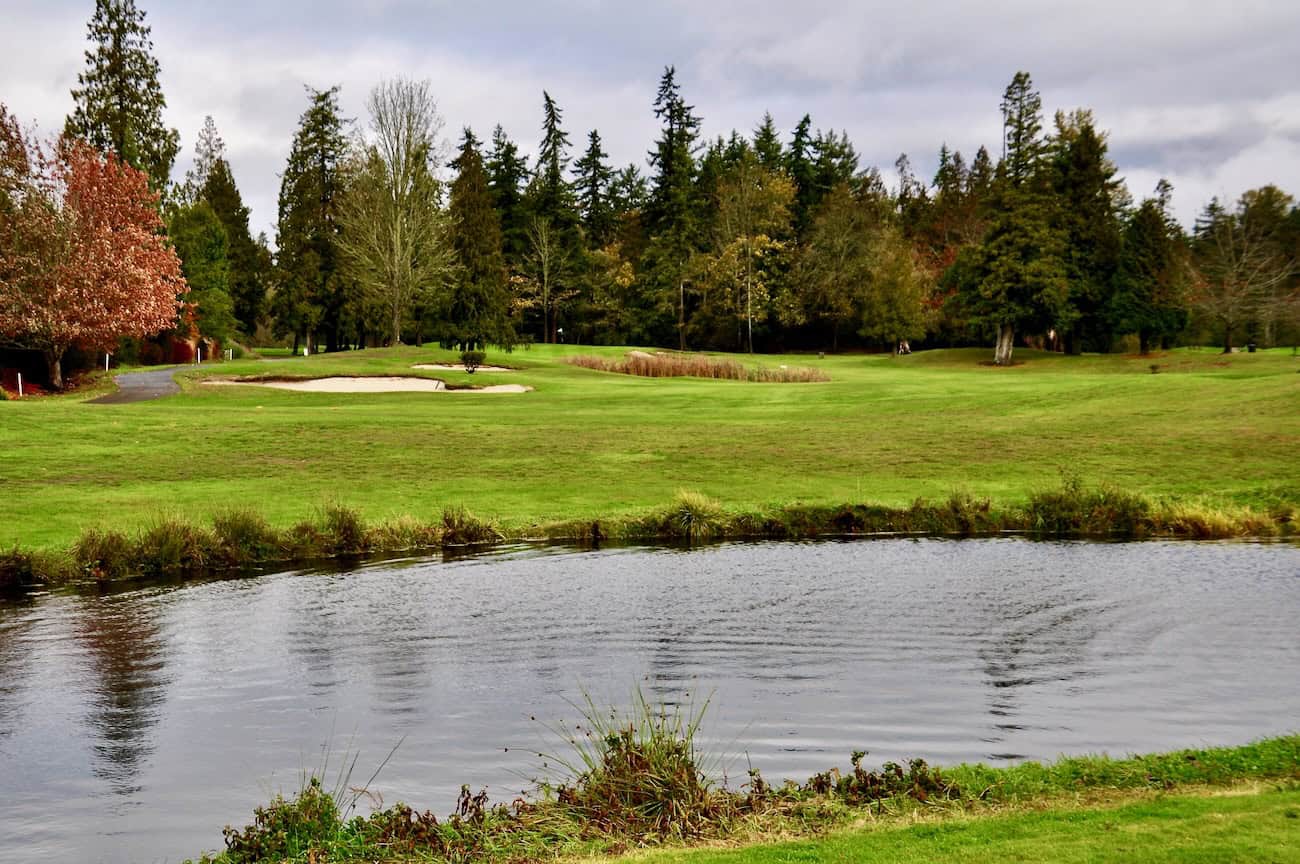
Hole 14
The par 5 fourteenth winds quietly through the trees of Loomis, a hole that feels more like a journey than a number on the card. It asks for imagination as much as strength, rewarding those who balance courage with restraint. Water lurks in scattered pockets, while bunkers dot the fairway, waiting for a moment of carelessness. The yardage is long, but it’s the artistry of shot making that matters most. If the swing feels uncertain, trust your straightest clubs and let the fairway be your friend. Here, par is not a disappointment — it’s an achievement.
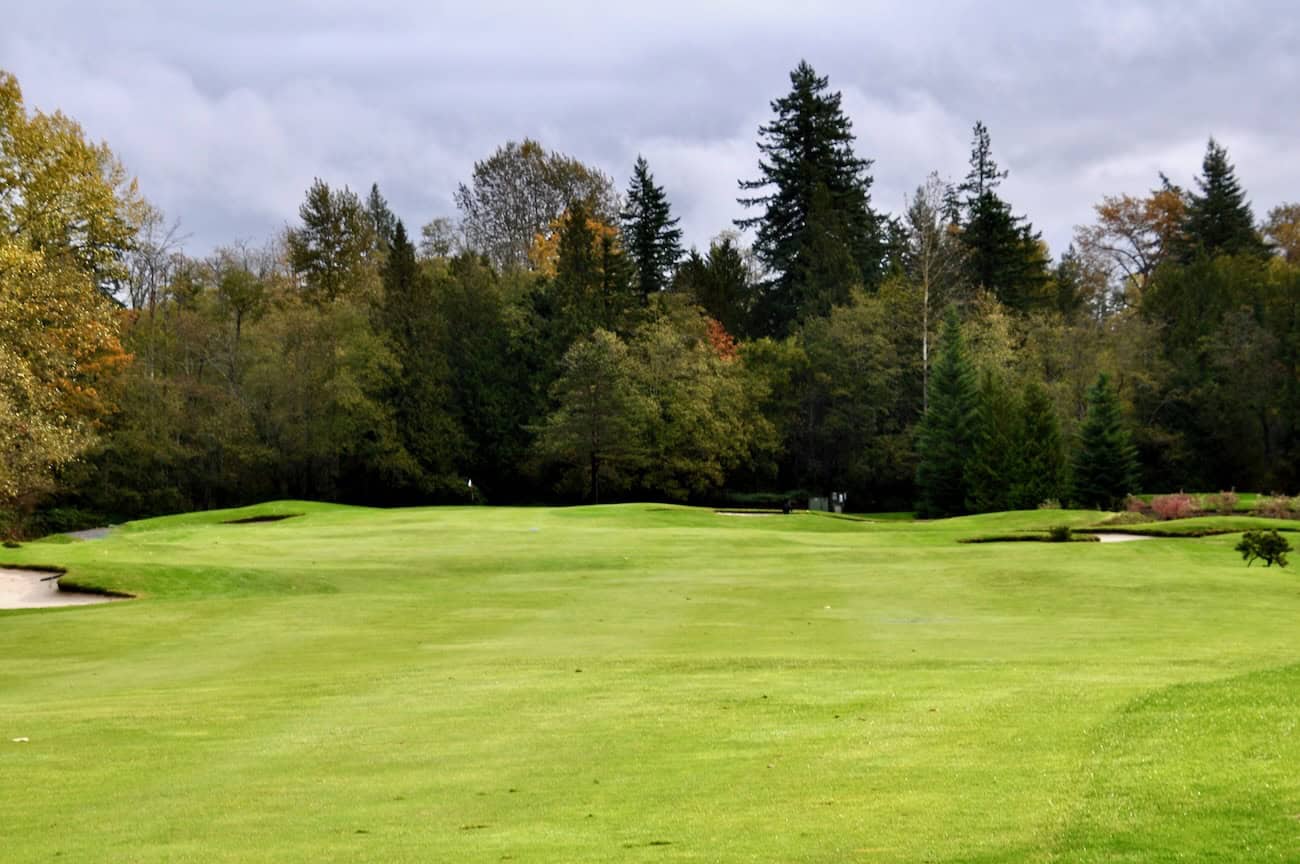
Hole 15
The 15th greets you with a par 4 that looks simple at first glance — straight, tidy, and just a touch narrow off the tee. Step into it, however, and the hole begins to whisper its secrets. The fairway opens in the middle, but watchful bunkers stand guard between the short grass and the water to the right, while a line of trees presses quietly along the left. Though short on the card, it asks for respect. A confident drive split down the middle sets up a short iron into the green, where the left half offers the safest look and the kindest roll.
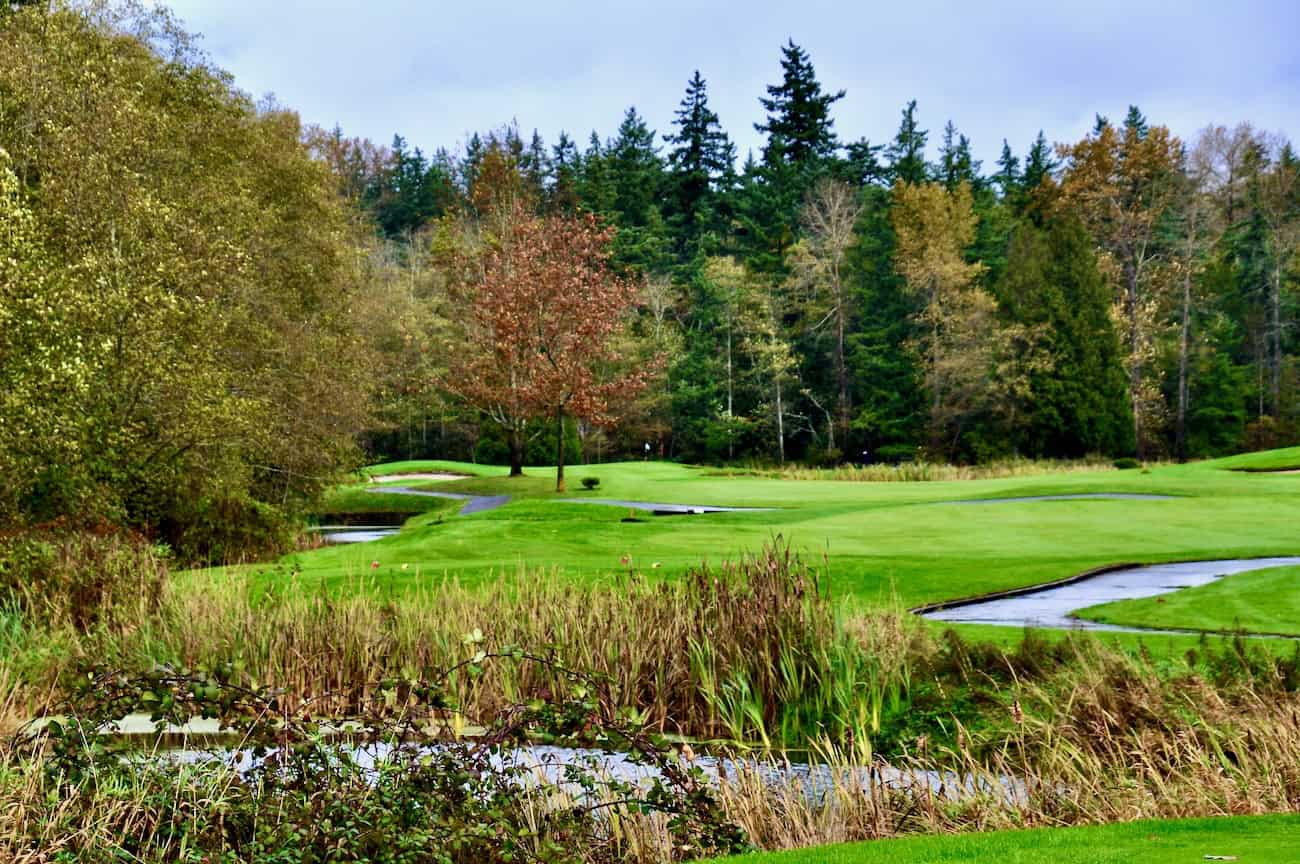
Hole 16
The 16th arrives as a beautiful, nerve-testing par 3 — a small hole with a big voice. Water shimmers off the tee and waits again just short of the green, demanding your full attention from start to finish. There are no half measures here; every pin position requires a true carry. The smart play is the heart of the green, where safety lives and birdie still whispers. Miss right and the bunker stands ready; drift left and the false front pushes the ball back toward trouble. From the back tee, it’s a stern, powerful test. From the forward tees, it still asks for respect — just with a slightly kinder tone.
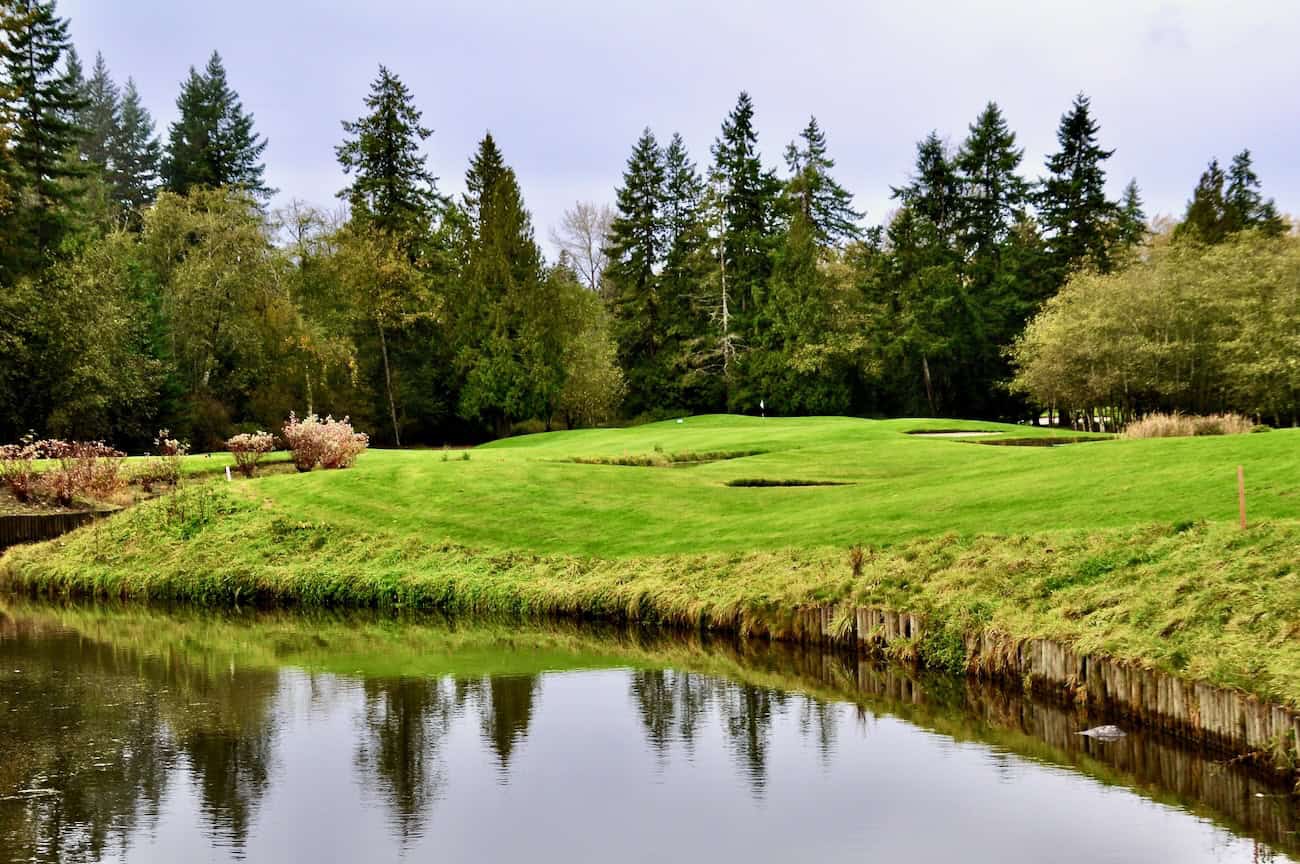
Hole 17
One of the most beautiful — and most intriguing — holes on the course unfolds here as a graceful dogleg left wrapped in quiet danger. Water traces the entire right side before slicing boldly across the fairway, forcing both thought and commitment from the tee. Beyond the stream, a series of bunkers stretch along the right, waiting for any shot that drifts from its true line.
As you turn toward the green, the drama deepens. Water guards the front and right, while two kidney-shaped bunkers sit like sentries on either side of the putting surface, tightening the approach and sharpening the moment. With the round near its end, this hole asks for focus, calm hands, and one last stretch of belief — because here, every good swing deserves a quiet, confident tap-in.

Hole 18
The finishing hole at Loomis Trail is a fitting finale — a par 4 wrapped in water and sand, and rich with quiet tension. A gentle dogleg to the right asks for a committed tee shot, best played down the left side, opening a clear and confident look into the green. What awaits is a slippery final test: a putting surface that leans right to left, subtly feeding everything toward the waiting water. A bunker stands guard to the right, so favor the safe inside line and trust your touch.
From there, it’s a simple walk to tap out, letting the round settle into memory. Follow the gentle pull of conversation, of hunger, toward a well-earned bite at the clubhouse. Sit, if you can, in the history that surrounds you — in the silence, in the spirit of the Lummi. Feel the land beneath your feet, the water at your side, the air filling your lungs. All is fragile. All is sacred. This is more than a course. It is a living part of their heritage, a story held in every tree, every ripple, every breeze. Play with gratitude and carry it with you.
To continue reading please login in or join
To access all of our Course Reviews, Guides, Tips, Lessons, and so much more!