Course Review
Heron Point Golf Course
Hilton Head, south carolina
A Nature Walk as Well as Golf
AMW Faves List
Favorite Par 3 – #13 – well designed, with sand and water shaping every decision—and the ever-present alligators adding a quiet reminder that this is their domain, not yours.
Favorite Par 4 – #12 – a lovely, tree-lined fairway bends gracefully around large bunkers, rewarding a confident line while asking for thoughtful placement.
Favorite Par 5 – #6 Long but beautiful, offering multiple lines and tempting options for the long hitter willing to take on the challenge.
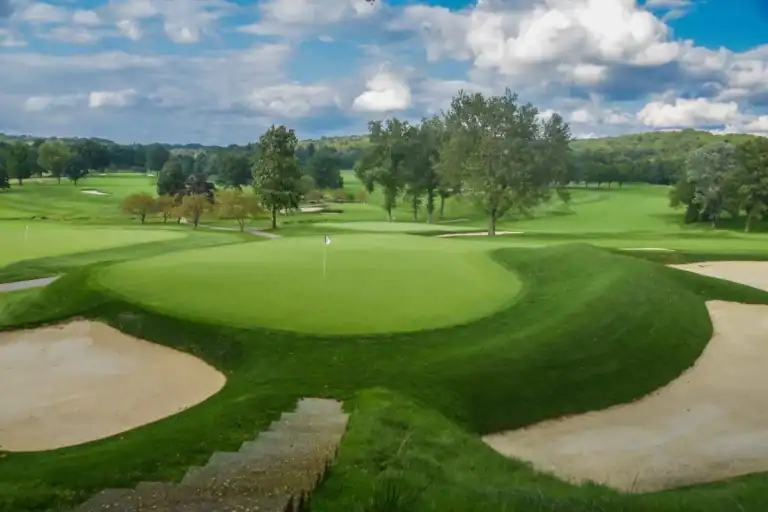
Favorite Hole Design – #18 – a classic Pete Dye design, defined by rolling undulations, sculpted berms, and strategically placed bunkers that demand both creativity and precision.
Easiest Hole – #10 – A straightforward par 4 that rewards solid execution without unnecessary complication.
Hardest Hole – #8 – long dogleg framed by tons of sand, challenging both your line off the tee and your commitment on the approach.
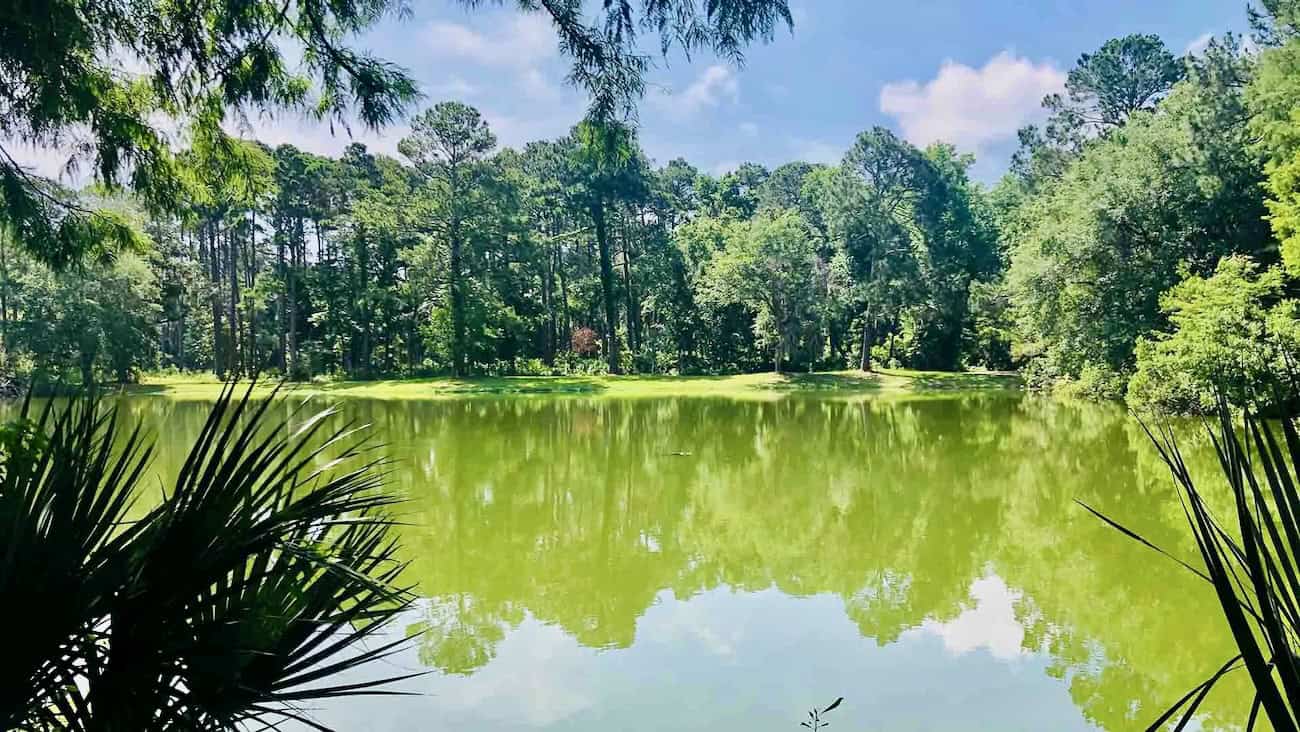
Favorite Extra Sighting – land of the alligator!
Favorite Apres Golf – nibbles and drinks at the Salty Dog
Where to Stay – Inn and Club at Harbor Town, Sea Pines Plantation
Where to Eat – Quarterdeck, Coast
PLAN AHEAD
Course Details
Address: 100 N. Sea Pines Drive, Hilton Head Island, SC 29928
Telephone: +1 (843) 842-1477
Website: www.seapines.com
Director of Golf: Bobby Downs
Architect: Pete Dye
Year Open: 2007
Greens Fees: ⛳️⛳️
Yardage: Dye – 7035; Blue – 6523; White – 6020; Gold – 5569; Green – 5151
What You Need to Know
It's AMW Story Time!
The story of Sea Pines has been told many times. Around dinner tables. In boardrooms. On golf courses at dusk. Each retelling carries its own emphasis, its own embellishments, yet the heart of the story never changes. It is, at its core, the story of one man, Charles E. Fraser, who believed that land could be developed without being destroyed, and that vision, if protected by principle, could outlast markets, trends, and even its creator.
In the early 1950s, Hilton Head Island was not a destination. It was remote, undeveloped, and forgotten by most of the modern world. There was no electricity, no phone service, no gas station, and only one paved road far to the north. The Lowcountry itself was among the poorest regions in South Carolina. Mosquitoes ruled the marshes, and dense maritime forests pressed hard against the Atlantic Ocean. Where others saw obstacles, Charles Fraser saw possibility.
A Yale Law School graduate who had briefly practiced law in Augusta, Georgia, Fraser returned south and joined the family timber business. The Fraser family of Hinesville, Georgia, along with the Hack family, owned thousands of acres on Hilton Head Island. Timbering was profitable, proven, and familiar. But Charles saw something else in the trees. Not simply lumber but space, beauty, and potential. Green, yes but not only in monetary terms.
Convincing his father, Gen. Joseph B. Fraser, to sell him land for development rather than clear-cutting it took time. Charles was proposing something that, at the time, bordered on irrational: selectively clearing land, preserving forests, limiting density, and binding future owners to strict rules about what they could—and could not—do with their property. Eventually, his parents supported the idea, trusting their son’s conviction.
To continue reading please login in or join
To access all of our Course Reviews, Guides, Tips, Lessons, and so much more!