Course Review

Royal Golf La Bagnia
Tuscany, Italy
Golf in the Tuscan Sun
AMW Faves List
Favorite Par 3 – #14 – down the hill and into the Tuscan countryside, this par 3 will take your breath away as you try to get a good score. Is it the signature hole? They all are.
Favorite Par 4 – #10 – A brilliant way to open the back nine; down the hill, away from the clubhouse, over the ravine, to a green that climbs uphill to meet you. Get it right, and birdie waits. Get it wrong, and the round may feel a good deal longer than eighteen holes.
Favorite Par 5 – #18 – The round closes with a long, uphill dogleg right; a par 5 so thoughtfully designed that leaving it behind feels harder than any shot you’ve played.
Favorite Hole Design – #15 – Unfolding before you, a dogleg par 4 that is tough but fair; it asks first for trust, then honesty, then full commitment, and finally, nerve.
Easiest Hole – #7 – This hole stretches out long, full of nerve but even more opportunity; play it well, and a well-earned birdie (or a tweet about it) is yours.
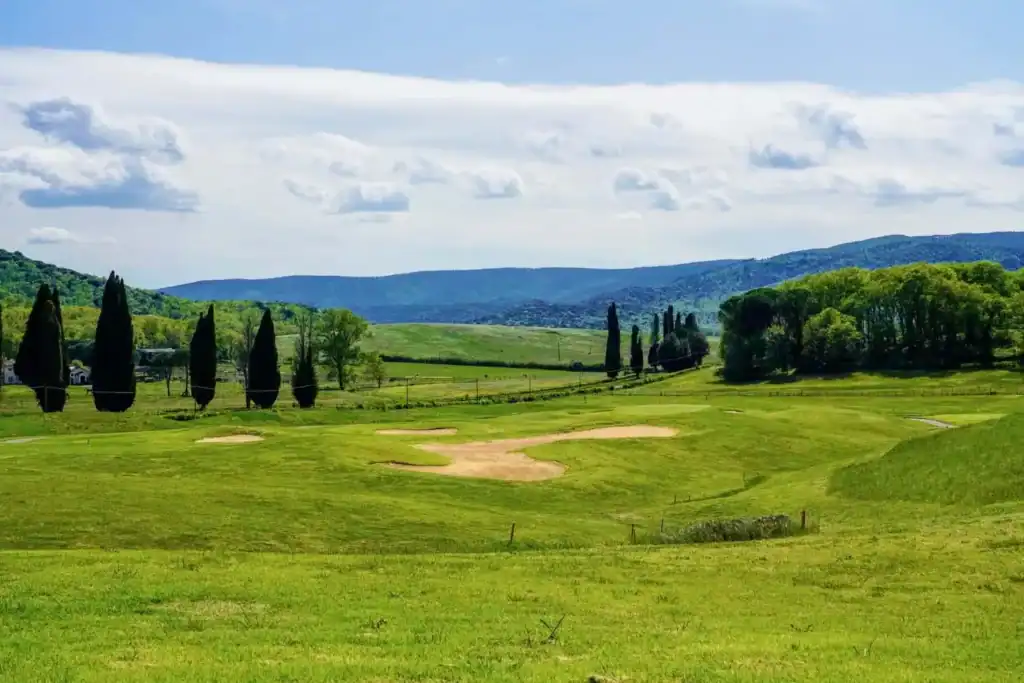
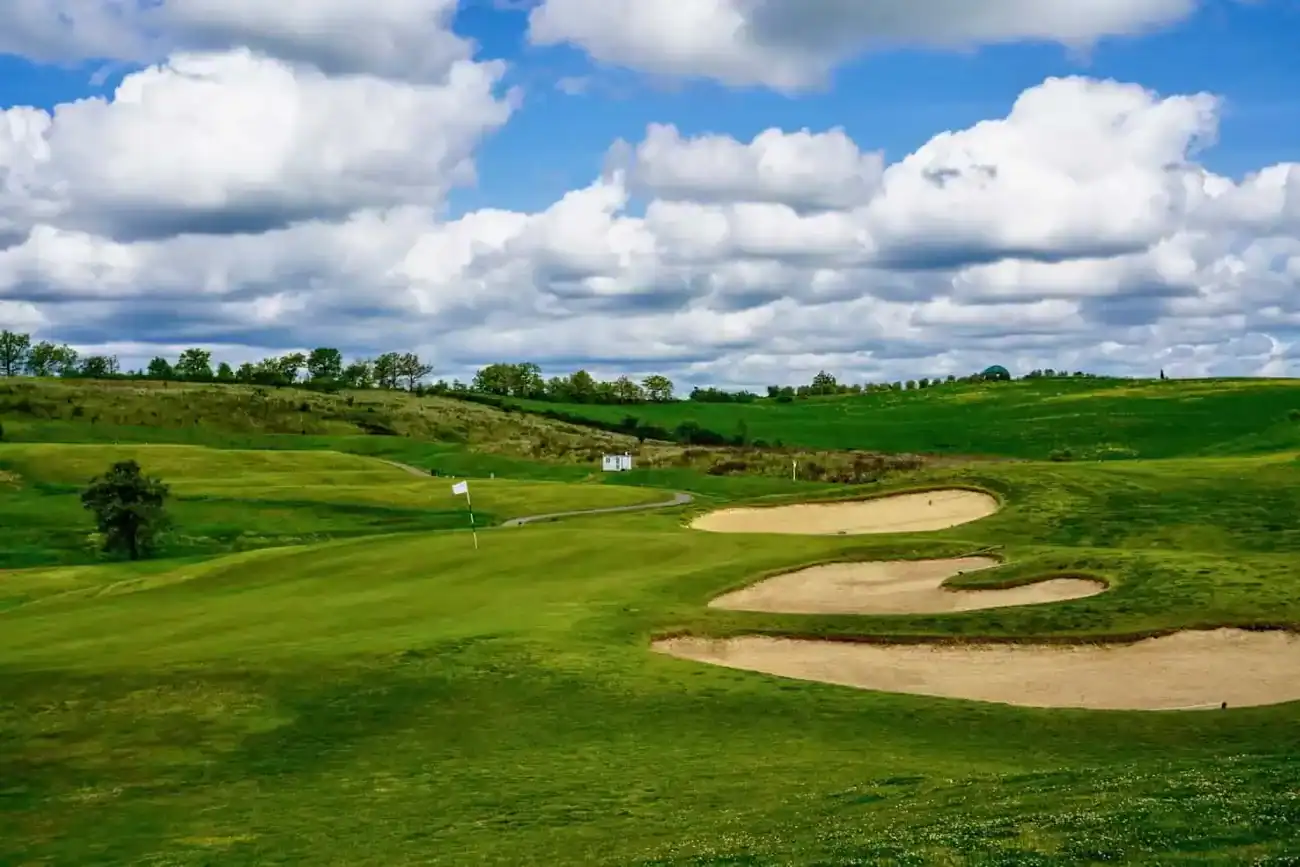
Hardest Hole – #12 – Uphill and ringed with sand, this hole asks for precision and length off the tee alike. It plays steeper than it looks; take two or three extra clubs into the green.
Favorite Extra Sighting – Stonework throughout the hillside.
Favorite Apres Golf – wine tasting in Tuscany, of course!
Where to Stay – Le Menice Di Stigliano, Casa Newton
Where to Eat – La Merla Osteria Boutique, Ristorante Dal Cateni, Il Vecchio Tinaio
PLAN AHEAD
Course Details
Address: Strada Statale 223 Siena–Grosseto Km 56
53016 Murlo (SI), Tuscany, Italy
Telephone: +39 0577 813000
Website: www.royalgolflabagnaia.com
Director of Golf: N/A
Architect: Robert Trent Jones Jr.
Year Open: 2009
Greens Fees: ⛳️⛳️⛳️⛳️
Yardage: White – 6101 meters (6672 yards); Yellow – 5606 meters (6131 yards); Blue – 5236 meters (5726 yards); Red – 4798 meters (5247 yards)
What You Need to Know
The Course Uncovered
Discover the story behind the course—from its history and design to the experience of playing it today. Tap the + to expand each section, journey through time, and explore the course one hole at a time.
To walk under the Tuscan Sky
Is to capture the feeling of time gone by.
A village built upon the hill,
The soul and mind it will fill.
Playing the game upon hallowed ground,
A home to papacy was rightly found.
So much history along the way,
The heart will fall and always stay.
Before there was a village, before there were walls or stone buildings or roads winding through the Tuscan hills, there was water. It came quietly from deep beneath the earth, warm, rich with minerals, carrying the scent of iron and the slow heat of the world below. The springs that would one day be called Santa Caterina did not arrive with fanfare. They simply rose from the hillside year after year, century after century, offering what the earth had always offered to those willing to stop and receive it.
The first people came for the water.
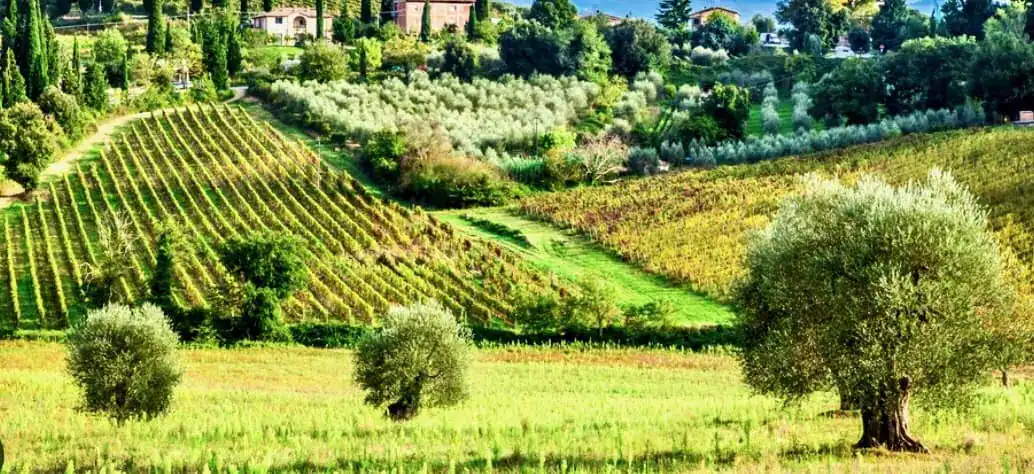
Somewhere between 900 and 400 years before the birth of Christ, farmers, shepherds, and travelers settled in the valley of the Merse River. They understood this land immediately. The soil was fertile. The hills offered protection from the harsh northern winds. Olive trees thrived along the slopes, and vines climbed patiently toward the sun. But it was the springs that made people stay.
Something about the water soothed aching joints, eased fevers, and quieted the exhaustion carried by travelers moving through Tuscany. Word spread slowly across the countryside; there is a place where the earth gives healing water. There is a place worth staying. So, they stayed.
For centuries, Bagnaia remained small and quiet, a handful of homes tucked against the hillside, living by the rhythms of harvests, feast days, births, and burials. The Merse River flowed below. Hawks circled overhead. In the evenings, smoke drifted upward from stone hearths into the enormous Tuscan sky.
Then the Roman world began to fall apart.
As roads became dangerous and armies moved across Italy, people did what people have always done in uncertain times, they gathered together for protection. They moved toward fortified places, offering loyalty and labor in exchange for safety behind walls. Around a feudal fortress on the high ground, Bagnaia slowly took shape.
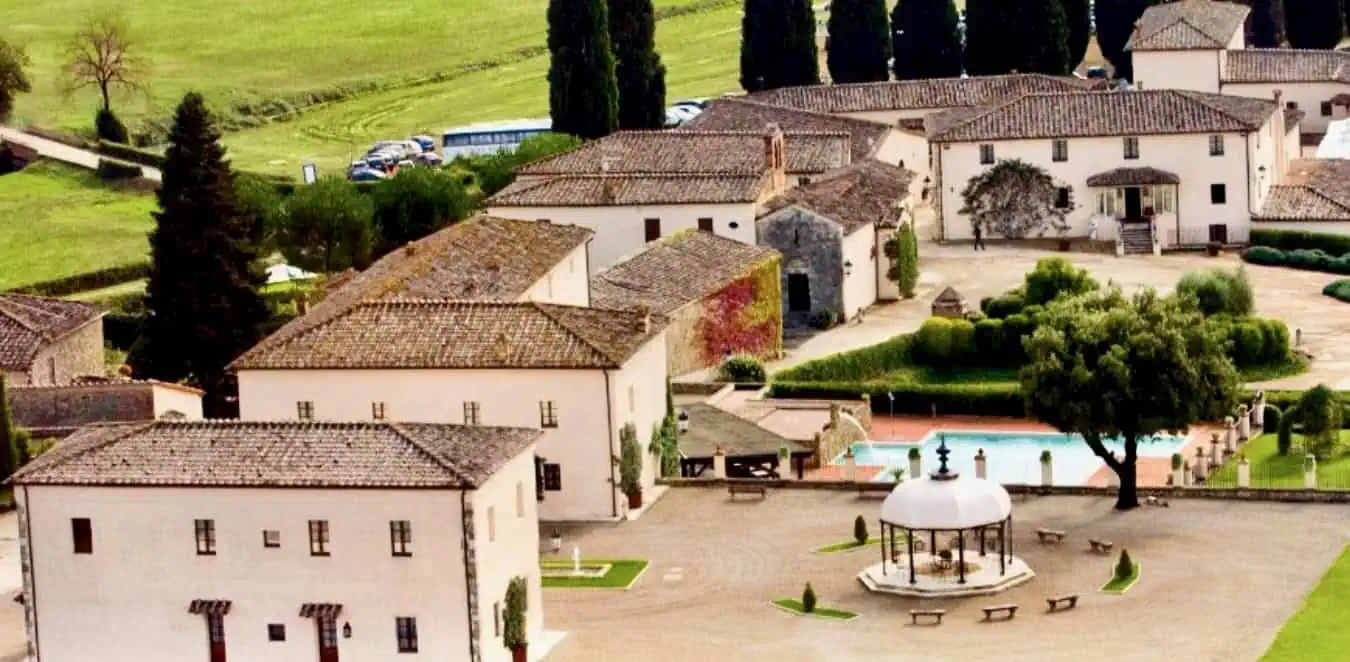
The village first appeared in written history in 1081, in a document sealed by Holy Roman Emperor Henry IV. For a small hillside settlement to appear in imperial records meant the land mattered. The springs were already known. The route between Siena and Rome passed nearby, and whoever controlled these hills controlled an important piece of Tuscany. By the twelfth century, Bagnaia found its heart, a heartbeat that would continue in history.
Local stonecutters built the Church of Saints Vincenzo and Anastasio at the highest point of the village. It was simple Romanesque architecture, thick walls, rounded arches, honest proportions. Nearly nine hundred years later, it still stands, its bell continuing to mark the passing hours across the valley.
The village spread down the hillside, while nearby Filetta grew along the old road connecting northern Italy to Rome. Filetta became known as a stopping place for travelers moving through Tuscany, a customs point where goods were taxed, riders rested, and horses were watered and exchanged before continuing south toward Rome or north toward Siena. Long before modern roads, the sound of horses filled the valley: leather reins pulling tight, iron shoes striking stone, stable doors opening before dawn as merchants, pilgrims, and messengers prepared for another day on the road. The horses of Filetta became part of the rhythm of the place itself, carrying stories, news, and weary travelers through the Tuscan countryside.
And always, the thermal waters continued to rise.
Pilgrims heading toward Rome soaked in the warm pools after weeks on the road. Merchants rested tired feet. Cardinals from Siena made the difficult journey into the hills seeking relief in the springs. Bagnaia never became famous in the grand sense of history, but it became something more lasting: remembered. The kind of place people carried quietly with them long after leaving. Then, slowly, silence arrived.
Whether from plague, economic hardship, or the pull of larger cities like Siena, the village began to empty. The bishop eventually merged Bagnaia’s parish with nearby Filetta, a small administrative decision that revealed how much the population had declined. The buildings remained. The church remained. The springs still flowed. But the voices disappeared.
The stables at Filetta quieted. The roads that once echoed with wagons and horses grew still. Rosemary spread wild through abandoned courtyards, and untended vines stretched wherever they pleased. Wind moved through empty archways. For a time, Bagnaia became one of those places Tuscany knows so well, neither fully alive nor truly gone, simply waiting.
Then Jacopo Bichi arrived.

Where others saw ruin, he saw possibility. A member of one of Siena’s important aristocratic families, Bichi purchased the entire estate, the homes, fields, woods, springs, and abandoned structures, and began restoring life to the hillside. Soon the estate became tied to one of Siena’s most influential sons: Pope Alexander VII.
Born Fabio Chigi in Siena in 1599, Alexander VII never lost his connection to Tuscany, even after rising to the papacy in Rome. He was the pope who helped shape Baroque Rome, commissioning Bernini’s sweeping colonnades at St. Peter’s Square. Yet despite the grandeur of Rome, he remained deeply attached to the landscapes of Siena.
A villa was built at Bagnaia as a retreat from the demands of the Vatican, a place where Rome’s power briefly settled among olive groves, cypress trees, and warm Tuscan springs.
With the Chigi family’s involvement, Bagnaia transformed. Gardens replaced neglected fields. The church was restored. The estate expanded across rolling hills, becoming not simply a country property but a carefully shaped expression of beauty, landscape, and quiet power.
The centuries that followed were gentler ones.
Italy changed. Wars came and went. Cities expanded while many Tuscan villages slowly emptied once again. Yet Bagnaia endured.
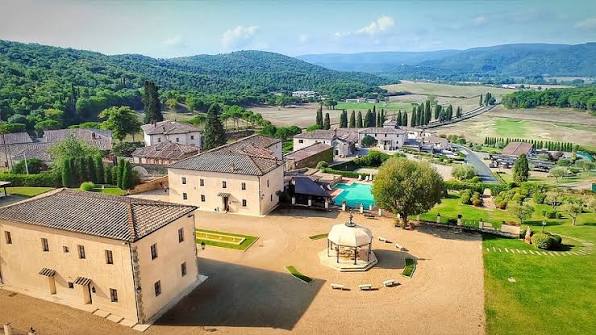
Its restoration in modern times was handled with patience and respect. Ancient stone buildings were repaired rather than replaced. The old priest’s house, La Canonica, was carefully brought back to life. Borgo Filetta regained the atmosphere it had once carried as a resting point for travelers centuries earlier, and today horses once again move through the hills and open countryside surrounding the estate, reconnecting the land to one of its oldest traditions.
Then, in 2011, the hills found a new chapter.
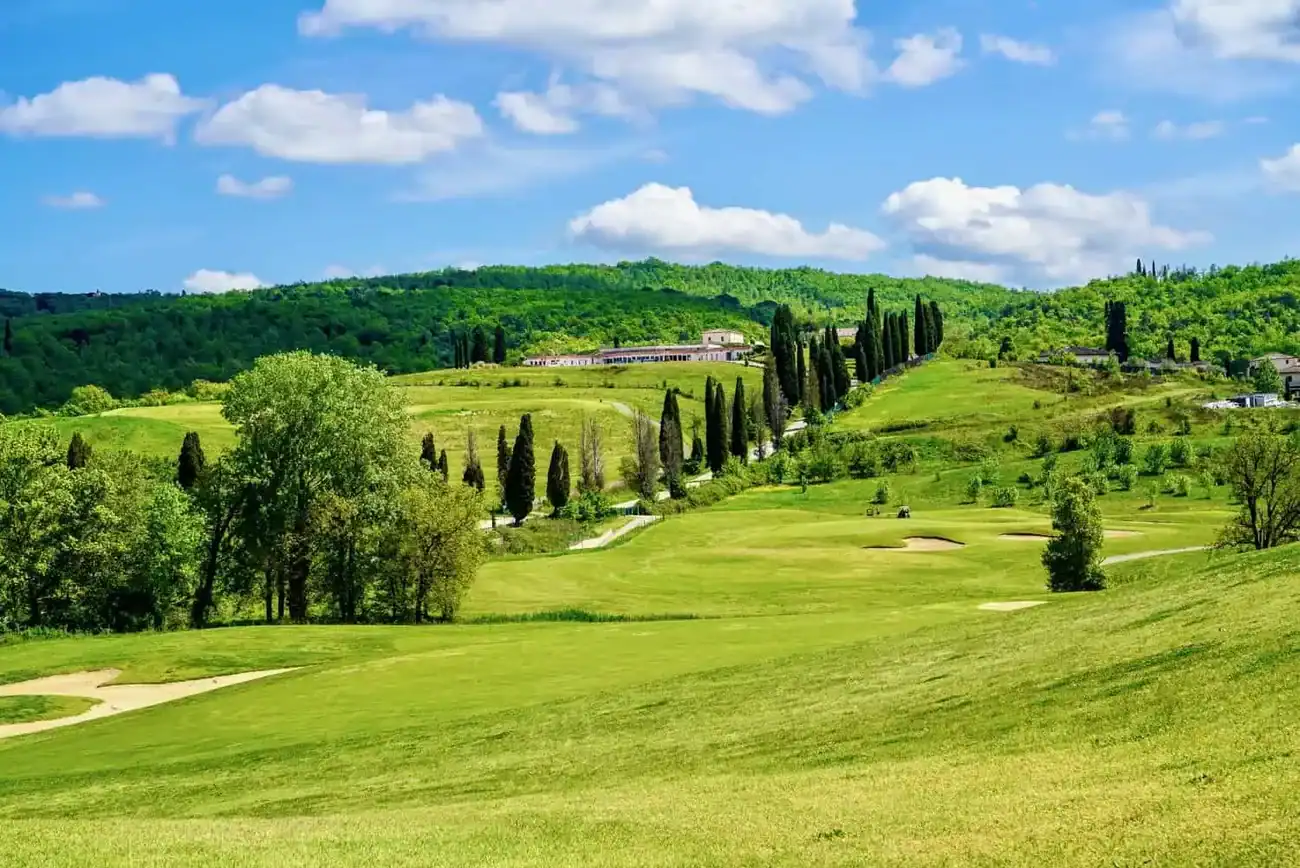
Golf architect Robert Trent Jones Jr. designed Royal Golf La Bagnaia across 130 hectares of rolling Sienese countryside. Rather than forcing the course onto the land, he allowed the landscape itself to shape the experience. The fairways move naturally through the hills, with deep bunkers, small, guarded greens, and views stretching toward Siena in the distance.

The “Royal” in Royal Golf La Bagnaia is not tied to a king or official crown decree, but to something older and distinctly Tuscan: the legacy of noble families, papal influence, and the quiet grandeur that has always lived on these hills. The estate’s connection to the Chigi family and Pope Alexander VII gives the land a sense of aristocratic history that still lingers today. Here, Royal feels less like a title and more like an atmosphere: the feeling of arriving somewhere timeless, where medieval stone villages, noble villas, horses moving through Filetta, and championship golf all exist together beneath the same Tuscan sky.
Yet through every chapter, from ancient settlers to medieval villagers, from noble families to modern golfers, the springs have remained unchanged.
The water still rises from deep beneath the earth at more than thirty degrees Celsius. Whatever ancient force first brought it to the surface thousands of years ago continues its work without hurry and without interruption.
To stand in the piazza of Borgo La Bagnaia today is to feel all those centuries layered together at once. The stone beneath your feet was laid by medieval hands long gone. The church bell still rings across the valley. The scent rosemary and lavender drift through the gardens just as they did generations ago. On clear mornings, the towers of Siena still rise above the horizon in the same golden Tuscan light.
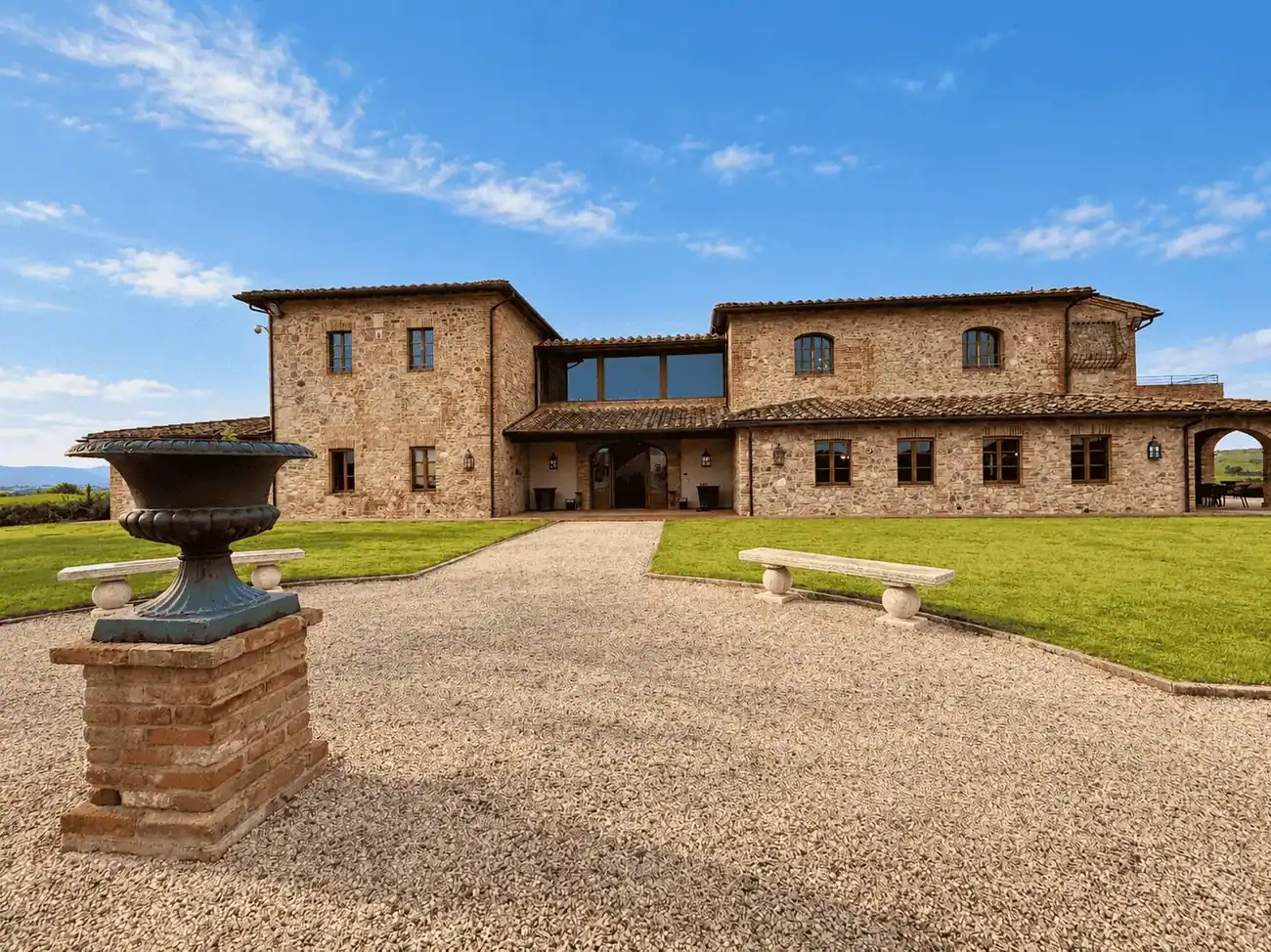
The springs rise. The cypress trees stand motionless against the sky. Time continues to move, but Bagnaia somehow holds all of it together; ancient and alive at the same time.
Some places are simply old. Bagnaia feels older in a different way not frozen in the past, but still carrying it, warmly and fully alive, like the water that first gave the place its reason to exist.
And then there is today.
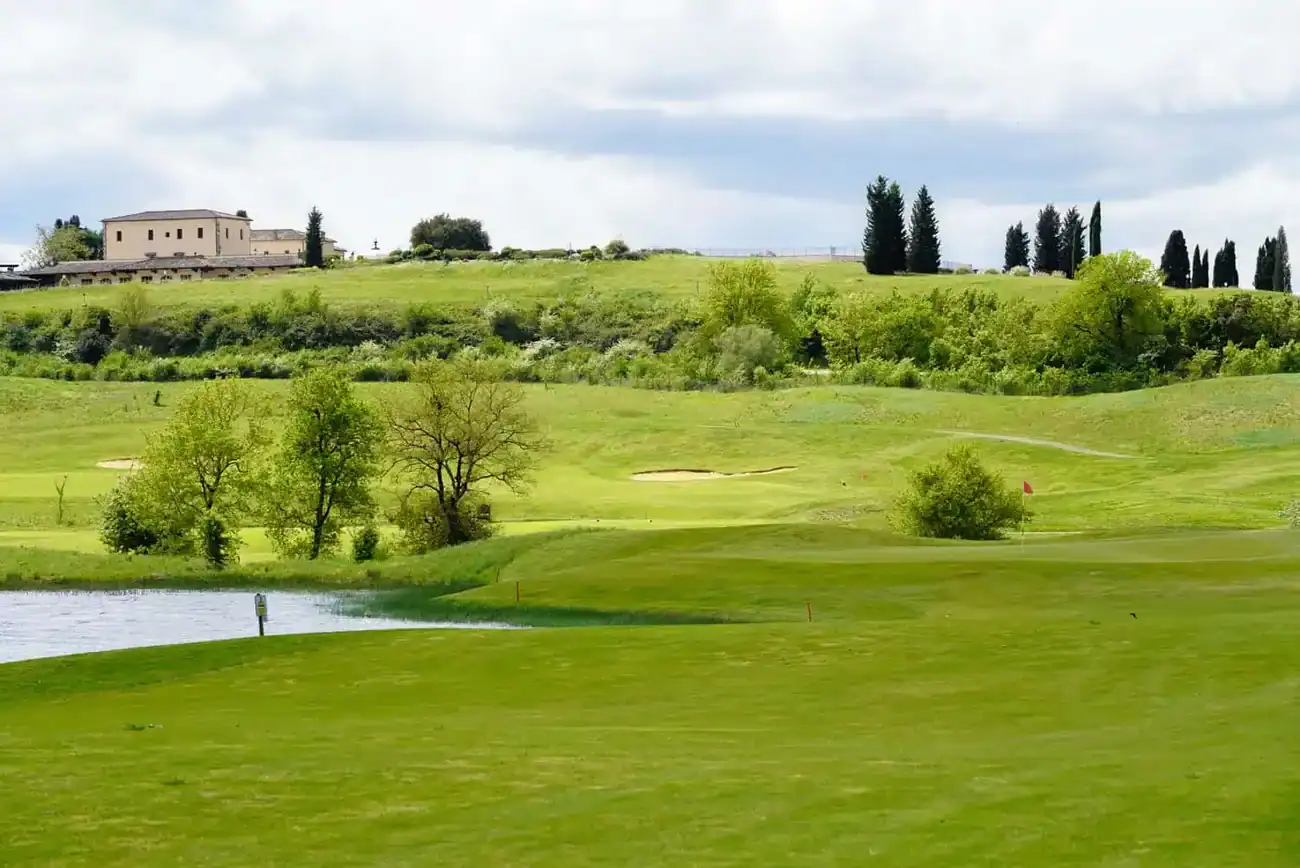
The golf course is complete, championship in design and quietly spectacular in the way it rises and falls through the Tuscan hills. The clubhouse sits above the valley with long views stretching toward Siena, while below it the old borgo waits for its next chapter. Once part of the Curio Collection by Hilton, the village now sits temporarily shuttered, its stone streets quiet again, almost as if the estate is pausing to gather itself before beginning something new.
And something new is coming.
Rumors move through Tuscany the way they always have, slowly, conversationally, over wine and long lunches, but the whispers surrounding La Bagnaia are impossible to ignore. A major five-star hospitality group is said to have taken on the challenge of restoring the estate to what many believe is its rightful place: one of the premier golf destinations not only in Italy, but in Europe. Given the land, the history, and the golf already in place, it is not difficult to imagine.
But perhaps the most remarkable thing about Royal Golf La Bagnaia is that even now, in this in-between chapter, it remains absolutely worth the journey.
Arrival comes without spectacle. No grand gates. No polished performance. In fact, the approach feels surprisingly understated, almost bare bones at first glance. And somehow, that restraint becomes part of its charm. Because once you step onto the property, the scale of the place slowly reveals itself. The practice facilities stretch across the hillside with a kind of quiet extravagance, a driving range fit for royalty, a practice green laid out with the same care and scale as the course itself.
Then the golf begins.
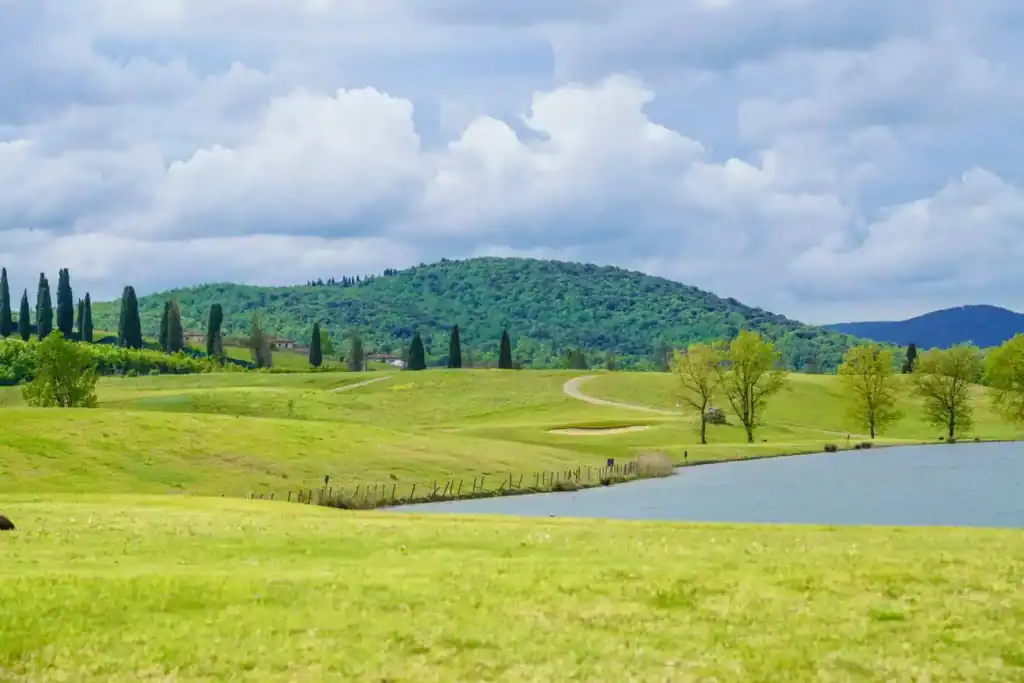
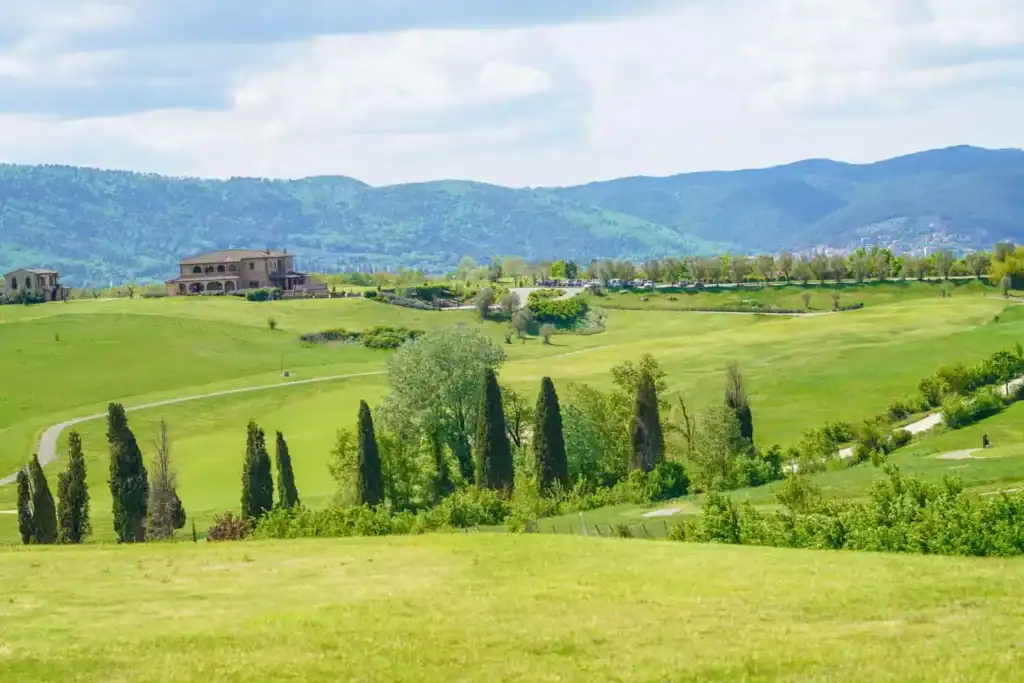
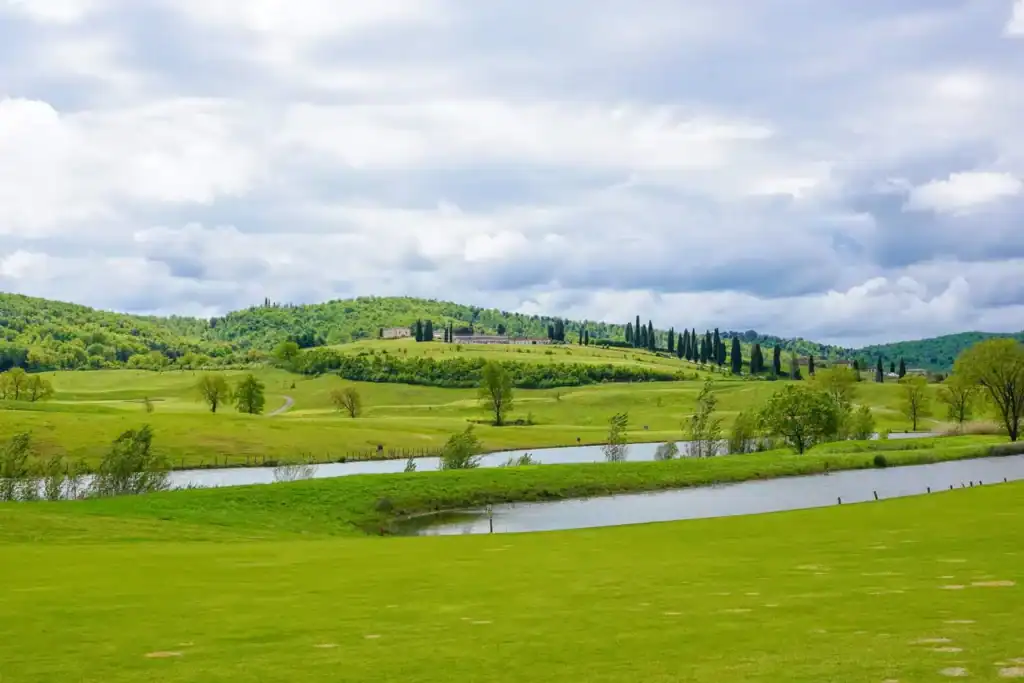
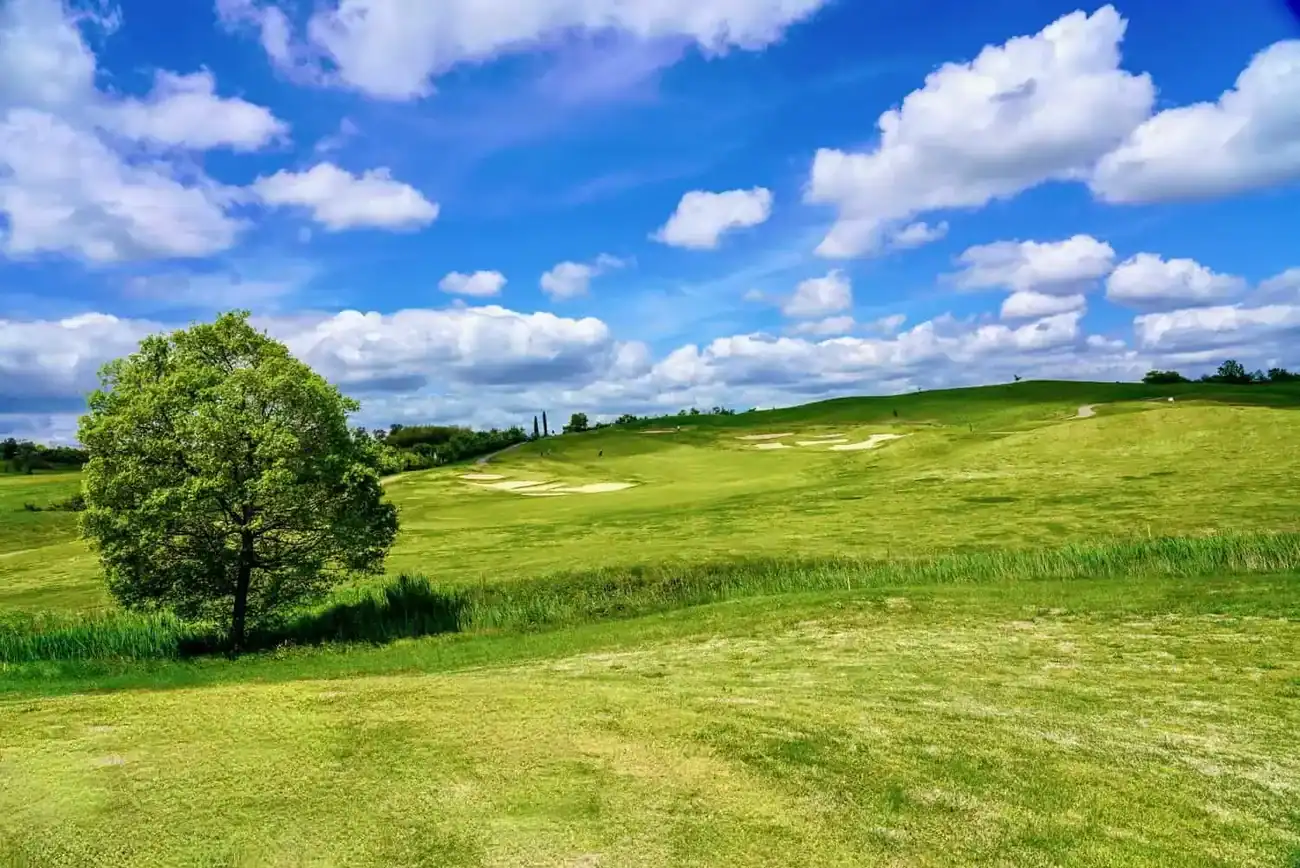
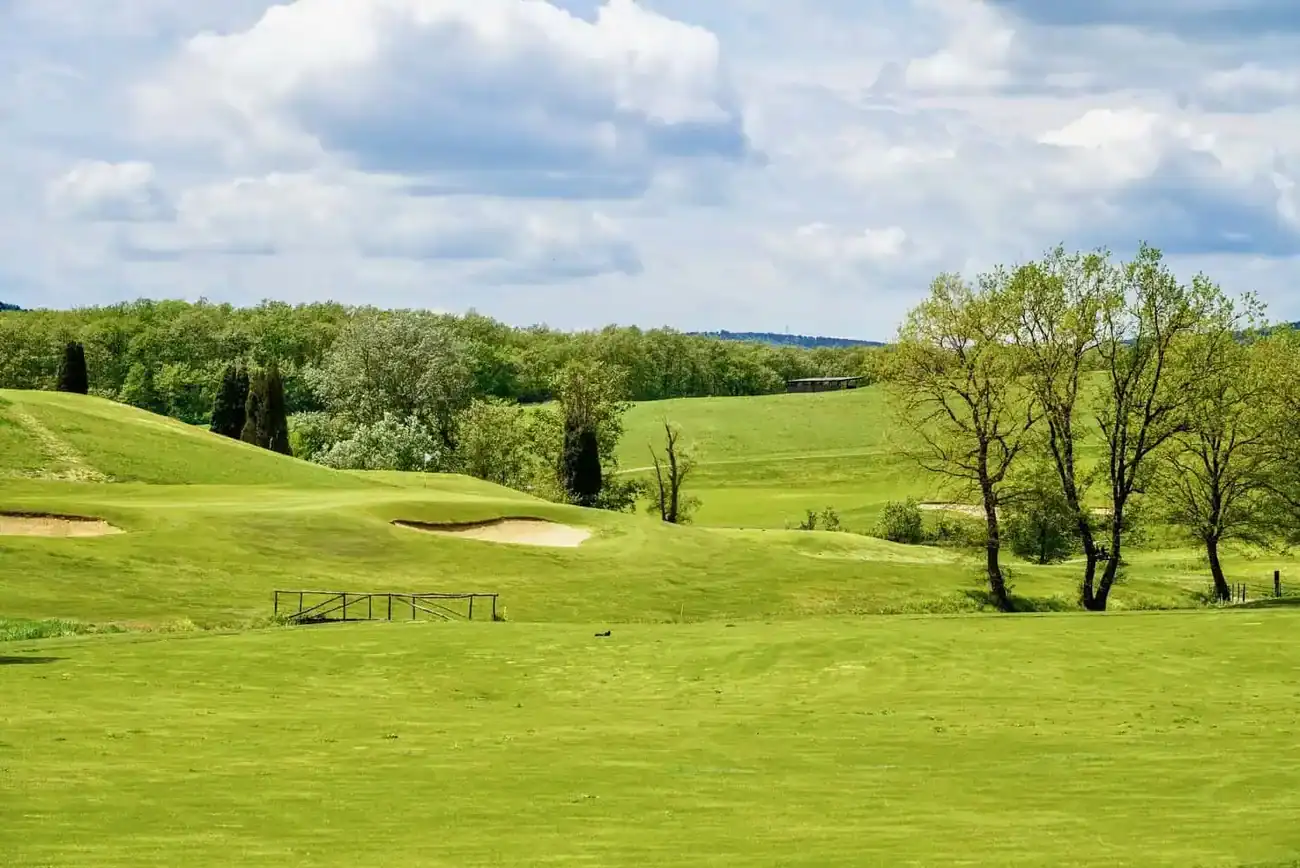
The fairways move naturally through the landscape as though they have always been there. The hills roll endlessly. The rough bends in the wind. And everywhere, Tuscany surrounds you, cypress trees, distant towers, olive groves, warm earth, and that unmistakable golden afternoon light that seems to soften everything it touches.
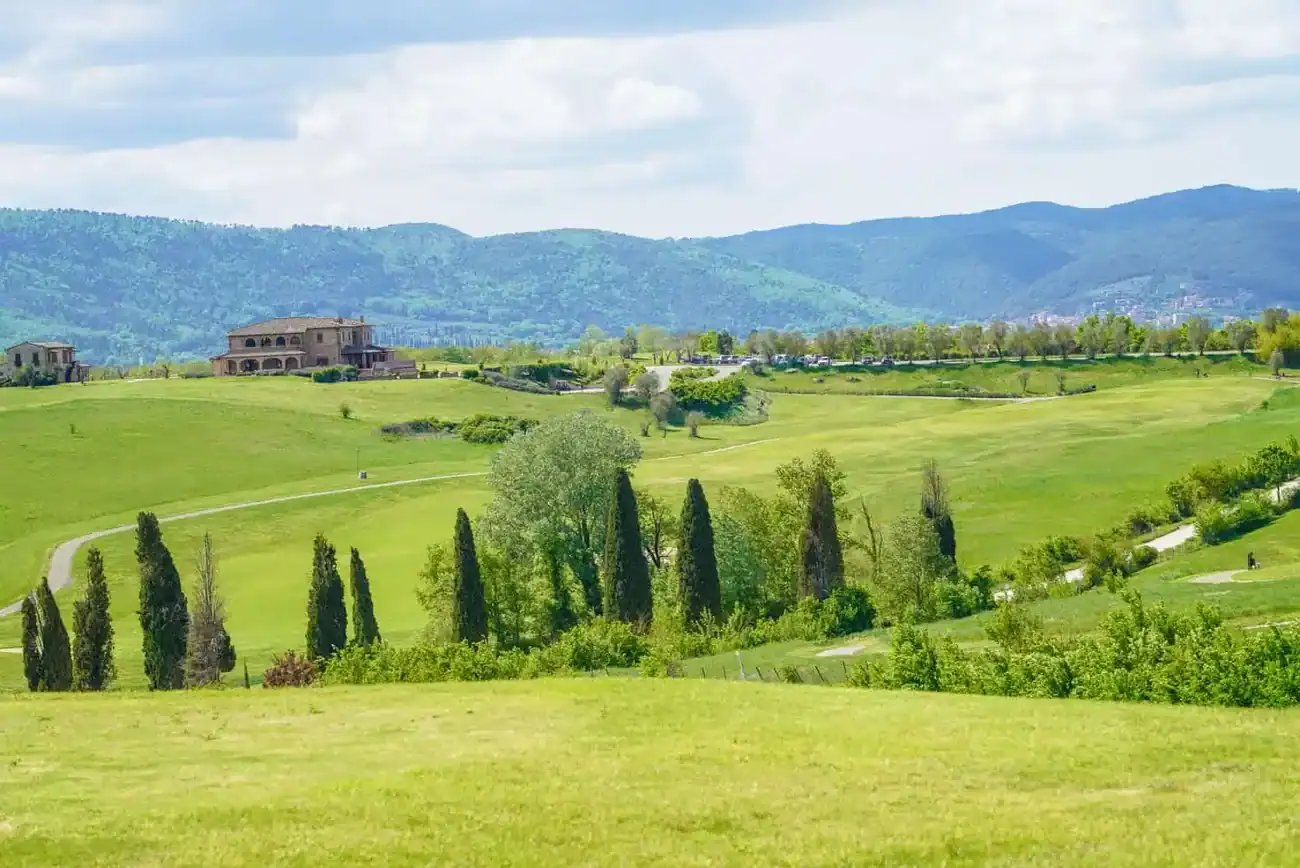
After the round, there may be no better place to sit than the terrace with a glass of Chianti, Sangiovese, or Barolo in hand, watching the late sun settle over the hills while the shadows stretch long across the course.
Royal Golf La Bagnaia already carries the distinction of being one of Italy’s finest golf experiences. And standing there now with the history behind it and the future quietly gathering ahead it feels less like a finished story than the beginning of something much larger.
Let’s Play the Course…
Hole 1
The opening hole at Royal Golf La Bagnaia is a stunning par 4 that reaches out into the Tuscan hillside, with wildflowers scattered along the edges of the fairway and the old borgo standing quietly in the distance to your right. It is the kind of opening hole that immediately tells you what this golf course wants from you, not power, not ego, but patience and precision, exactly as Robert Trent Jones Jr. intended.
The smart play is down the left side of the fairway, threading your drive between the bunkers guarding both sides. Done correctly, the ball settles naturally into the center of the fairway and leaves a short approach into the green, though rarely from a perfectly even lie. Like much of La Bagnaia, the land asks you to adjust and work with it rather than against it.
The approach itself demands attention. A deep pot bunker guards the front right portion of the green and should be avoided at all costs, making the left half of the putting surface the safer target. Once on the green, another subtle challenge appears, a ridge running through the middle divides the pin positions and can completely change the character of the putt depending on where the flag is set.
It is an elegant opening hole. Beautiful to look at, deceptively strategic, and a reminder from the very first swing that Royal Golf La Bagnaia rewards thoughtful golf far more than aggressive golf.
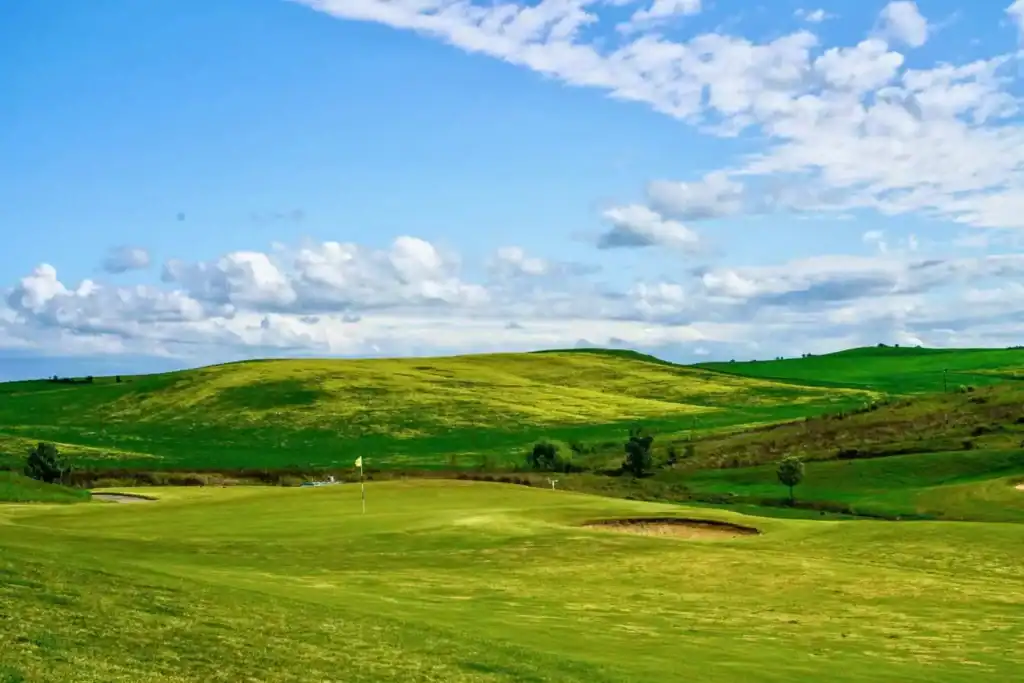
From the Tee at the 1st Hole 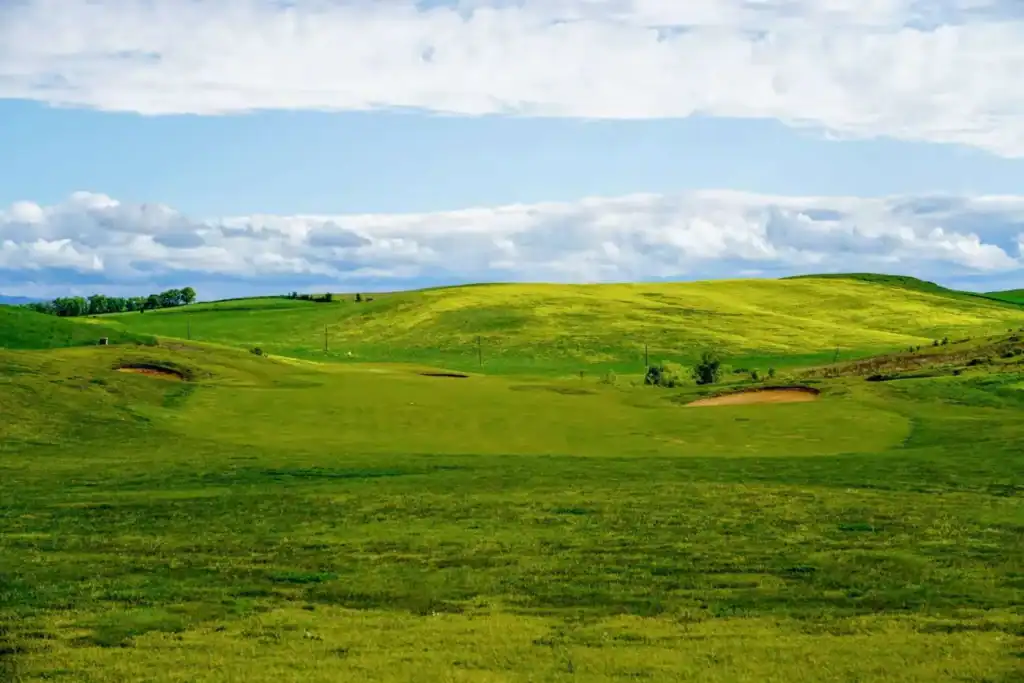
Spring in Tuscany off the 1st Green
Hole 2
Climbing into the next stretch of beautiful Tuscan hillside, the 2nd hole at Royal Golf La Bagnaia is a short but demanding par three that begins to reveal the character of the course ahead.
Playing across a ravine to an elevated green, the challenge is immediately clear from the tee. The shot asks for commitment enough carry to safely clear the valley below while finding the narrow opening between the greenside bunkers. Anything left short has little chance of survival, feeding back down the slope toward the creek beneath the green. Long, however, leaves room to recover and is the far better miss.
The green itself introduces another layer of difficulty. Like many putting surfaces at La Bagnaia, it is shaped with subtle movement that becomes more apparent the longer you stand on it. A distinct two-tier design separates the upper and lower sections, making pin position critical. Above the hole, the green becomes extremely quick, with putts capable of slipping away and tumbling back toward the slopes leading to the ravine below.
By the 2nd hole, a pattern already begins to emerge. The greens at Royal Golf La Bagnaia are not simply targets, they are defenses. They reward patience, awareness, and thoughtful positioning, quietly reminding players that this course reveals itself one careful shot at a time.
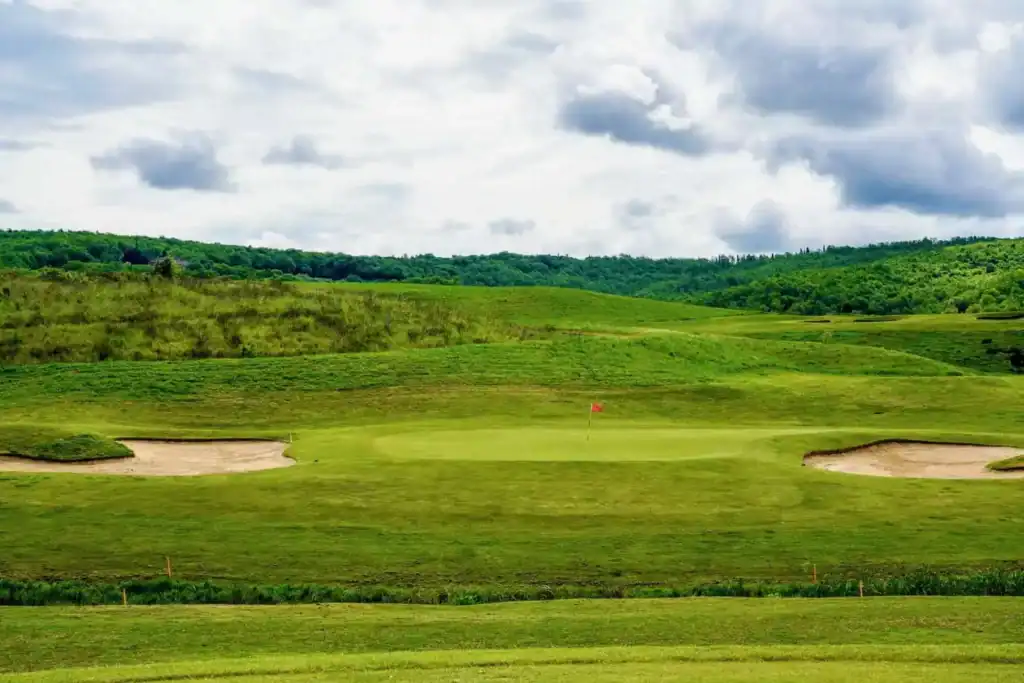
Looking into the Hillside at the 2nd Hole 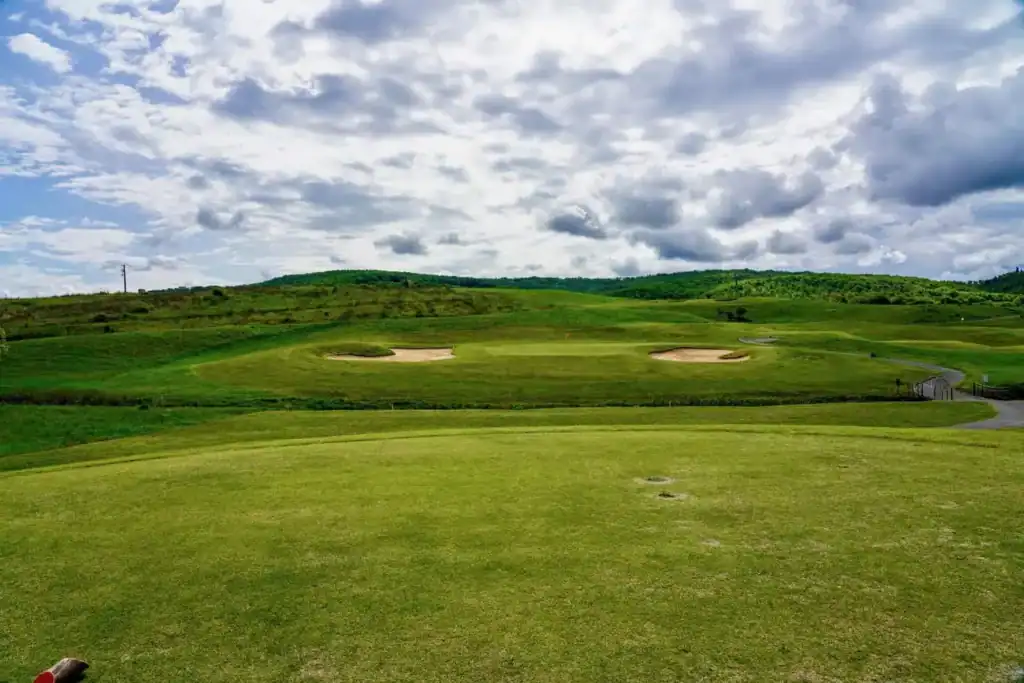
Two-Tiered Challenge at the 2nd Hole
Hole 3
The tee shot on the 3rd hole is the first truly bold moment at Royal Golf La Bagnaia. A reachable par five winding through the Tuscan hills, it invites players to be aggressive but only if they do it intelligently. The ideal line is toward the fairway bunker on the right, shaping the drive gently back to the left with the natural contour of the hole. When the fairways are firm, the ball can run considerably once it lands, leaving a very manageable second shot down toward the green.
When the last putt drops, do not walk immediately to the clubhouse. Turn instead toward the mountains. Stand there a moment, breathe, be still, let the round settle around you. Bend down and touch the ground if the impulse takes you. Whatever feels right, do it, and do it slowly. Because this is a moment worth marking.
For longer hitters, this is a genuine opportunity to reach the green in two and pick up an early birdie. But the hole does not force heroics. Players choosing the safer route simply need to keep the ball inside the string of bunkers running up the right side, using the width of the fairway and allowing the hole to unfold gradually.
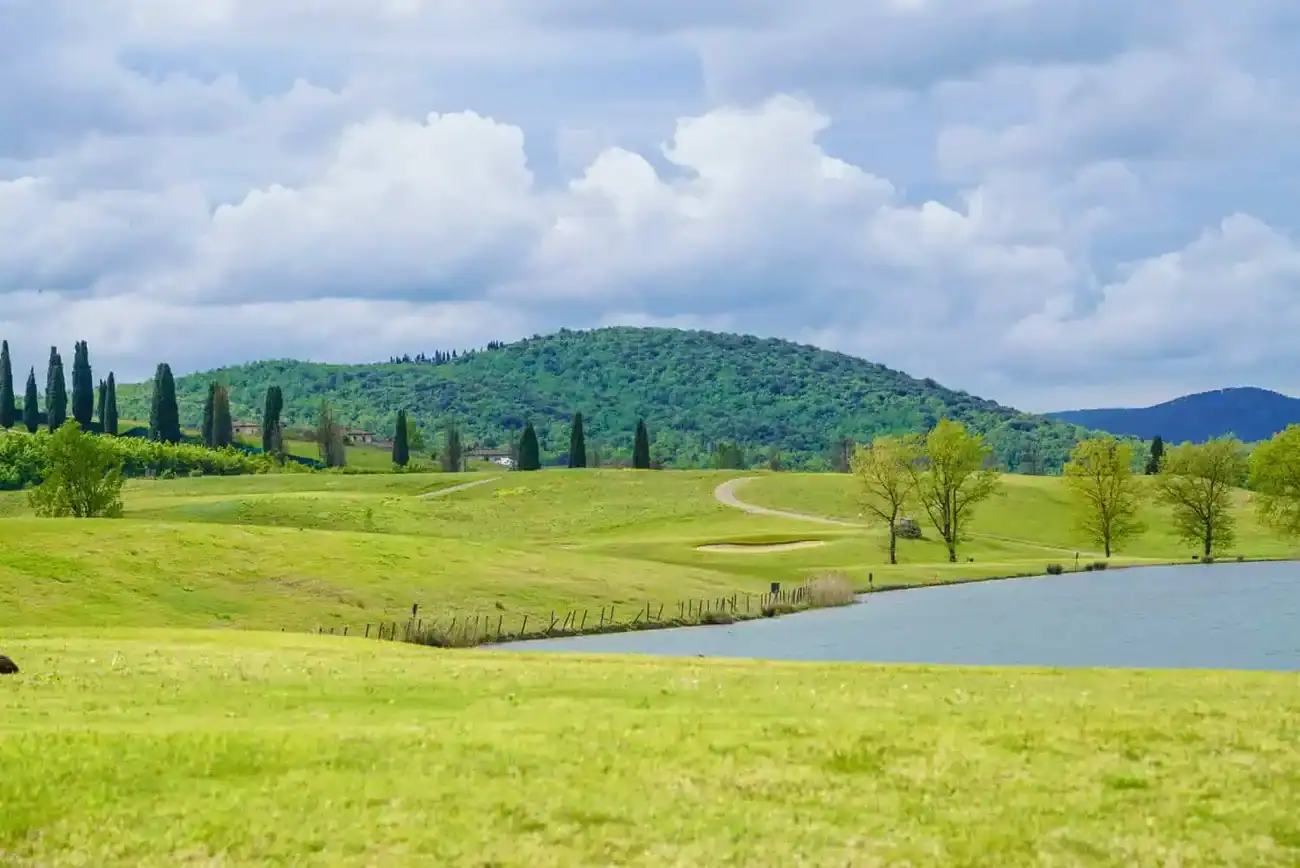
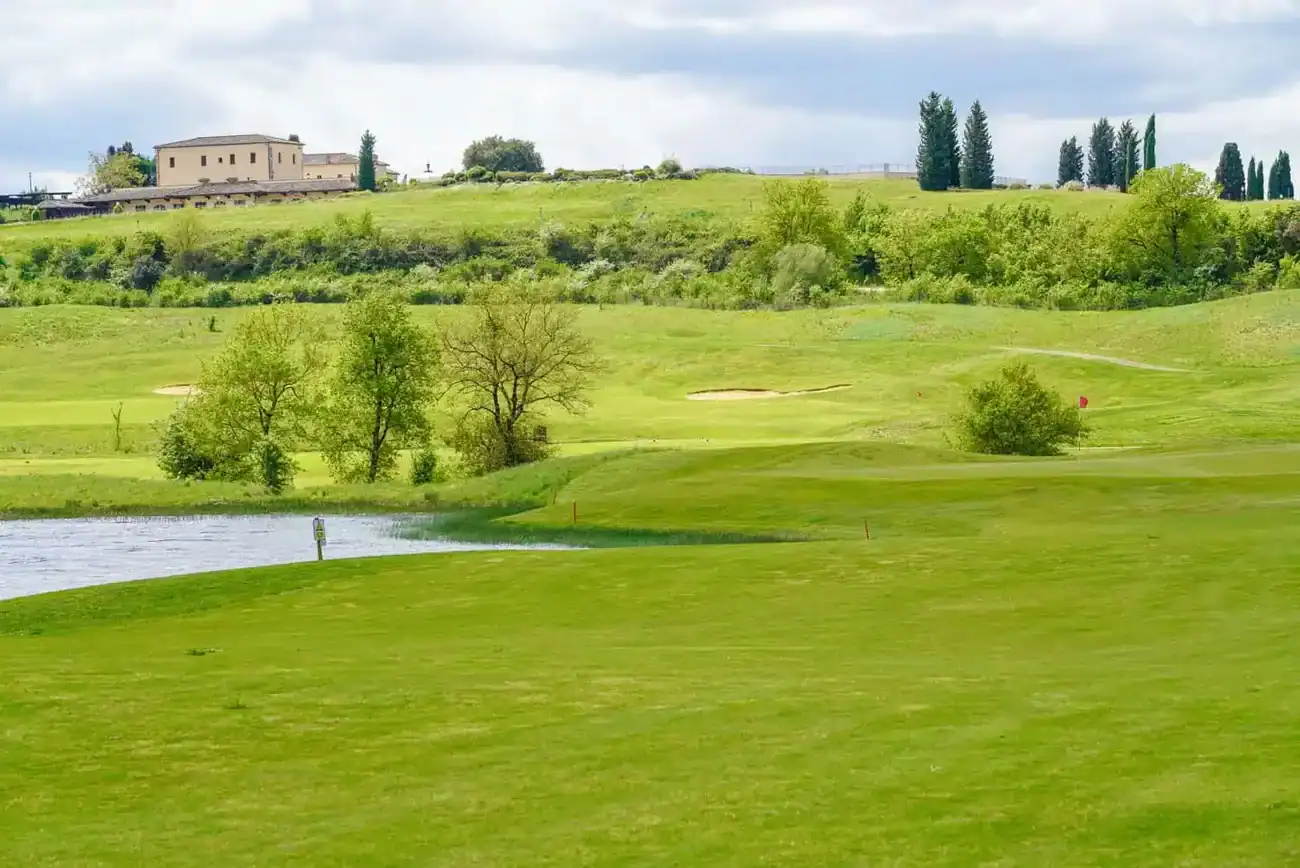
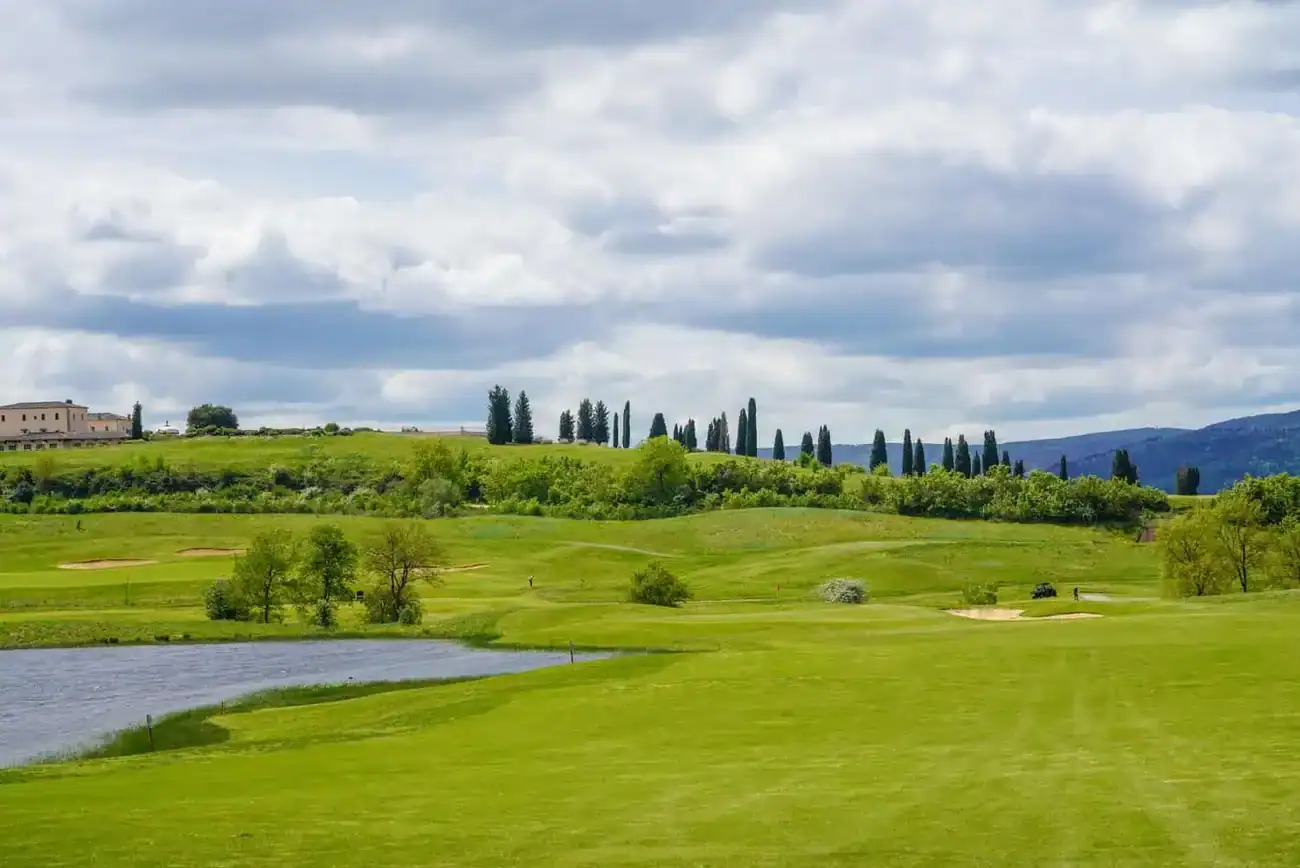
Water stretches along the entire left side of the hole, though it remains more visual than threatening for much of the play. It only truly enters the golfer’s mind as the approach nears the green. From there, the smartest target is the right-center portion of the putting surface, safely away from the hazard while still leaving a good look at birdie.
Once on the green, however, the water quietly makes its presence known again. Putts subtly fall toward the lake, another reminder that at La Bagnaia the land is always influencing the golf, even when it appears still.
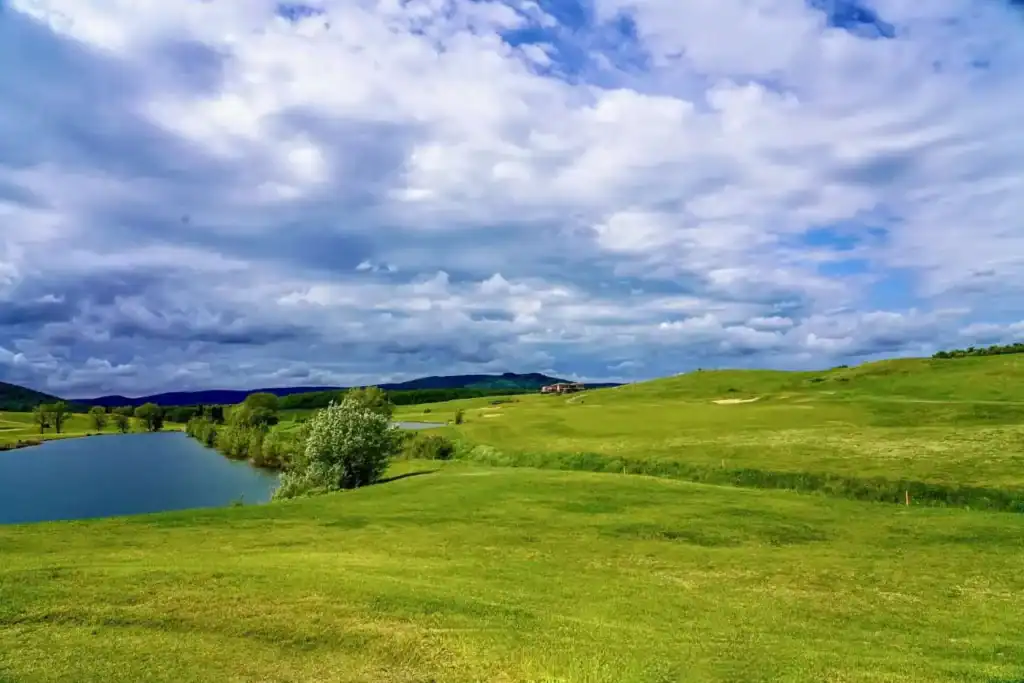
A Beautiful Dogleg at the 3rd Hole 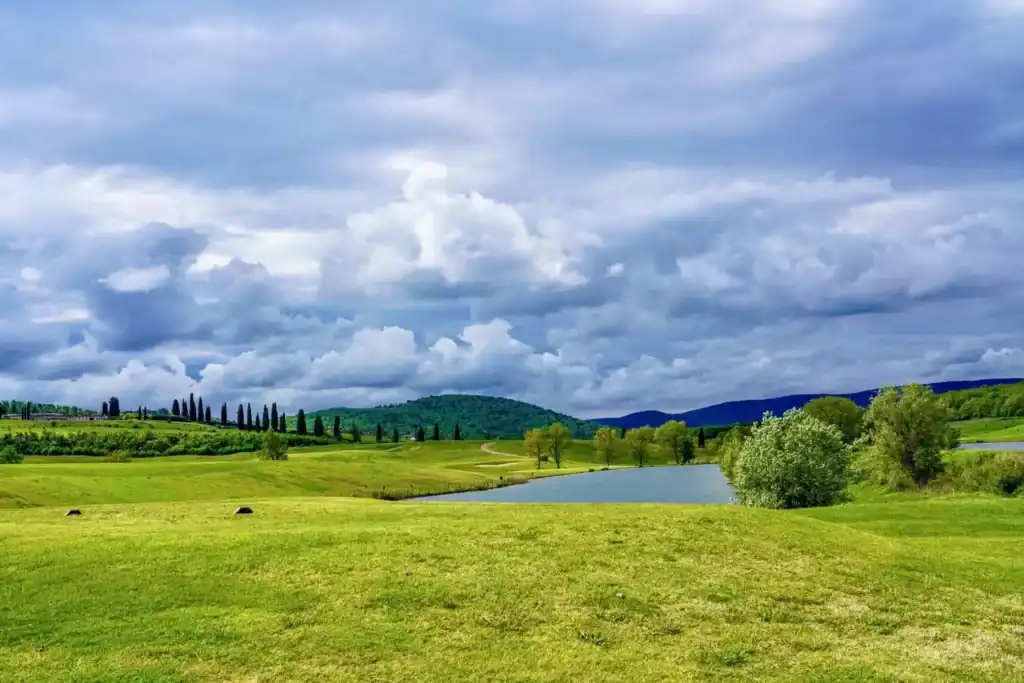
A View Across the Water at the 3rd Hole 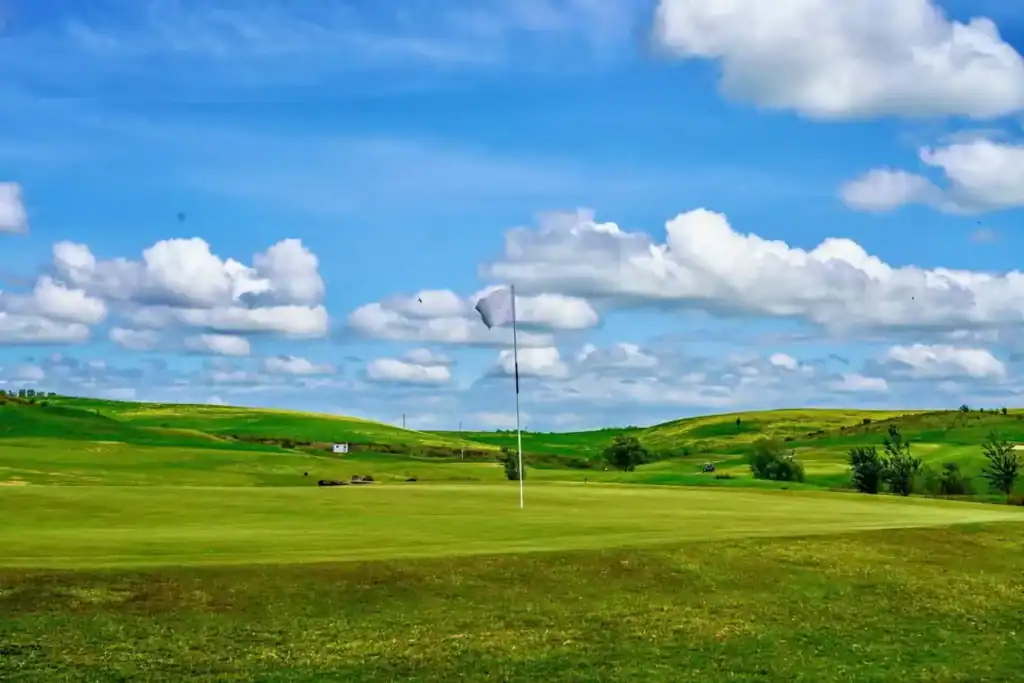
The Approach into the 3rd Hole 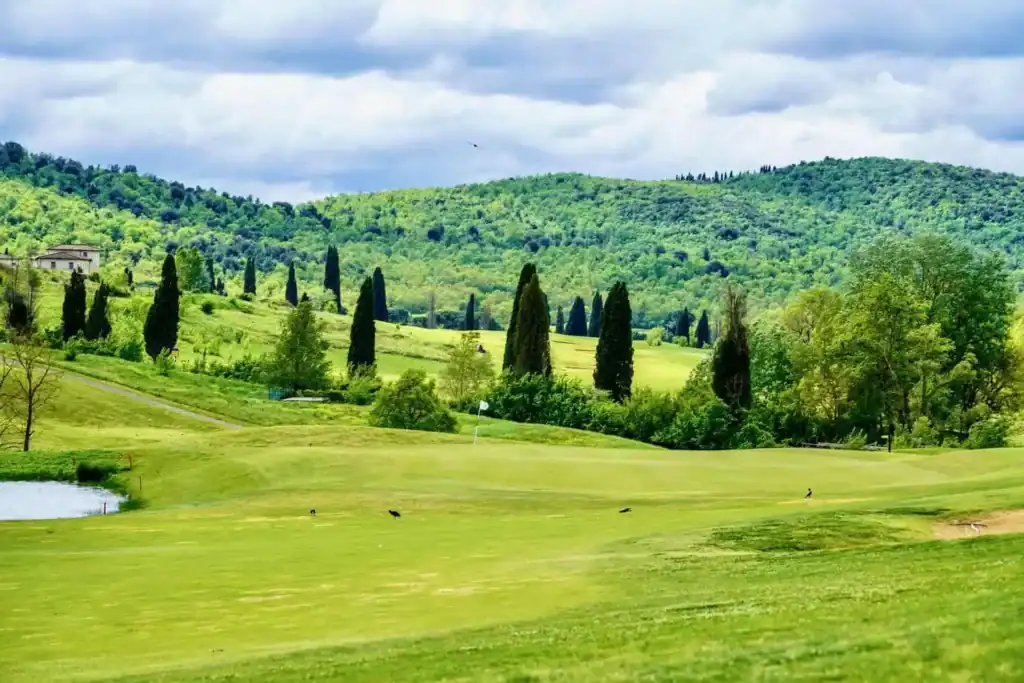
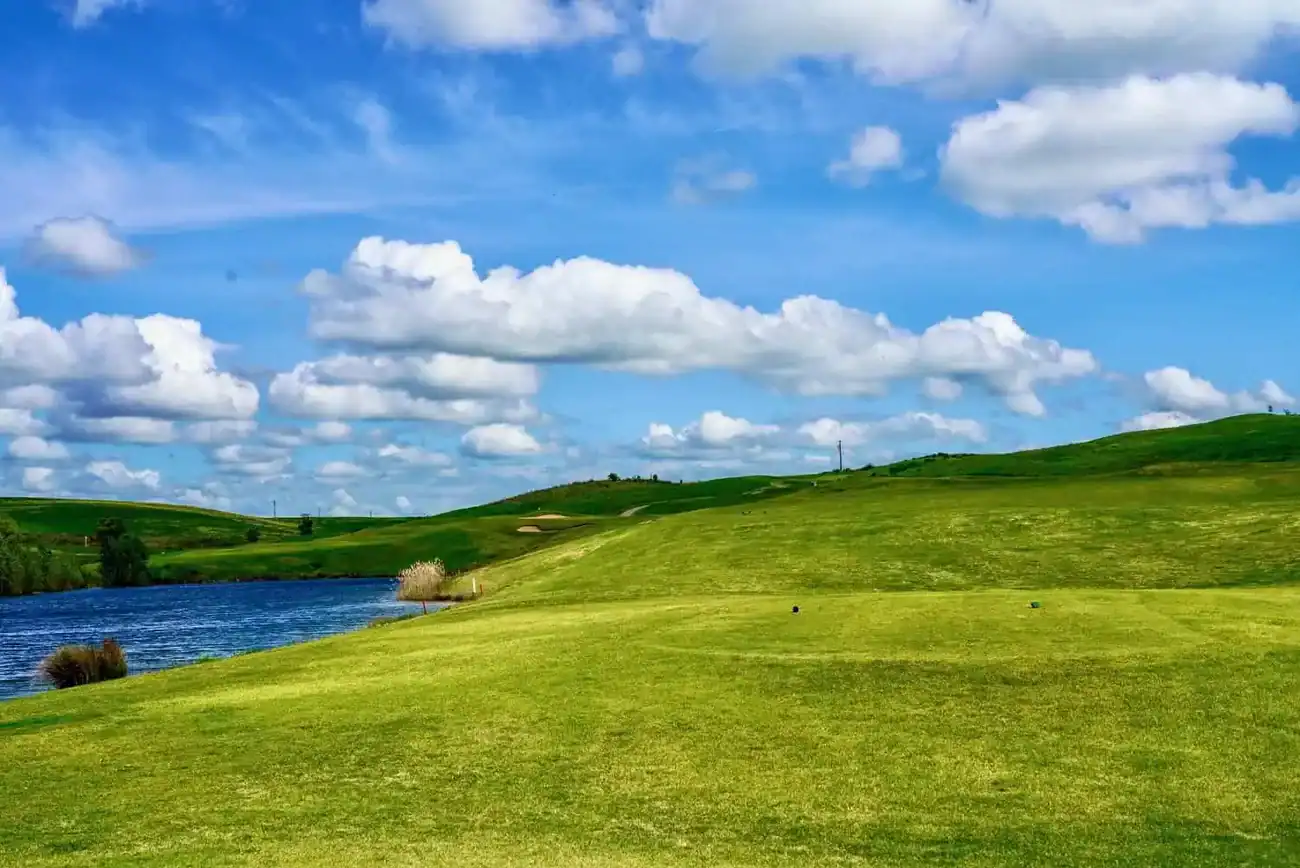
Colors Almost Unreal at the 3d Hole
Hole 4
At first glance, this hole feels generous. The yardage is friendly, almost inviting, encouraging thoughts of birdie before the club is even chosen. But the fairway has a personality of its own, and it reveals its secrets only after the ball is in motion.
Anything drifting even slightly left of center is often gathered and carried toward the far side of the fairway, sometimes rolling all the way into rough that makes the next shot far less comfortable than expected. The wiser line is down the right, where the contours of the land can feed a well-placed drive gently back toward the middle, leaving only a short approach in hand.
From there, the green appears slightly elevated, though not unreachable along the ground. Players who come up just short may still find salvation with a clever bump-and-run climbing onto the putting surface. It is a hole that rewards creativity as much as precision.
But there is danger waiting for anything overly ambitious. Long and left is a place best avoided, where recovery becomes uncertain and scores can quickly slip away. And once safely on the green, the work is not over. The different tiers create subtle challenges in both pace and direction, asking players to study carefully before the putter is ever drawn back.
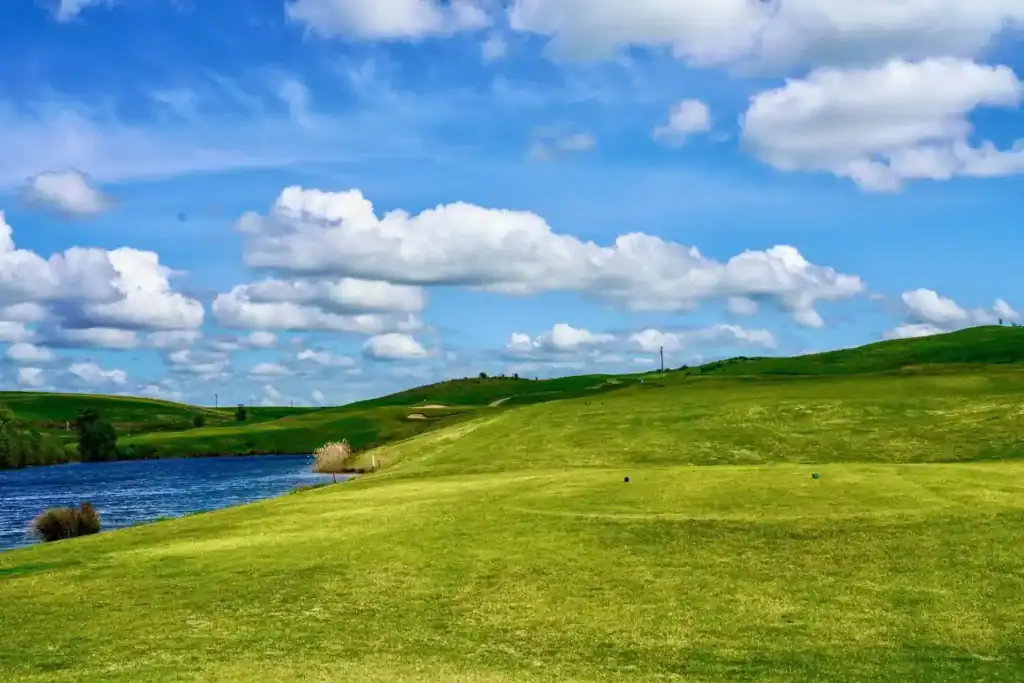
Hole 4 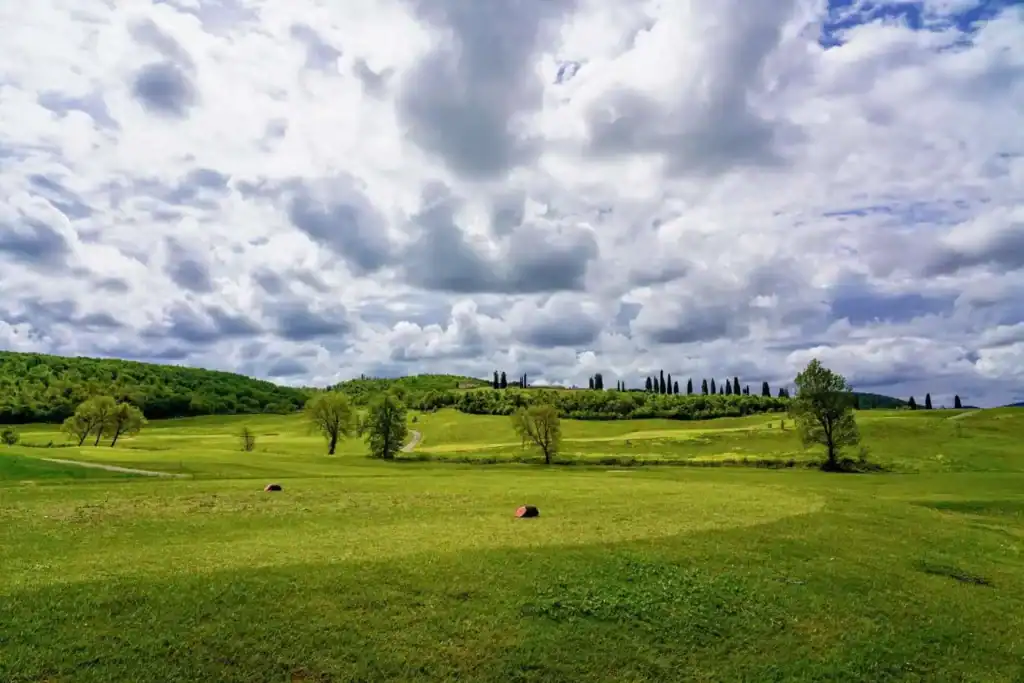
Hole 4 Tee Box 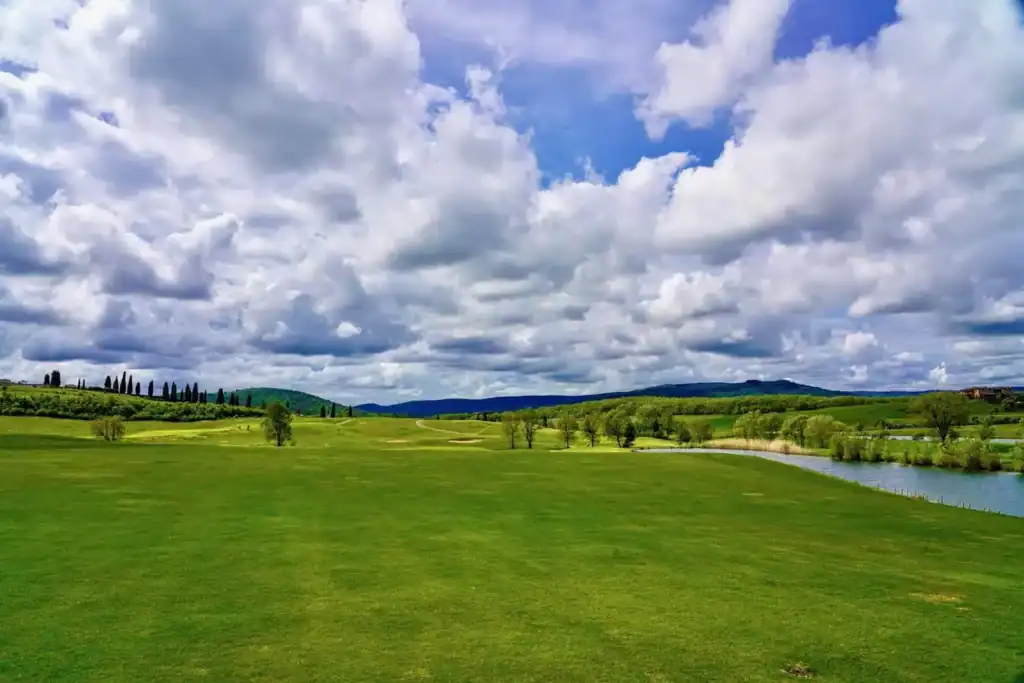
Don't forget to turn around to take in the views! 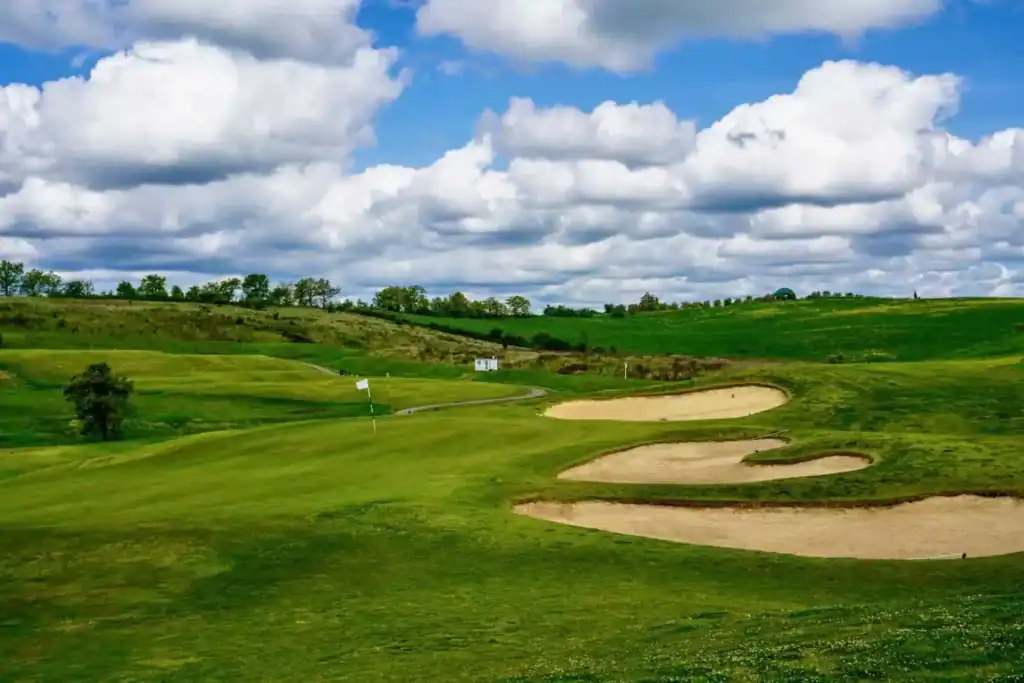
Hole 5
The walk to this par 3 slows you down before you ever reach the tee. The view alone is enough to make you smile, the kind of quiet beauty that asks for a deep breath and a longer look. It feels gentle at first glance, almost welcoming, with only a short iron in hand and a green sitting comfortably in the distance. But this hole has its own quiet defenses.
A bunker rests at the front of the green like an old gatekeeper, gathering anything struck with even the slightest hesitation. The putting surface beyond it is shallow in depth yet alive with movement, tilting quickly from front to back. Shots that land and release too eagerly can skip forward and vanish over the rear edge before the player has even lifted the tee.
There is forgiveness in a miss long, and slightly left leaves hope as well, but precision matters here. The green is wider than it is deep, rewarding those who understand placement more than power. And once aboard, the real puzzle begins. This is not a green to read with only your eyes. It asks for imagination. Putts seem to bend with the landscape itself, revealing subtle turns only to those willing to see them.
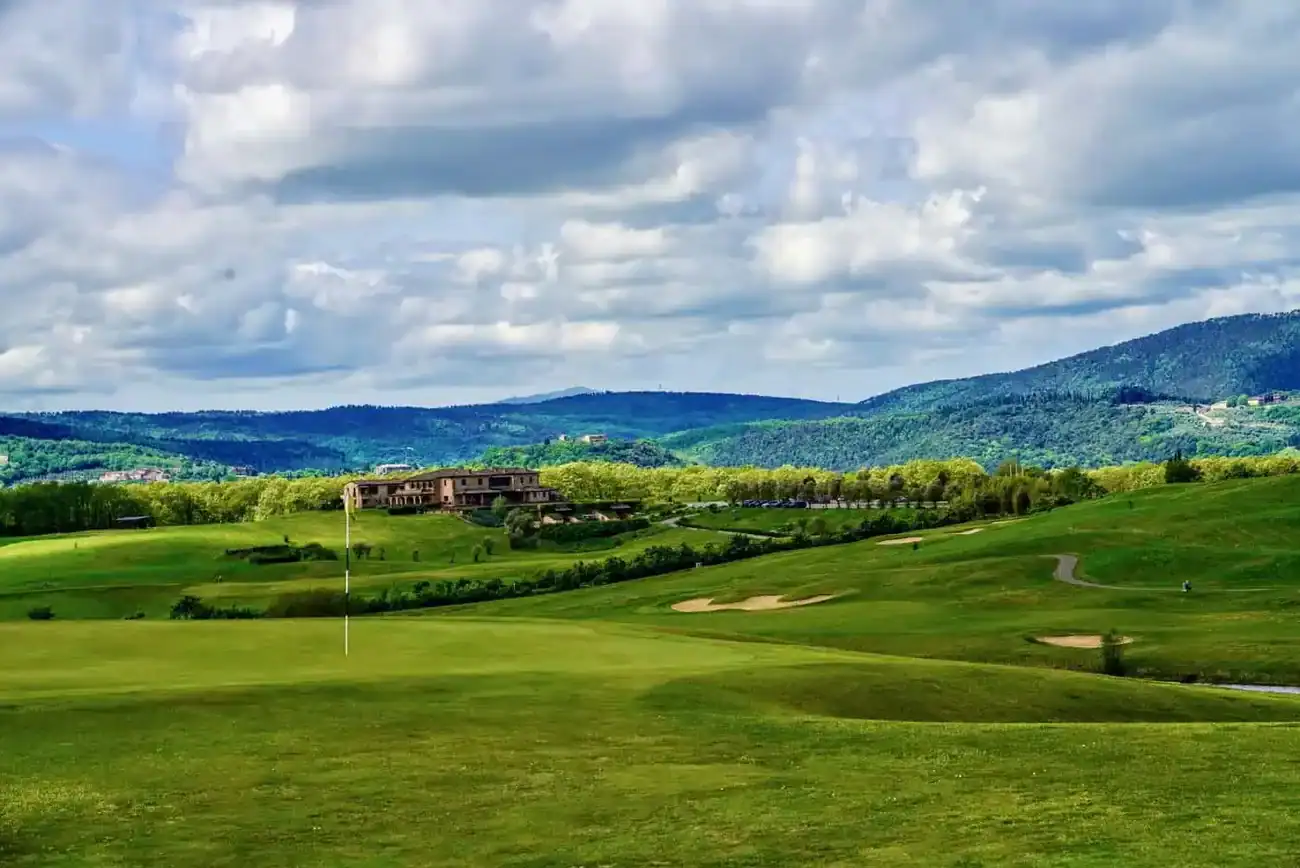
Hole 6
One of the more demanding holes at Royal Golf La Bagnaia arrives early in the round. The 6th is a long, rugged par four that wastes little time showing its teeth. From the tee, the landing area is framed by a series of well-placed fairway and cross bunkers that immediately narrow the eye and force a decision. The hole climbs steadily uphill from start to finish, adding even more length to what is already a substantial test.
At first glance, the left side appears tempting, offering the possibility of a shorter approach into the green. But appearances can be deceiving at La Bagnaia. The rough down the left is thick, heavy, and unforgiving, making recovery difficult and control nearly impossible. The smarter line is just right of the bunkers on the left side of the fairway, a position that opens the hole while still leaving the best angle for the long second shot ahead. And it is a second shot that requires commitment.
The uphill climb continues all the way to the green, while the wind moving across the hillside can quietly add confusion to both club selection and distance. Taking enough club is essential, especially with the bunker guarding the front portion of the green waiting to collect anything tentative or under-struck. Missing slightly left or even a touch long leaves manageable recovery options. Missing short rarely does.
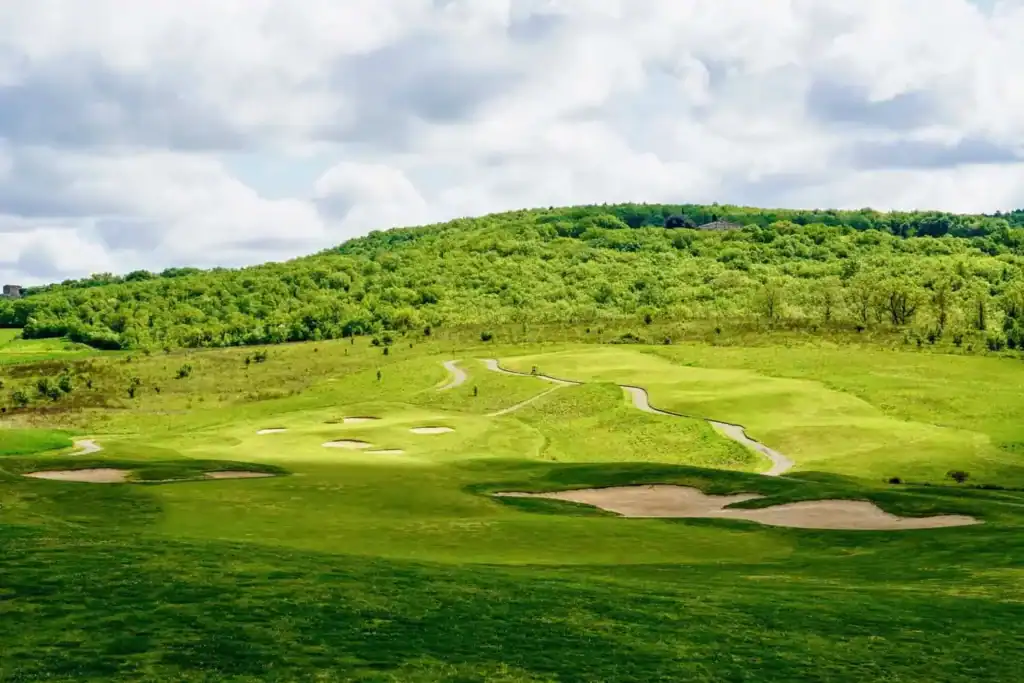
From the Tee at 6th Tee 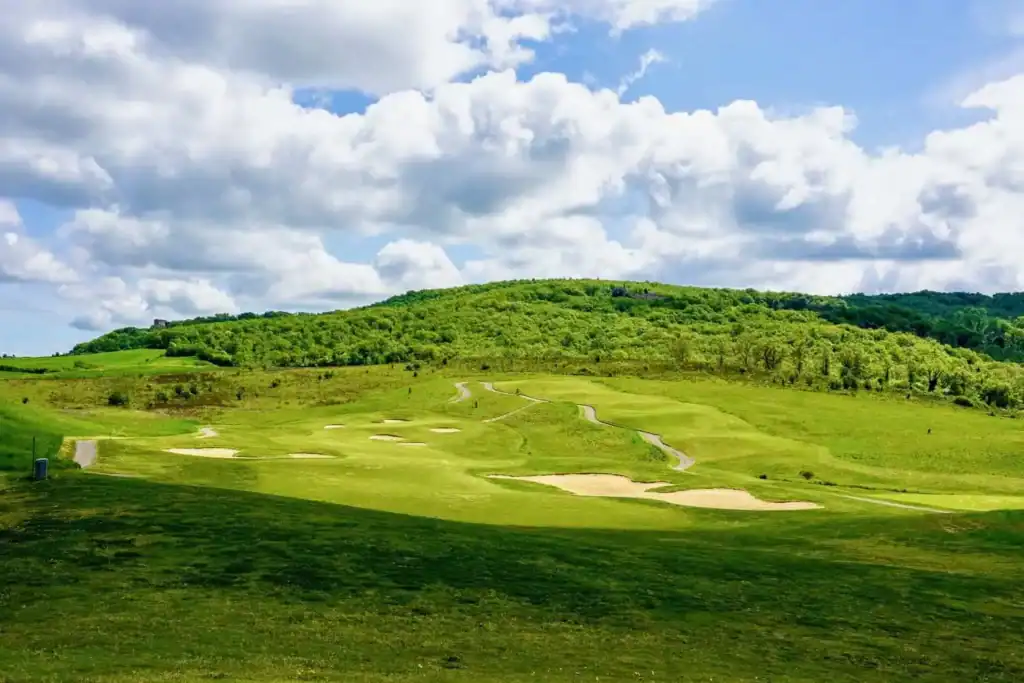
Another perspective at the 6th Hole 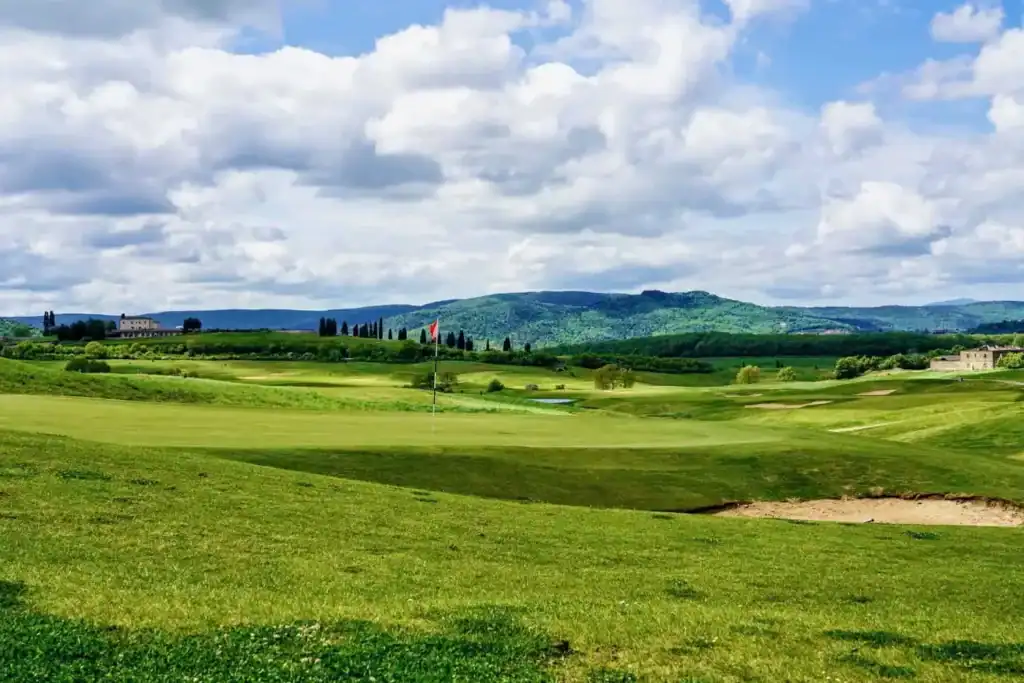
Approaching the 6th Green
Hole 7
The walk to the 7th tee carries a different sort of energy. After the steady demands of the previous holes, this one arrives almost like a whispered invitation. A chance. An opening. The scorecard calls it a par 4, but the hole itself feels more generous than that, as though it wants to reward a player willing to trust what is in front of them.
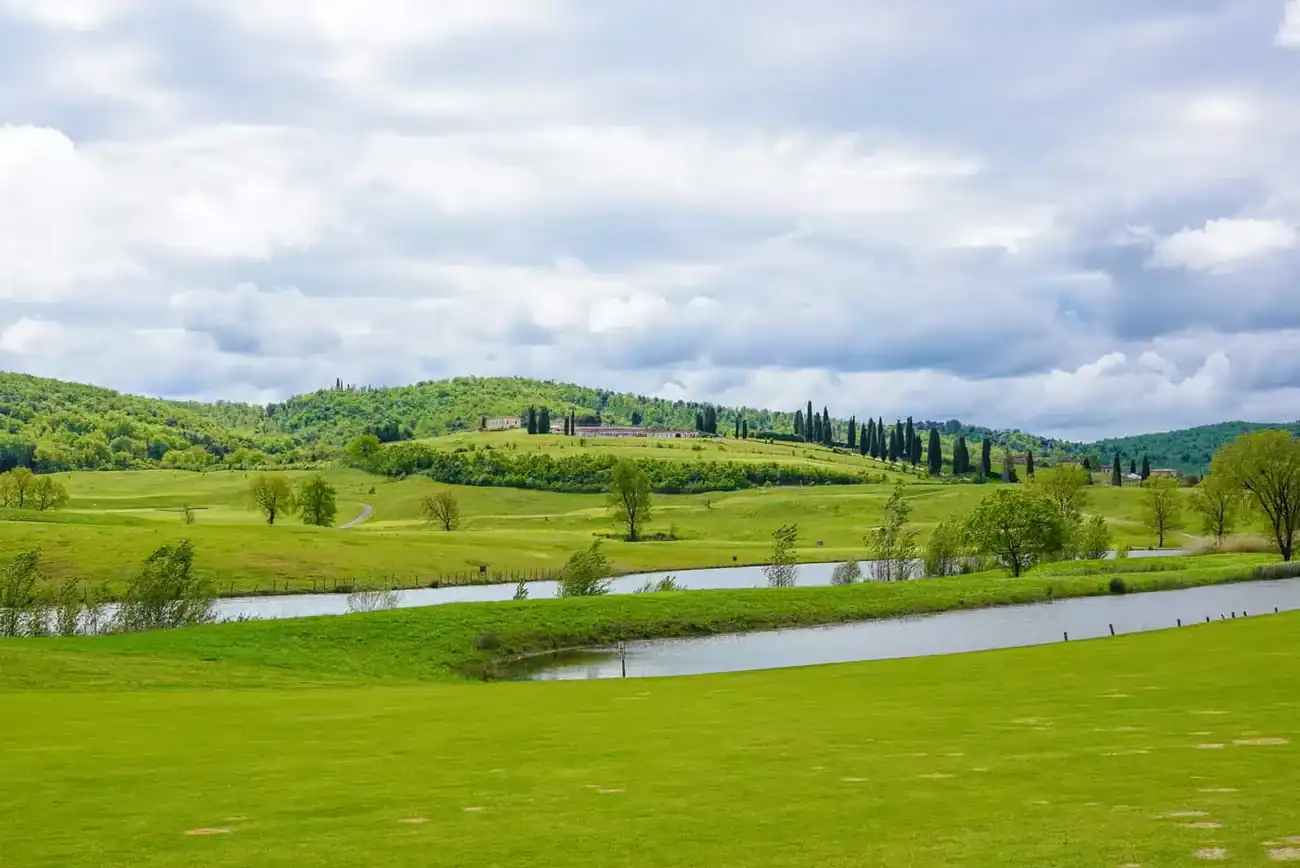
From the tee, the fairway stretches ahead in simple, tempting fashion, though appearances can deceive. Along the left side, the pond lies quietly beside the fairway before curling toward the green, waiting for the impatient swing or the overly confident line. Many have watched a promising round disappear there with a splash hardly loud enough to match the disappointment. The wiser play reveals itself slowly. Out to the right sits the bunker. Aim there. Trust it. A well-struck drive will tumble gently back toward the center of the fairway.
And then comes the approach. Short club in hand. A flag fluttering close enough to tempt ambition. This is the moment golfers remember long after the round ends — standing over a wedge with the rare feeling that something wonderful could happen. Not hope exactly, but possibility.
The 7th does not ask for brute force or heroics. It asks for belief. A confident swing. A touch of nerve. And for those willing to answer, it offers one of the sweetest opportunities on the course to turn a good round into a memorable one.
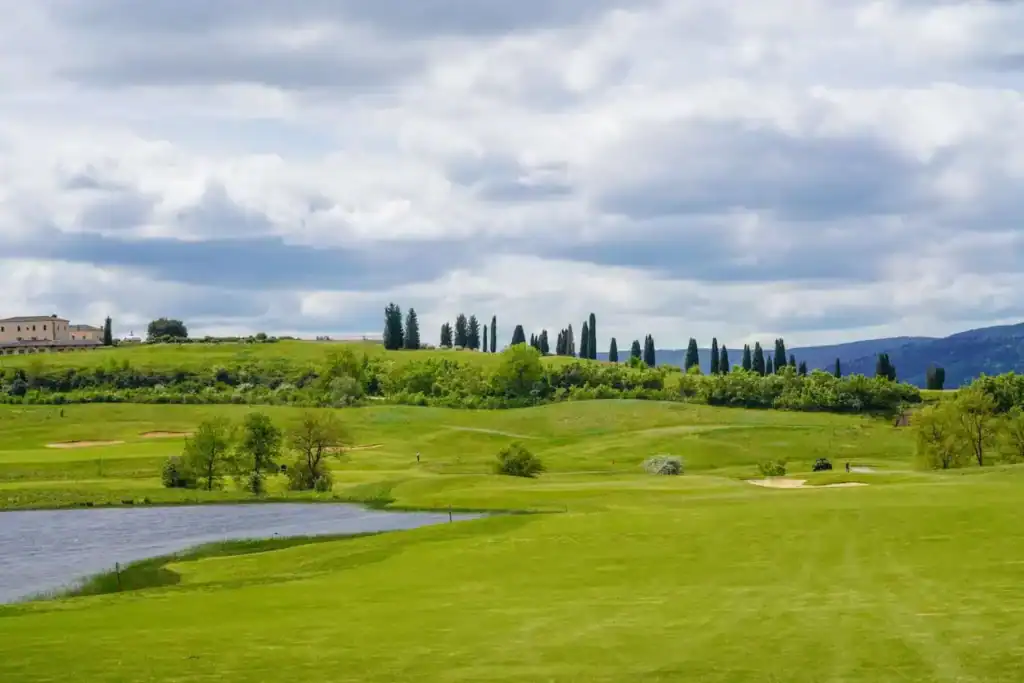
Fairway Stretching Out on the 7th Hole 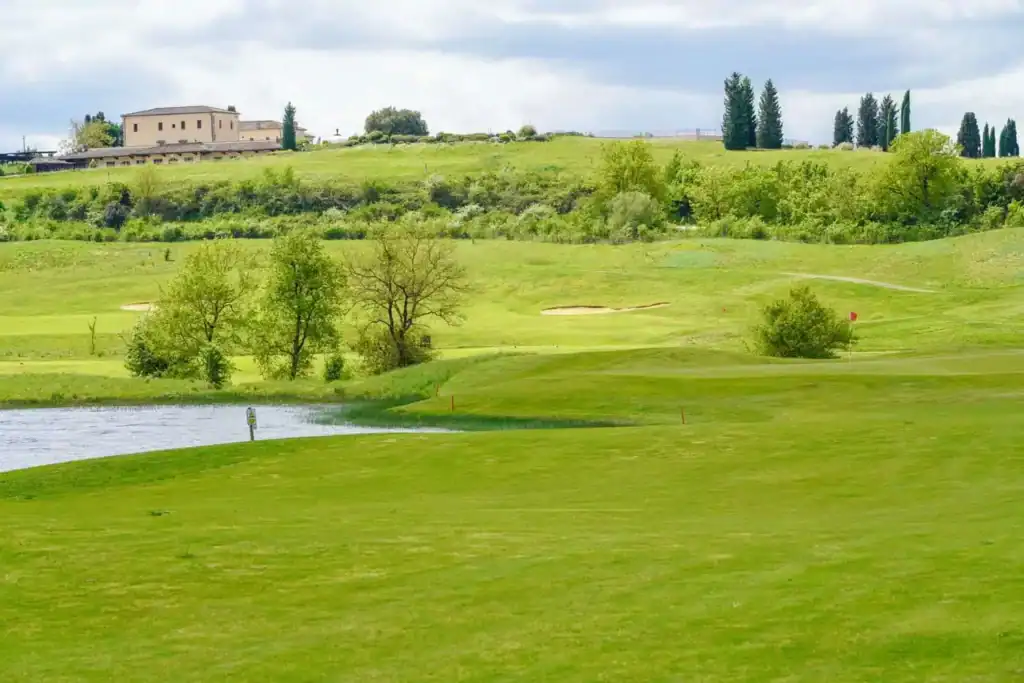
Approach Shot into the 7th Hole
Hole 8
There are holes that ask questions slowly, and there are holes that announce themselves the moment you step onto the tee. This one belongs firmly in the second category.
The fairway bends sharply left at nearly ninety degrees. It is one of the most distinctive moments on the course, a hole that demands thought before strength and rewards patience far more than aggression.
The temptation is immediate. The bunker sitting on the left side of the fairway seems to dare players into challenging it, to bite off more of the corner in search of a shorter route home. Yet the wiser play is far less dramatic. There is no need to flirt with trouble here. A controlled tee shot carrying just beyond the end of that bunker leaves exactly what the hole was designed to offer: a comfortable angle and a short iron into the green. But the second shot carries its own subtle deception. A creek cuts across the fairway roughly a hundred yards from the putting surface, quietly collecting any approach that comes up timid or uncertain. Beyond it, the green rises gently upward, elevated just enough to disguise the true yardage. More than a few players have watched a well-struck shot land short, swallowed not by poor contact, but by hesitation. One more club is almost always the wiser choice.
Then comes the green itself, narrow in depth yet stretching wider than it first appears. Pin placement changes everything. A flag tucked to one side can suddenly transform a straightforward wedge into something requiring touch, precision, and restraint.
It is a hole built on angles and decisions rather than distance. One that asks players to think their way carefully from tee to green. And when played properly, it leaves behind that deeply satisfying feeling that golf, at its best, is still a game of strategy disguised as a walk-through beautiful land.
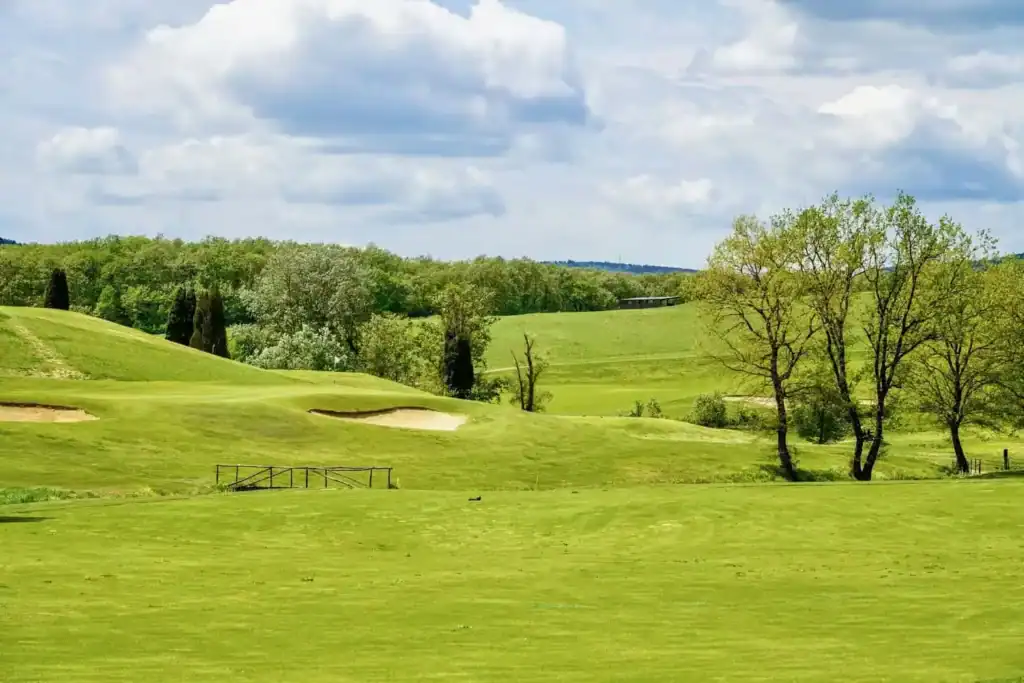
Unique and Bold at the 8th Hole 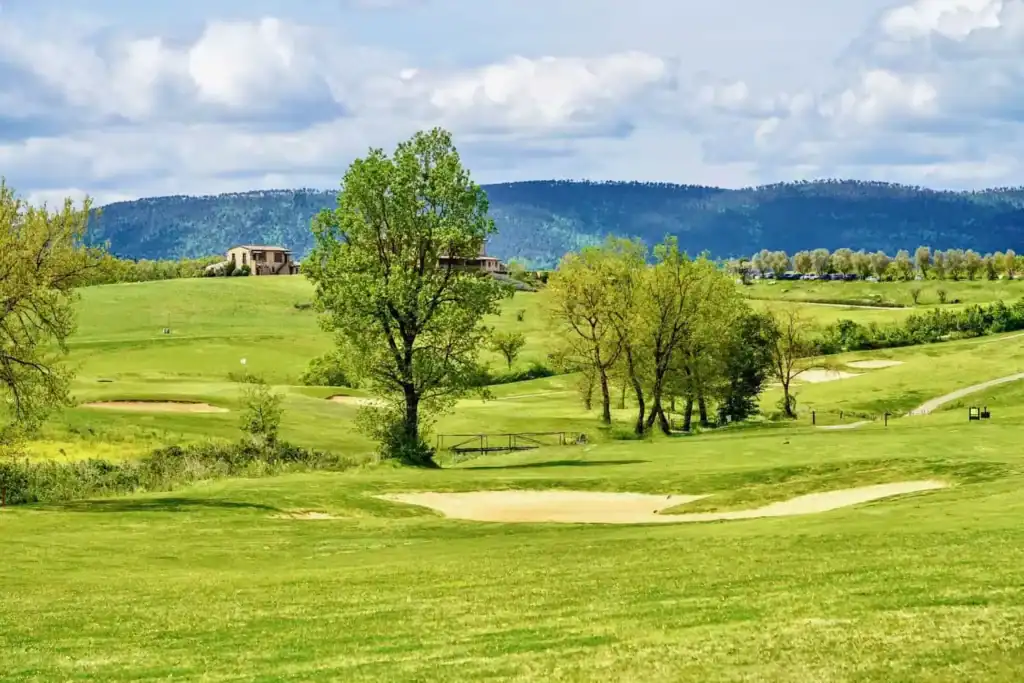
A Dogleg at the 8th Hole
Hole 9
The 9th rises ahead with the quiet confidence of a proper finishing hole, the kind that feels designed to leave one final impression before the turn. Not overly dramatic, not unfair, but sturdy and memorable in all the right ways. It asks for one more stretch of focus before the comforts of the clubhouse begin to drift back into thought.
From the tee, the hole unfolds with honesty. A strong drive is rewarded immediately, opening the door to what can become a genuine scoring opportunity. But the climb begins subtly about midway to the green, the land lifting steadily upward and quietly adding yardage with every step. What appears manageable on the card often plays much longer by the time the approach arrives.
The fairway bunkers stand ready to complicate matters for anyone too careless with direction. Avoid them, and the hole becomes far simpler. The reward is a clear look into the green and the chance to attack with a shorter club in hand.
Yet the final challenge waits on the putting surface itself. The green moves with more character than first meets the eye, full of gentle rolls and hidden turns that can make even short putts feel uncertain. Here, success belongs to the player willing to slow down, walk around the hole, and trust their read.
As a closing chapter to the outward nine, the 9th feels complete. A hole that rewards a solid drive, demands thoughtful approach play, and finishes with the timeless art of putting. Walk away with par or better, and the turn to the back nine feels just a little lighter.
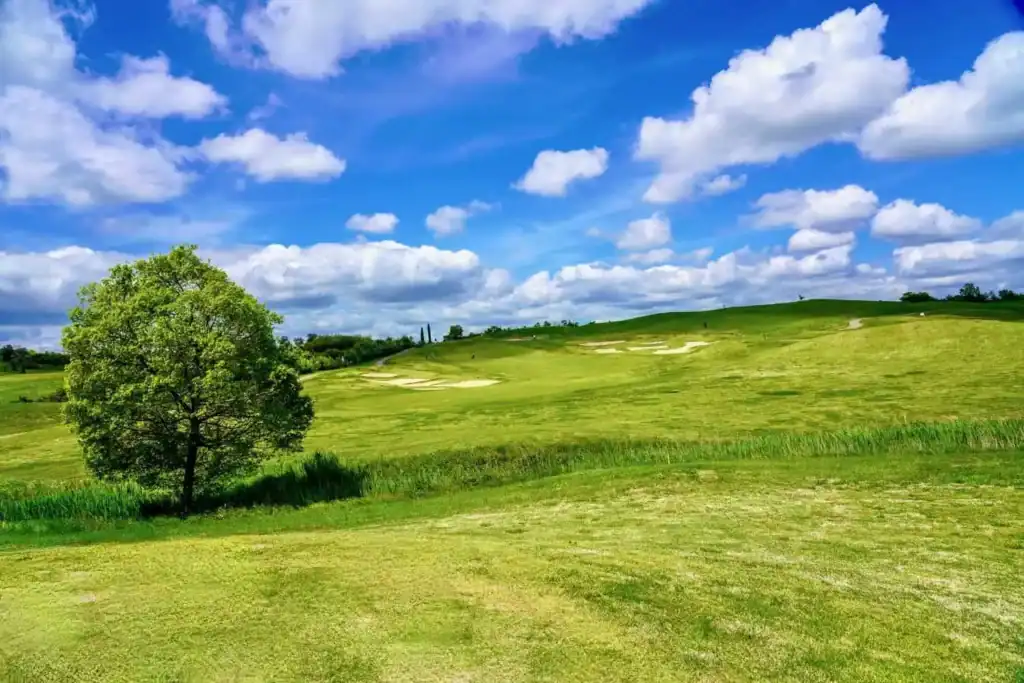
Unfolds with Honesty at the 9th Hole 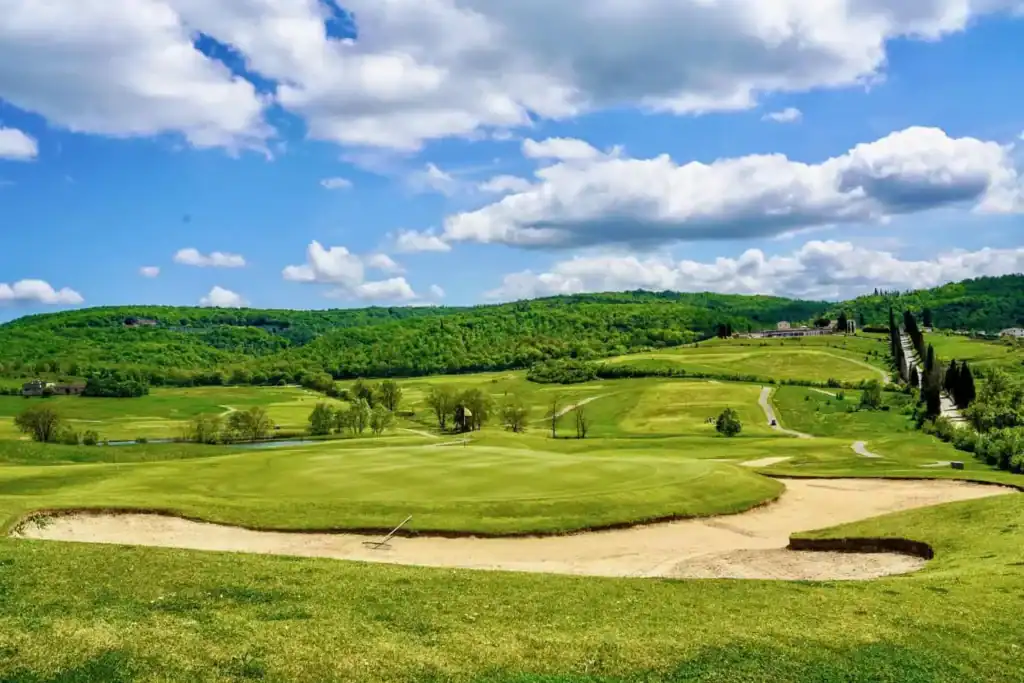
Looking back from the 9th Hole
The turn at Royal Golf La Bagnaia arrives with the same understated elegance that defines so much of Tuscany itself. There is no rush here, no noise pulling at your attention. Just rolling countryside, warm stone buildings, and the quiet understanding that golf is meant to be savored as much as played.
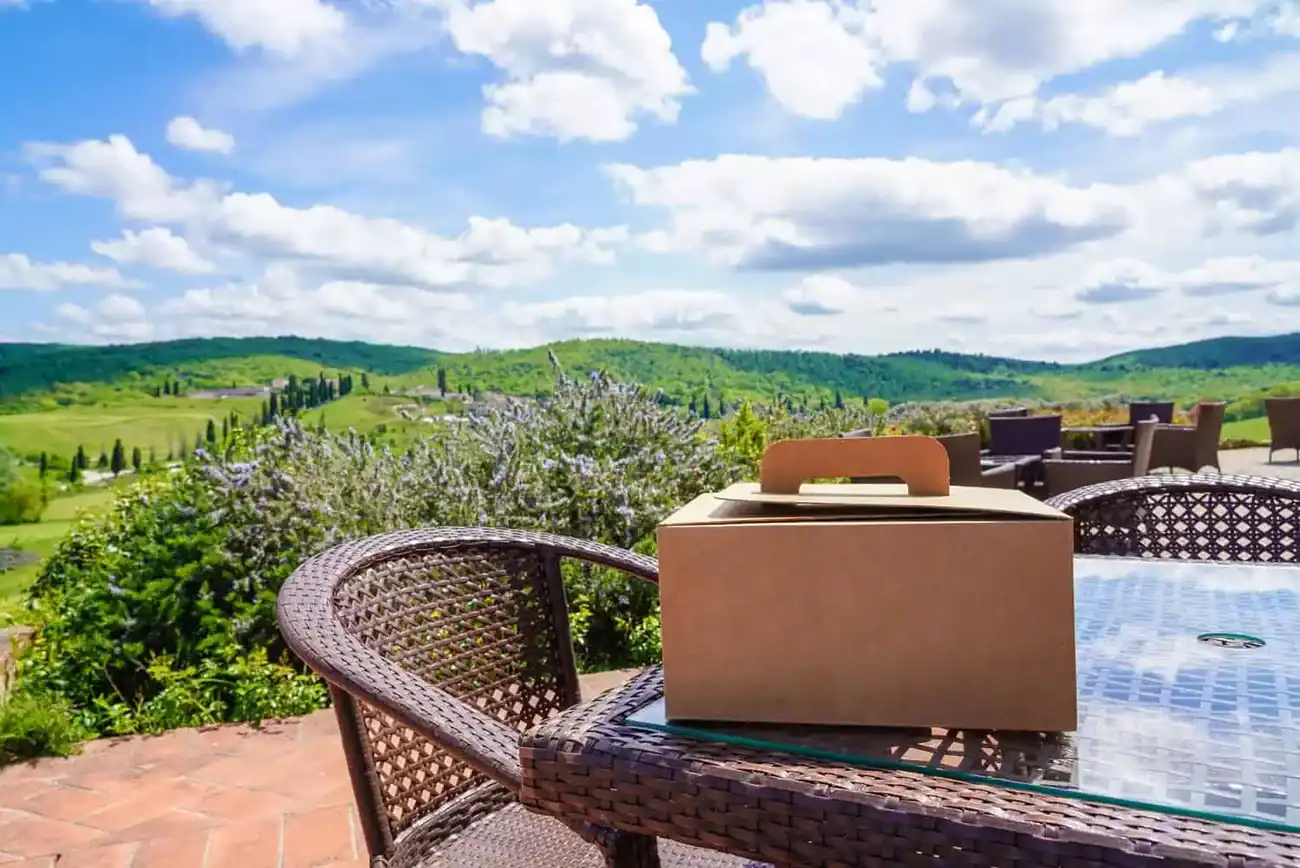
This is the perfect moment to slow down. Arrange a boxed lunch before your round. Find a shaded table overlooking the hills and settle in for a brief pause between nines, enjoying the effortless hospitality Italy offers so naturally. A simple espresso, fresh bread, olive oil, cured meats, perhaps a glass of wine if the afternoon allows. Somehow even the smallest break feels memorable here.
Then comes the familiar ritual once more. One last stop for whatever the back nine may require, a fresh glove, another bottle of water, perhaps only renewed focus. Soon enough, clubs are lifted back onto shoulders or carts hum quietly toward the 10th tee.
And as beautiful as the opening nine may have been, there is the distinct feeling that the course still has more to reveal. The back nine waits patiently ahead, ready with another collection of unforgettable holes woven into the Tuscan hills.
Hole 10
The back nine begins not with brute force, but with quiet deception. Standing on the 10th tee at Royal Golf La Bagnaia, the hole appears gentle at first glance, a modest downhill par 4 rolling away through the Tuscan landscape. But like many good opening holes to a side, it asks for discipline long before it asks for power.
The first decision comes immediately. Straight ahead, water waits silently in the landing area, perfectly placed to catch the player who swings first and calculates later. The downhill slope adds more run than expected, turning an ordinary tee shot into one that can quickly travel too far. Smart players pause here, check the carry carefully, and often choose one less club than instinct suggests. There is no shame in laying back. In fact, that is precisely what the hole encourages.
A well-positioned drive leaves the real challenge ahead, an approach into an elevated green protected heavily along the right by bunkers eager to gather anything pushed even slightly offline. The safer opening lies to the left, where the ground is more forgiving and the angle more welcoming.
Still, the elevation creates its own uncertainty. Anything struck timidly or left short risks spinning or rolling back down the slope, leaving an awkward recovery and immediate frustration to begin the inward nine. Better to err with confidence. Long leaves a chance. Short often leaves regret.
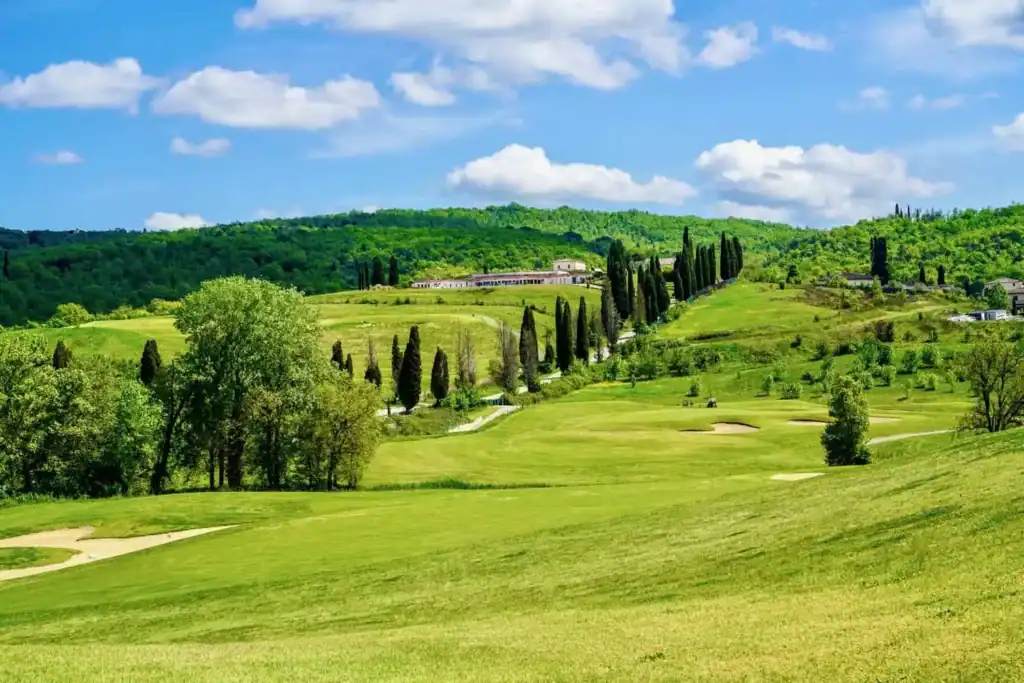
Downhill Opening to the Back Nine 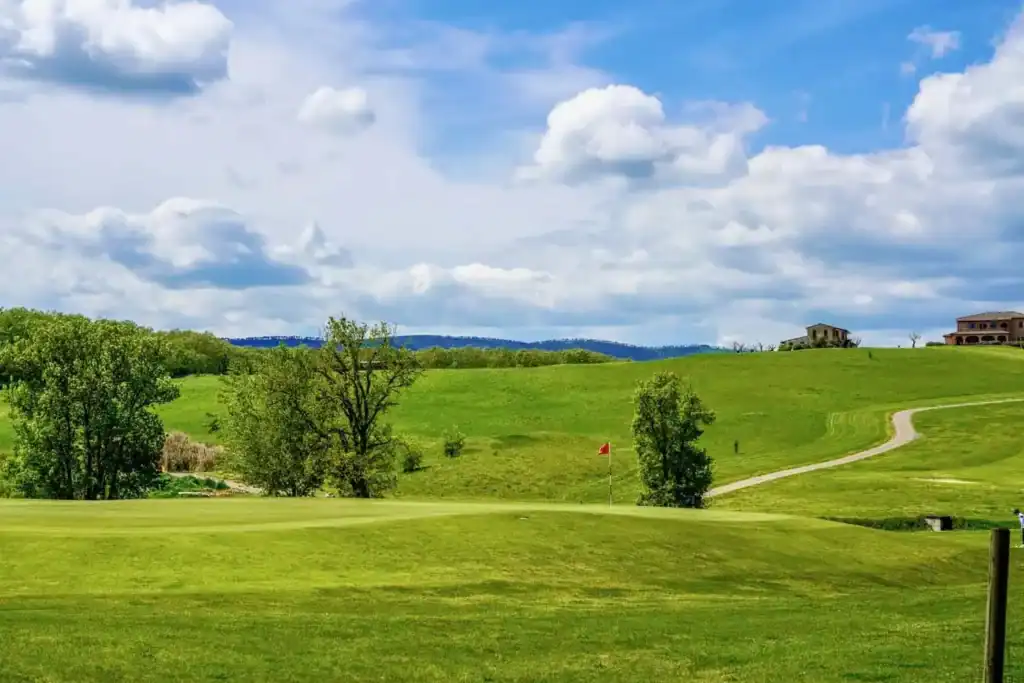
From the Green Looking Back at the 10th Hole
Hole 11
The 11th arrives quietly after the downhill excitement of the previous hole, a par 4 that at first seems almost gentle by comparison. There are no dramatic carries, no intimidating visuals demanding your full attention from the tee. It is the sort of hole many players are tempted to underestimate. And that is exactly where its danger begins.
From the outset, the assignment is simple: keep the ball in play and accept the par the hole is willing to give. The fairway opens best from the right side, offering the safest route and clearest angle into the green. To the left, however, the land falls sharply into a ravine that runs alongside the hole like a quiet warning. It is the one true mistake the 11th refuses to forgive.
There is no need for heroics here. A controlled drive finding the short grass is enough to place the hole immediately in your favor. The beauty of the 11th lies in its restraint. It does not overpower the golfer. Instead, it waits patiently for impatience to appear.
The approach continues the theme. If the flag is tucked tightly on the right side of the green, resist the temptation to chase it directly. The smarter play is safely left, allowing the contours of the putting surface to work in your favor and taking trouble almost completely out of the equation.
The 11th is a reminder that not every memorable golf hole needs spectacle. Some earn their place through subtlety and sound design, rewarding discipline while quietly punishing carelessness.

Hole 12
As quickly as the 10th tumbled downhill through the Tuscan countryside, the 12th turns and climbs right back up again. It is a hole that feels uphill in every sense, visually, physically, and strategically, asking players to reset themselves and commit fully to each shot.
From the tee, sand seems scattered across the hole like pieces of a puzzle. Fairway bunkers dot the route from landing area to green, shaping both the strategy and the eye line all the way uphill. The secret to the hole is wonderfully simple: connect the dots by avoiding every one of them. Do that, and the 12th becomes far more manageable than it first appears.
A drive finding the fairway leaves the player in control. But stray into the sand, and the climb toward the green suddenly becomes far more complicated. The bunkers here do not merely inconvenience, they interrupt rhythm, force awkward lies, and make judging distance on the uphill approach even more difficult. Trouble that is entirely avoidable quickly becomes exhausting.
The rise to the green is steeper than it first looks. Standing in the fairway, players often underestimate just how much extra yardage the climb demands. One additional club is wise. Two is often smarter, particularly when the front bunker waits eagerly to collect anything struck with hesitation. Better to arrive safely on the putting surface than watch a promising shot spin helplessly back into the sand below.
And once aboard, the work is not finished. The green carries more movement than expected, with subtle ridges and shifting breaks capable of turning a confident birdie chance into a nervy two-putt. Careful reading becomes essential.

Hole 13
The 13th is the kind of hole players remember long after the round is over. Beautiful from every angle and quietly intimidating at the same time, it captures the balance that great golf holes strive for: temptation wrapped carefully inside danger. At Royal Golf La Bagnaia, few holes embody that balance better.
From the tee, the hole unfolds with cinematic beauty. Water traces along the right side while bunkers line the left, framing the fairway in a way that feels both inviting and uneasy. It is a par 5 that, by the scorecard and yardage alone, whispers the possibility of reaching the green in two. But the design carries a more mischievous personality than the numbers suggest.
The drive is everything. Favor the right side, and suddenly opportunity opens. The angle improves, the fairway widens visually, and the thought of attacking the green begins to creep naturally into the mind. Drift left-center, however, and the hole changes character immediately. The water becomes impossible to ignore, tightening the second shot and turning ambition into uncertainty.
That is where the 13th quietly reveals its true nature. The smart play is often the restrained one. A well-placed layup short of the green leaves the hole exactly where most players score best with a wedge in hand and control restored. It is not surrender. It is strategy.
And yet, standing in the fairway with a chance ahead, it is impossible not to feel the pull of temptation. That is what makes the hole so compelling. It asks every golfer the same question: attack, or trust patience? Either way, birdie is absolutely within reach here. Whether it comes through power, precision, or a perfectly judged wedge depends entirely on the choices made along the way.
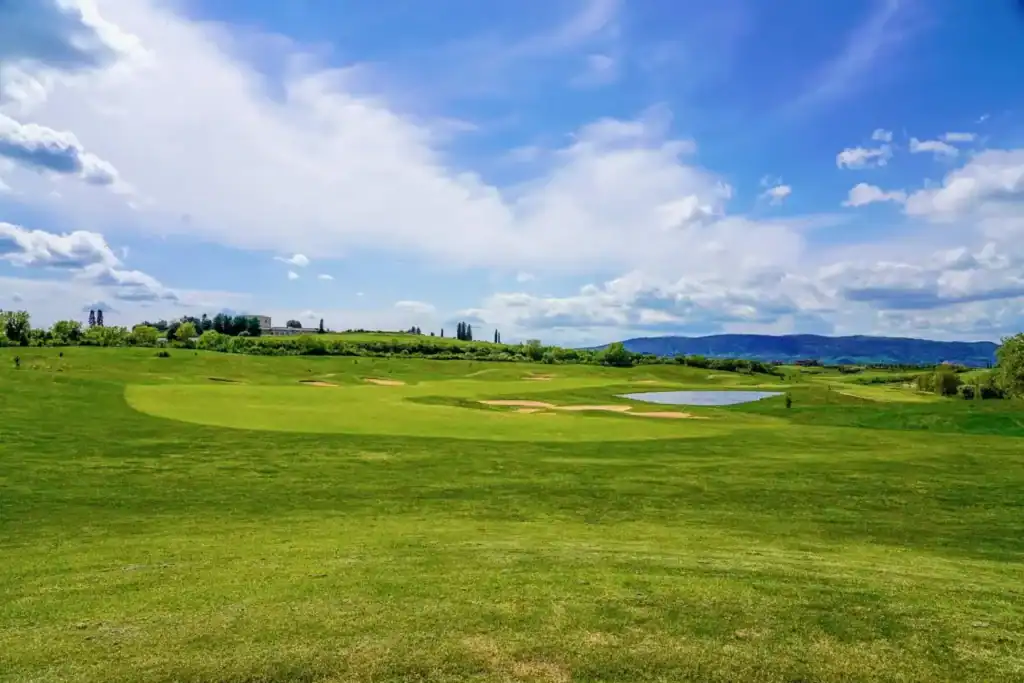
From the Tee at the 13th Hole 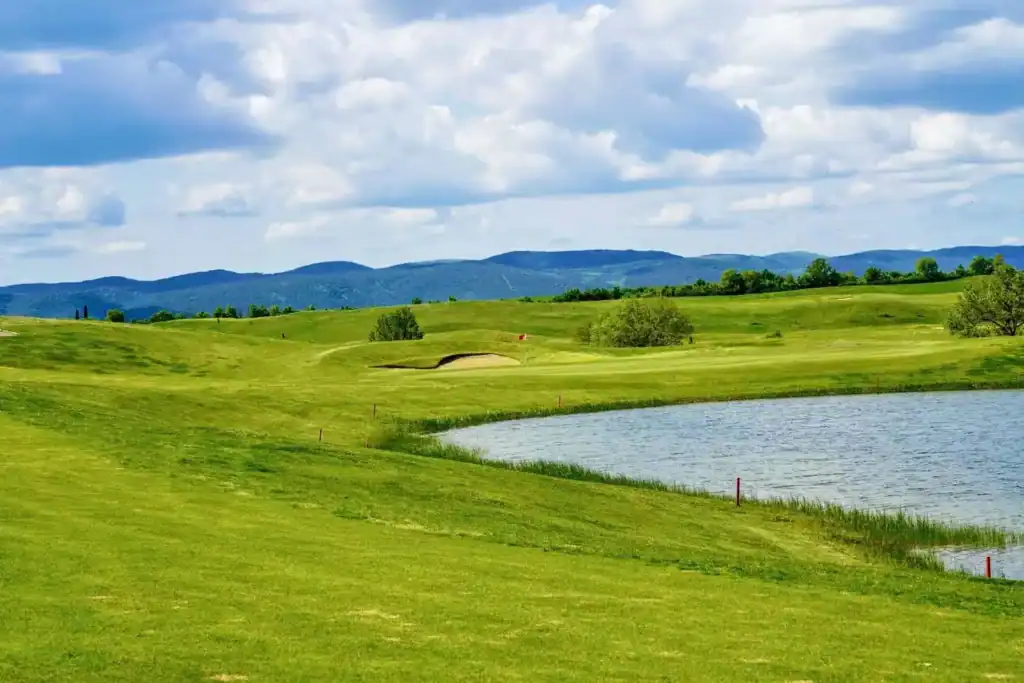
Into the Green at the 13th Hole
Hole 14
A signature hole? The 14th at Royal Golf La Bagnaia certainly makes a convincing argument.
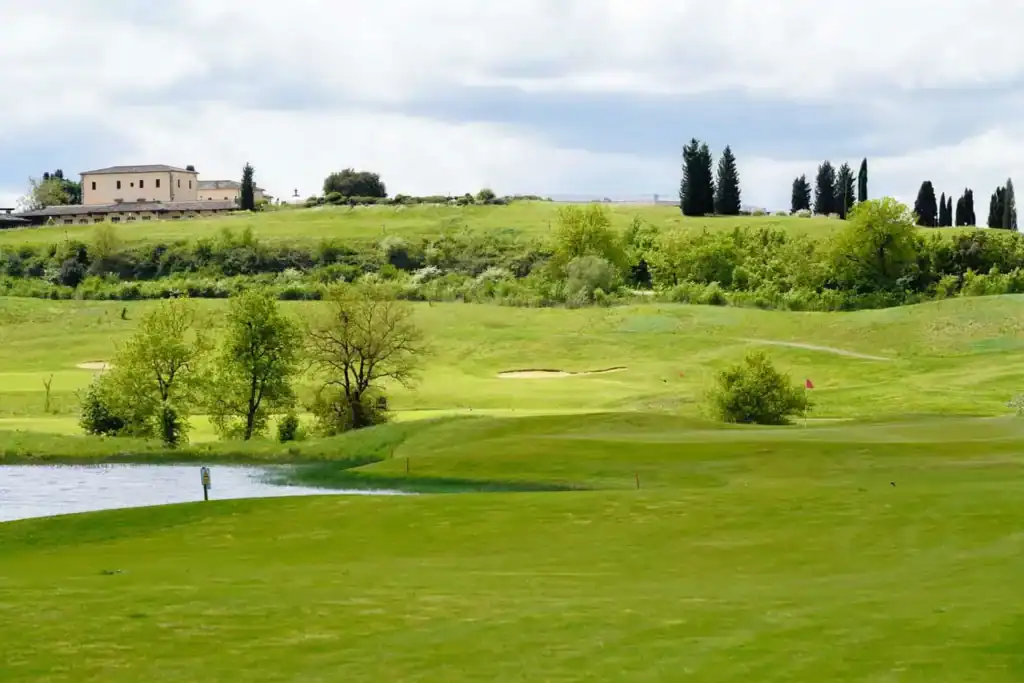
Perched high above the green, this par 3 delivers one of the most unforgettable views on the course, the Tuscan countryside stretching endlessly beyond the putting surface in waves of rolling hills, cypress trees, and distant stone villages. It is the sort of tee box that briefly steals attention away from golf altogether. Briefly. Because once the beauty settles in, the deception begins.
The hole is not especially long from any tee, yet nearly every player standing above it feels the urge to pull too much club. The dramatic elevation drop disguises the true yardage, and balls seem to stay in the air forever against the Tuscan sky. One less club than instinct suggests is almost always the correct decision. Sometimes even more restraint is required.
But caution carries its own danger. A bunker guards the front of the green, ready to punish anything struck tentatively or left short. It is the kind of hazard that creeps quietly into a golfer’s thoughts during the swing itself. The challenge is finding the perfect balance between trust and commitment.
And once the ball lands, the work is far from over. Missing the green leaves delicate recovery shots from tightly mown areas and awkward slopes where touch becomes difficult to judge. The short game here can unravel quickly, turning a seemingly harmless par 3 into an unexpected struggle. The smartest play is also the simplest: hit the green.
Like the finest signature holes, the 14th succeeds because it lingers in the memory long after the score is forgotten. Beautiful, deceptive, and demanding all at once, it is a hole that captures both the charm and the subtle danger woven throughout the Tuscan landscape.
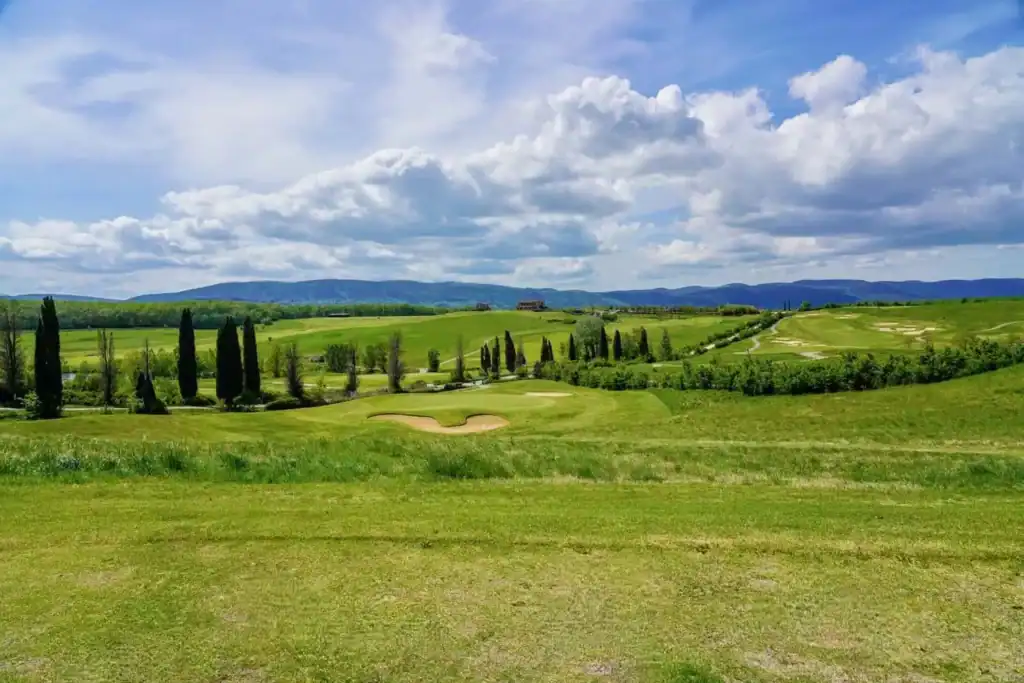
Down the Hill at the 14th Hole 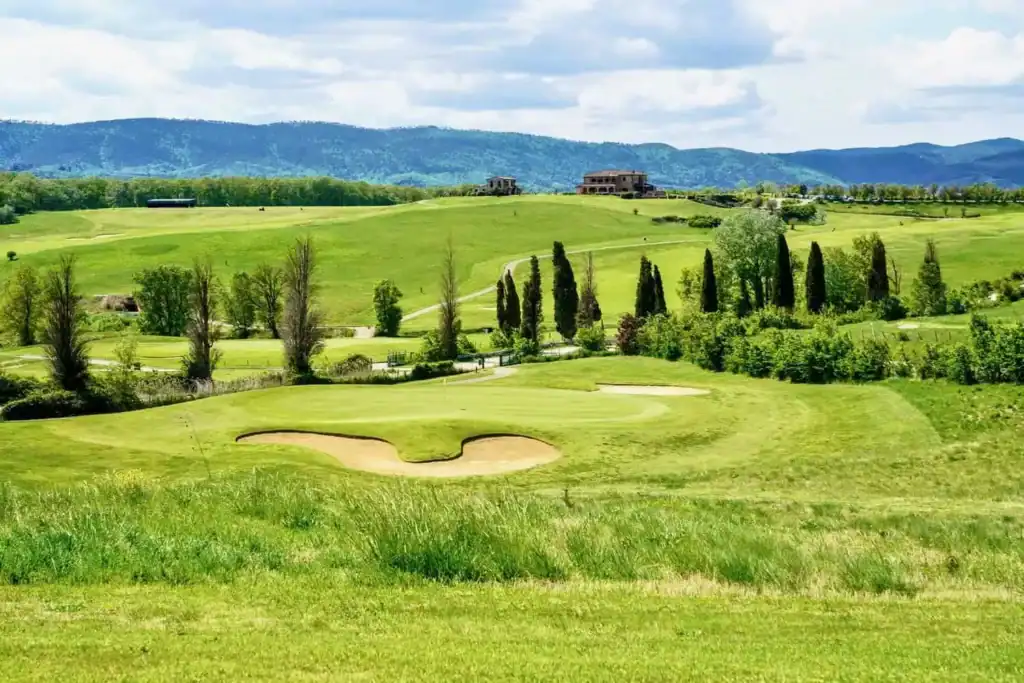
A Beautiful View at the 14th Hole
Hole 15
The 15th continues the rhythm of the back nine with quiet authority, a par 4 that doesn’t need spectacle to make its point. It simply unfolds, piece by piece, as you play your way into it.
From the tee, the hole offers no immediate clarity. The green is hidden, turning left and climbing uphill beyond view. It is a true dogleg, shaped more by land than by imagination, and it asks for trust in both line and execution.
The sensible play is clear enough once you’ve walked the tee box briefly. Favor the right side. From there, the fairway opens naturally and the angle into the green becomes far more generous. Drift left, however, and the fairway bunker comes into play, tightening the landing area and complicating what should be a straightforward start.
Position off the tee is everything here. A well-placed drive down the right side transforms the hole into a controlled mid-length approach, played with confidence rather than recovery. But even then, the 15th is not finished testing you.
Bunkers are everywhere near the green. A shot with height is optimal.
The green itself is generous in size, but that generosity comes with a caveat. Subtle slopes and varied pin positions can change the entire character of the hole. One section may offer space and comfort, while another demands precision and touch to avoid a difficult putt.
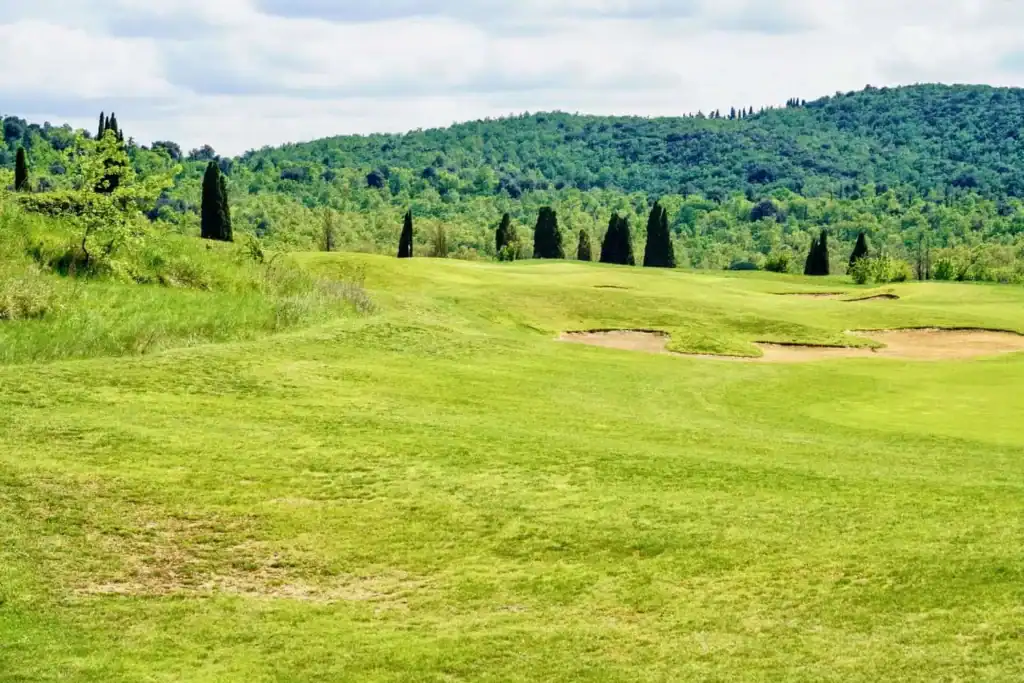
Blind Tee Shot at the 15th Hole 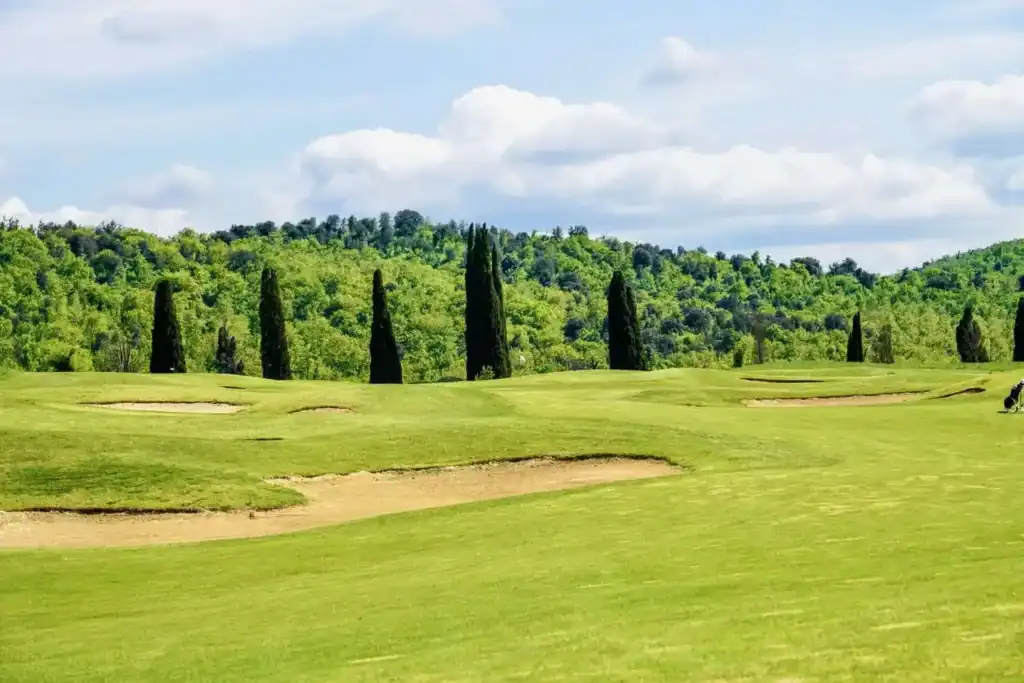
Lots of Sand at the 15th Green
Hole 16
The 16th feels like golf slipping fully into landscape and story, where the course no longer sits apart from Tuscany but seems stitched directly into it. The village rests quietly behind you, as if watching the hole unfold, while horse stables sit off to the left, a reminder that this land has always carried rhythm and life long before a golf ball ever traced its way across it. At Royal Golf La Bagnaia, holes like this do not feel designed so much as discovered.
From the tee, the fairway opens in an inviting way that feels almost generous. The line is there for the taking, and so is the temptation. It is a par 4 that flirts with aggression, short enough, shaped enough, and receptive enough to make players think about doing something memorable rather than merely safe.
If the yardage is in the bag, this is the moment to consider it. A well-struck drive can turn the hole into something far more playful, bringing eagle thoughts into the edges of imagination or at the very least setting up a simple pitch. But the real key is not just power, but contact. Catch it cleanly, on the screws, and the hole rewards you instantly. Miss it, and the charm fades quickly into something more demanding.
From there, the second shot becomes a matter of feel rather than force. The green presents itself in two distinct personalities depending on pin position. If the flag is cut short, the ground game comes alive, a bump-and-run skimming the surface, using the contours as intended, bringing the ball gently to rest. If the pin is tucked away at the back, then the approach shifts to the air, carrying fully onto the surface before releasing out with the slope. Or vice versa depending on your imagination. Two different shots, two different solutions, both entirely dependent on judgment.
It is a hole that rewards freedom but punishes recklessness, a blend of invitation and restraint framed by Tuscan beauty on every side. And as you stand there, club in hand, it feels less like choosing a shot and more like choosing a moment to trust your swing.
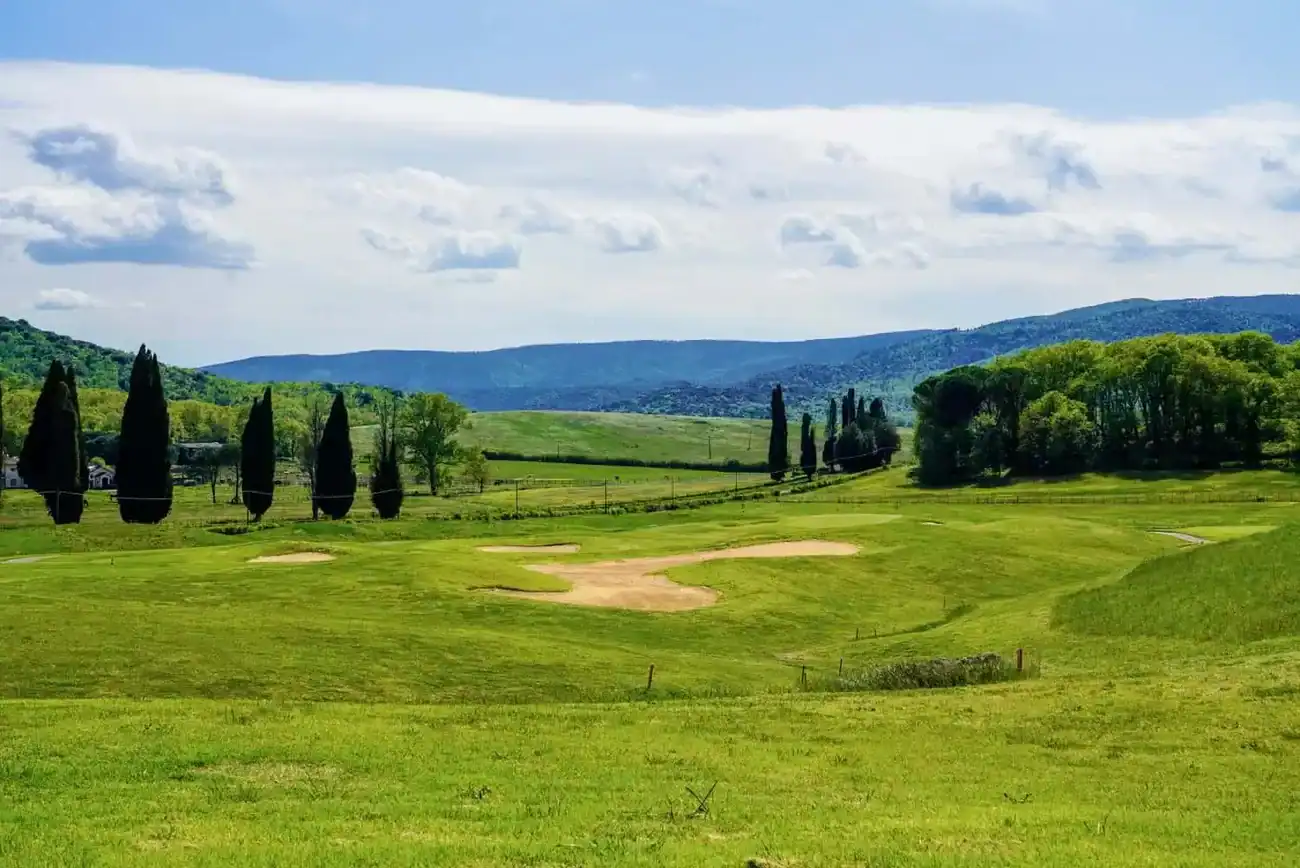
Hole 17
The final par 3 at Royal Golf La Bagnaia arrives with just enough challenge to demand respect, but not so much that it overwhelms the rhythm of the round. It is the kind of hole that quietly separates patience from impulse, asking for commitment without apology.
From the tee, the picture is clear but not simple. The green sits at a testing distance, framed by a creek that guards the entire left side, ready to collect anything pulled even slightly offline. Across the front, a broad, clam-shaped bunker curves like an open hand waiting to catch anything that comes up short. Together, they create a corridor that feels narrower than it first appears.
Reaching the green cleanly is already an achievement. The target demands a higher, softer shot the kind that climbs into the air and lands with enough control to hold the surface. Anything lower tends to release forward, bringing the front bunker into play or worse, leaving a tricky recovery from just short of the green.
And yet, the bunker itself is not the punishment it appears to be. The sand is soft, forgiving, and welcoming in a way most hazards are not. A clean strike from there can still save par comfortably, which subtly changes the way the hole is played. It does not demand perfection so much as acceptance of where the ball ends up.
That is the quiet lesson of the last par 3 here. Commit to the shot, respect the water, and accept that even the “miss” is manageable. Play it that way, and you walk off with par feeling not like survival, but like understanding.
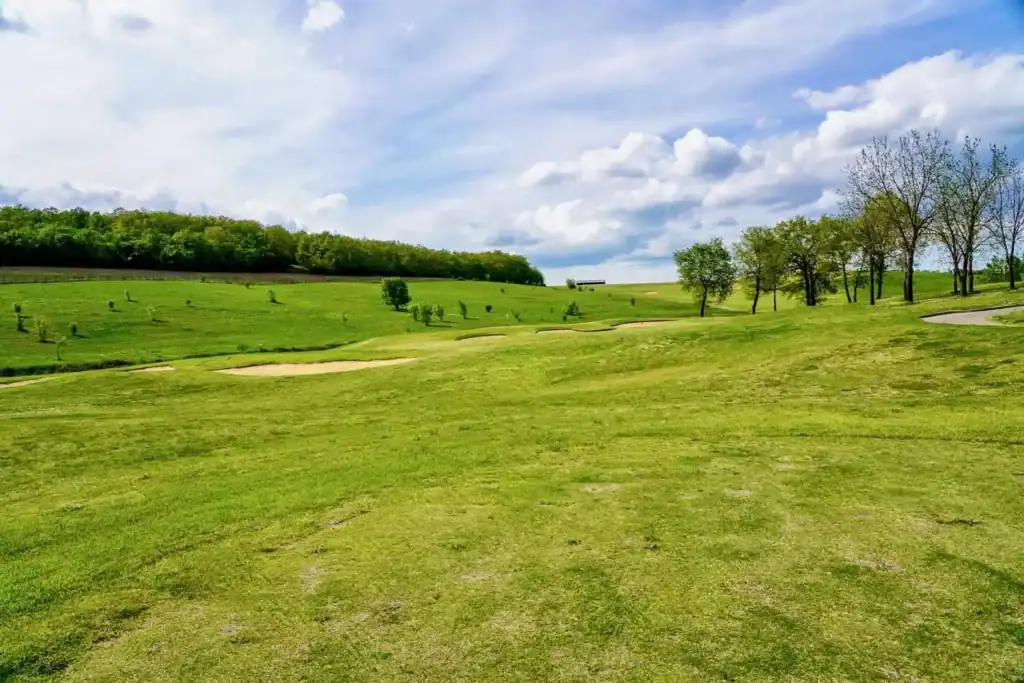
From the Tee at the 17th Hole 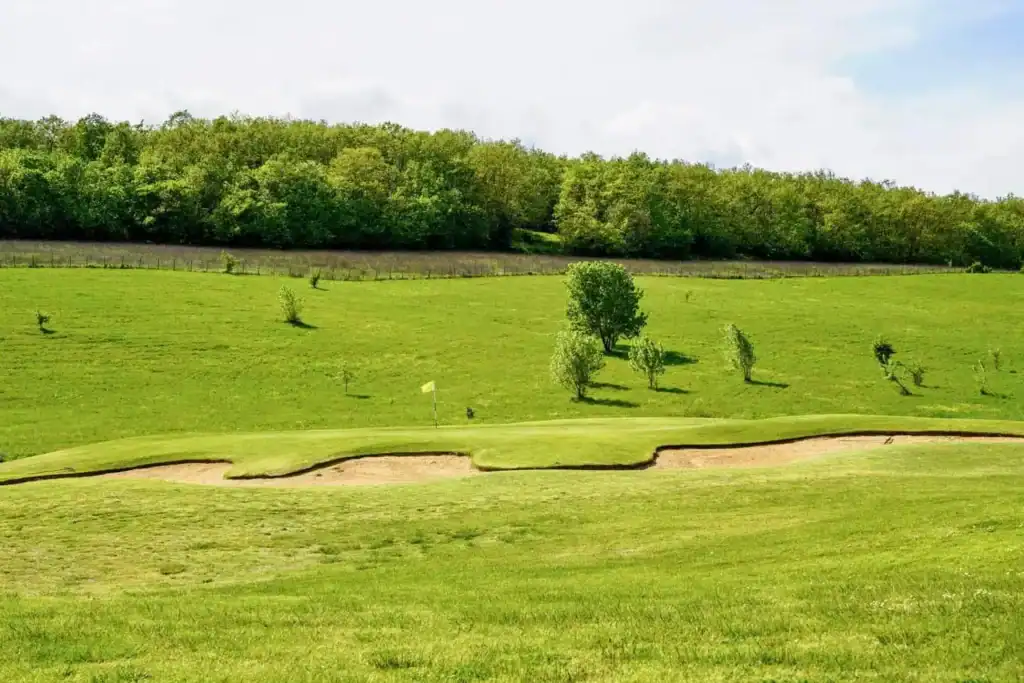
Clam Shell Bunker at the 17th Hole
Hole 18
The finishing hole at Royal Golf La Bagnaia is not just a conclusion, it is a statement. A long, climbing par 5 that draws the round upward from its very first step, asking for one final stretch of patience, precision, and composure before the day releases its hold.
From the tee, the hole appears deceptively open. But that illusion fades quickly. Bunkers and rough subtly push the line left, guiding the fairway into a sweeping arc before it eventually bends back toward the right and the clubhouse beyond. It is a hole that refuses to be linear, both in shape and in challenge.
The uphill climb defines everything. Each shot feels slightly heavier, slightly longer than expected. Lies become more complicated as the ground tilts, uphill, sidehill, never quite flat. Even well-struck shots demand interpretation in the air, and mishits are quickly exaggerated by the terrain. A push becomes a drift right. A pull finds trouble left. Control matters as much as distance. And still, the hole keeps asking for more.
The approach rises sharply to a green that sits elevated and watchful, demanding full commitment on distance. Anything short is immediately swallowed by the slope, tumbling back into a difficult recovery that feels a long way from the finish line. Here, club selection is everything and almost always, it is more than first thought.
But reaching the surface is only half the reward. The green itself carries the same sense of scale as the hole that precedes it, with enough movement to keep even short putts honest after a long walk uphill. And then, finally, the last putt falls.
There is no rush to leave. Just a moment to turn, take in the clubhouse, the hills, the fairways you’ve crossed, and the Tuscan sun that has followed every step of the journey. A round completed not just in score, but in memory.
And so, the round slows, as it should, into something softer than competition. At Royal Golf La Bagnaia, the finish is not only about the final putt or the last walk off the green — it is about what comes after the game has already been decided.
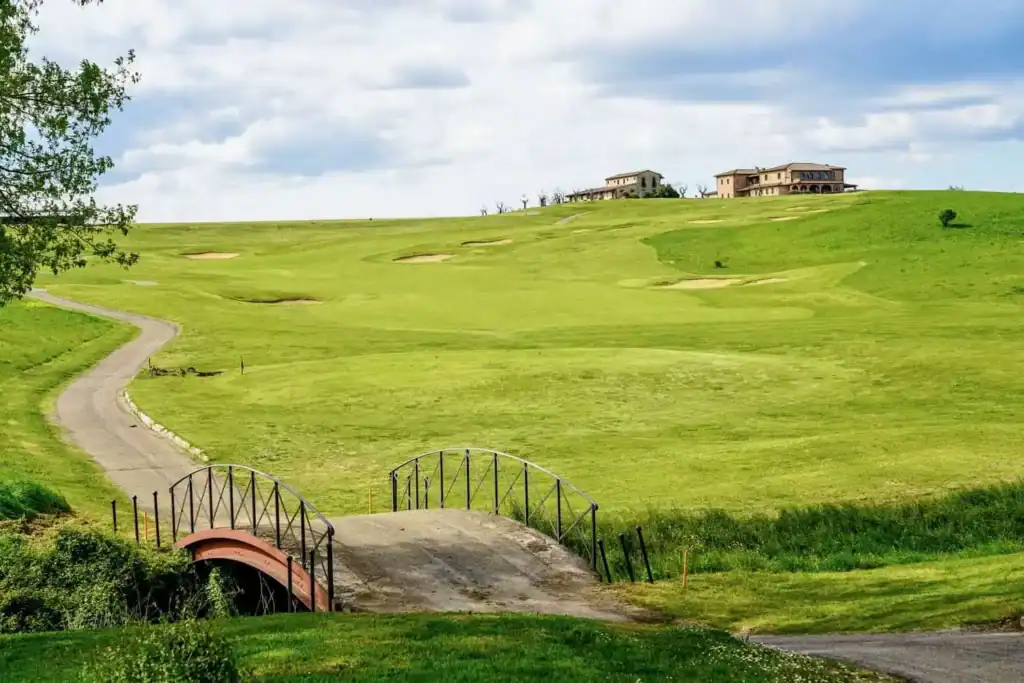
A Big Finishing Hole at the 18th 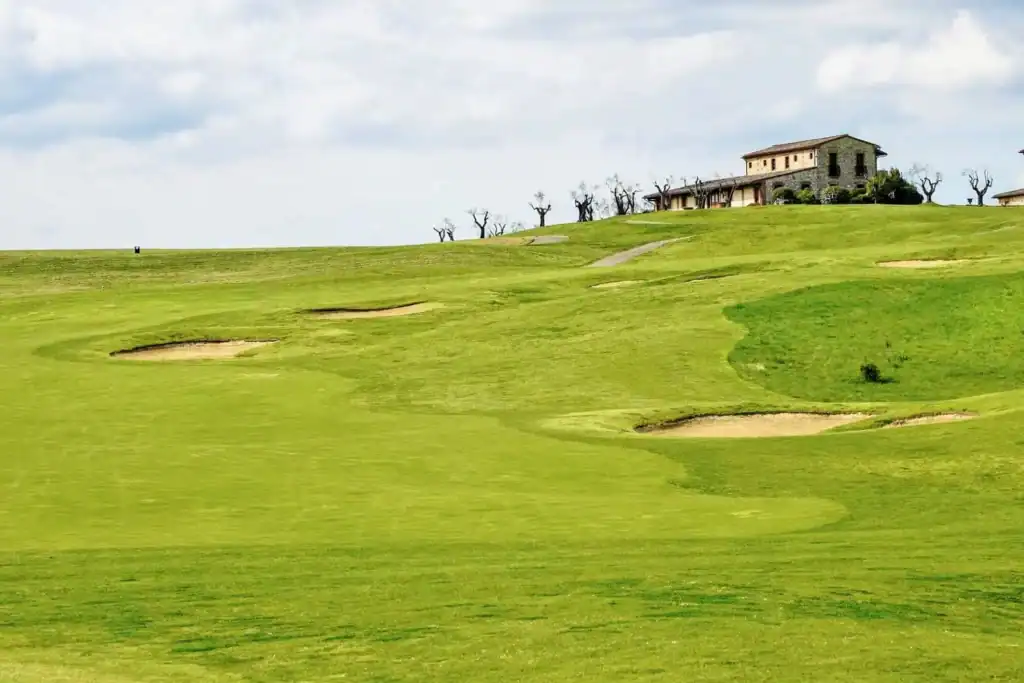
Elevated Green to the Clubhouse at the 18th Hole
The terrace waits patiently, as it always does, overlooking the course that has just asked so much of you. An hour here feels less like a luxury and more like part of the design. Conversations drift easily not about swing mechanics or missed putts, but about moments: the shot that held the slope just right, the bunker that saved a par, the drive that finally behaved on the 16th when it mattered.
A glass of bold Tuscan red arrives without urgency. It does not need to announce itself. It simply fits the setting. The sun lingers over the hills, warm and unbothered, as if it too has decided there is nowhere else to be. Hydration comes slowly, conversation even slower. Time stretches in a way it rarely does elsewhere.
The clubhouse becomes less a building and more a resting place for the day itself, a quiet frame around everything that has just unfolded. Laughter mixes with reflection. Scorecards are folded, then unfolded again, not for correction but for memory.
Eventually, there is movement. A final stop in the golf shop for something small to carry the place forward, a reminder more than a purchase. Clubs are gathered, shoes dusted off, belongings accounted for. And still, no one rushes.
Because days like this do not end abruptly. They fade gently, like the light over the Tuscan hills, leaving you somewhere between satisfaction and stillness, the sense that golf, at its best, is never just played, but fully experienced.




A Concierge Member exclusive
Experience Royal Golf La Bagnia beyond the review. This exceptional course is included in our Tour of Italy itinerary, where Concierge Members enjoy thoughtfully curated golf, beautiful stays, local experiences, and seamless planning throughout the journey. Become a Concierge Member and experience golf beyond the guidebook.